

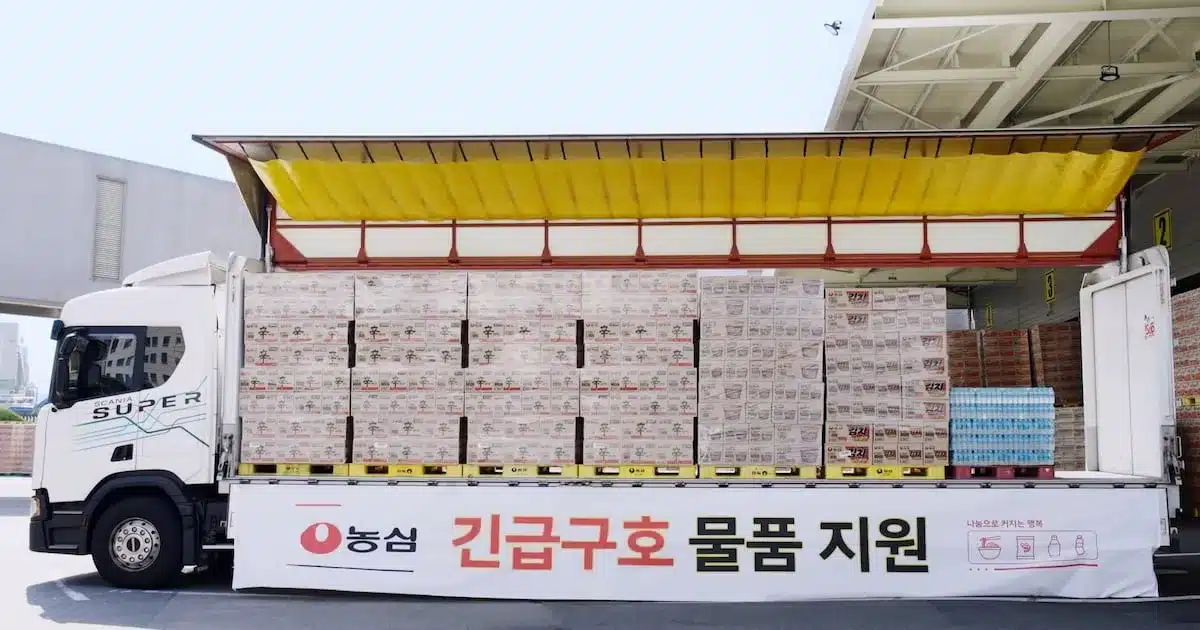
Nongshim, a prominent food company, has announced the immediate provision of 1,200 emergency food sets to the Gyeongnam region, which is currently grappling with severe damage from a historic typhoon. The aid is intended to support individuals displaced by the disaster and those involved in recovery efforts.
Emergency Relief Efforts Underway
The emergency food packs supplied by Nongshim consist of staple items such as ramen and bottled water. These provisions are slated for distribution to evacuees sheltering in temporary facilities and to first responders, including firefighters and volunteer workers, who are actively engaged in the challenging task of damage assessment and recovery operations. The company stated that this initiative aims to offer some measure of relief and support to those enduring hardship due to the extreme weather conditions.
A representative from Nongshim commented on the decision, explaining, “We decided to provide this support to offer even a small amount of strength to those who are facing difficulties due to the extreme typhoon damage.” This sentiment underscores the company’s commitment to community welfare during times of crisis.
Nongshim’s Ongoing Commitment to Social Contribution
This recent donation is part of a broader, ongoing social contribution program by Nongshim. In February, the company formalized its commitment to providing significant humanitarian aid by signing an agreement with the Korea National Council on Social Welfare. This agreement outlines plans to supply relief goods valued at over 300 million Korean won throughout the current year. The signing ceremony took place at Nongshim’s headquarters in Dongjak-gu, Seoul.
The Emergency Food Pack Initiative
The emergency food pack program itself has been a cornerstone of Nongshim’s corporate social responsibility efforts since 2020. This initiative is designed to provide immediate sustenance to vulnerable populations affected by natural disasters, such as typhoons and other calamities. It also extends support to underprivileged groups who may fall through the cracks of public assistance systems.
The core components of these emergency packs are ready-to-eat food items, primarily ramen and drinking water. These are selected for their long shelf life, ease of preparation, and nutritional value, making them ideal for distribution in emergency situations where access to regular food supplies and cooking facilities may be severely limited. By providing these essential goods, Nongshim aims to alleviate immediate hunger and ensure basic nutritional needs are met for those most in need during the critical post-disaster period.
Broader Impact of Natural Disasters
Typhoons and other severe weather events pose significant threats to communities, causing widespread damage to infrastructure, homes, and livelihoods. The economic and social repercussions can be long-lasting, requiring sustained efforts from both government agencies and private organizations to facilitate recovery. In the aftermath of such events, the availability of basic necessities like food and water becomes paramount for the well-being of affected populations.
The Gyeongnam region, like many coastal areas, is particularly susceptible to the impacts of typhoons. These storms can bring torrential rain, strong winds, and storm surges, leading to flooding, landslides, and extensive property damage. The response to such disasters typically involves immediate search and rescue operations, followed by efforts to provide shelter, food, medical aid, and psychological support to those affected. Long-term recovery includes rebuilding infrastructure, restoring essential services, and supporting economic revitalization.
The Role of Corporate Philanthropy
Corporate philanthropy plays a crucial role in disaster response and recovery. Companies like Nongshim, through their established social contribution programs, can mobilize resources quickly to provide much-needed aid. Their contributions can supplement government relief efforts and reach communities that might otherwise face delays in receiving assistance. Such support not only addresses immediate needs but also demonstrates solidarity and fosters a sense of community resilience.
The effectiveness of corporate aid often depends on strategic partnerships with non-profit organizations and government bodies. Collaborations with entities like the Korea National Council on Social Welfare ensure that aid is distributed efficiently and reaches the intended recipients. These partnerships leverage the logistical capabilities and local knowledge of established organizations, maximizing the impact of corporate donations.
Looking Ahead: Preparedness and Resilience
While immediate relief is vital, the long-term challenge lies in building community resilience to future disasters. This involves investing in disaster preparedness measures, such as early warning systems, robust infrastructure, and community education programs. Nongshim’s consistent support for emergency food provisions highlights the importance of having readily available resources to respond to unforeseen crises. The company’s ongoing commitment suggests a recognition of the cyclical nature of natural disasters and the need for sustained support systems.
The provision of emergency food packs by Nongshim to the Gyeongnam region serves as a vital lifeline for those affected by the recent typhoon. It reflects a corporate ethos that extends beyond business operations to encompass a genuine concern for societal well-being, particularly during times of extreme adversity. Such initiatives are instrumental in helping communities recover and rebuild in the face of natural challenges.
