

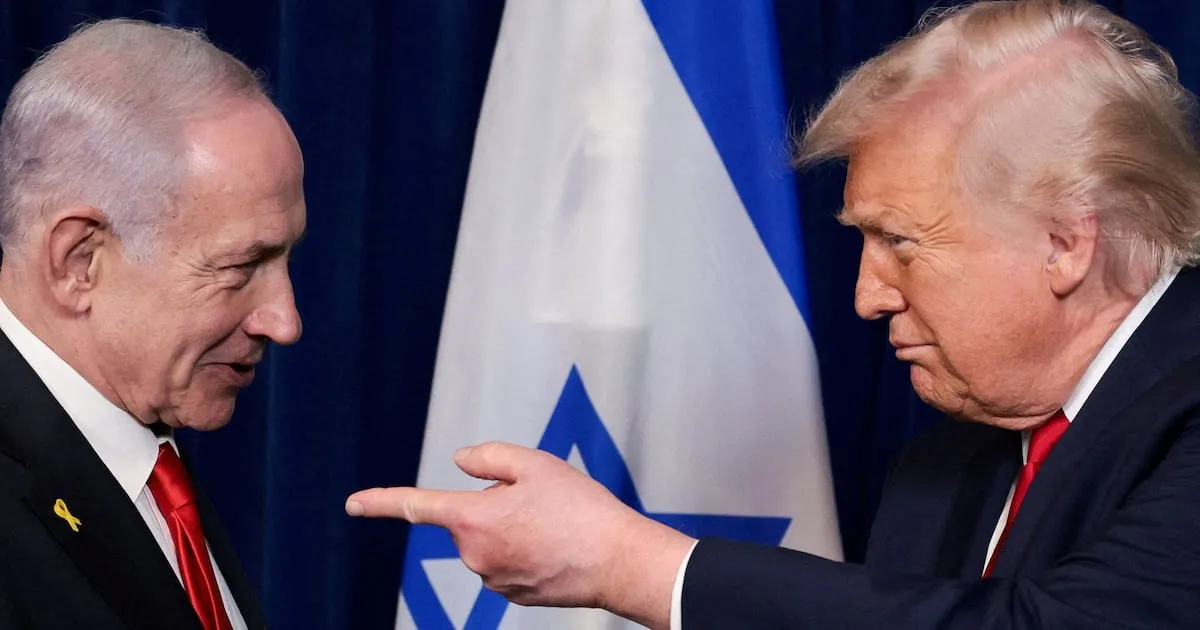
Israeli Prime Minister Benjamin Netanyahu has reiterated his opposition to a proposed disarmament agreement with Hamas, stating that Israel will not withdraw its forces from the Gaza Strip until the militant group is disarmed. The Prime Minister’s office announced his stance following a cabinet meeting on Tuesday, where he declared that Israel rejects 15 specific points within the proposed framework.
Netanyahu’s Stance on Disarmament and Withdrawal
During the cabinet meeting, Prime Minister Netanyahu asserted, “Israel will not withdraw from the Gaza Strip until Hamas is disarmed.” He clarified that the disarmament of Hamas would encompass the neutralization of all its weaponry, including rockets and light arms. Netanyahu indicated that these points are currently under discussion with the United States, acknowledging that while some proposals are acceptable, others are not.
“Israel’s existence and the security of its citizens are not subject to negotiation,” Netanyahu stated, emphasizing the non-negotiable nature of these core principles. He further elaborated on the critical issue of Gaza’s future, making it clear that as long as he leads the government, a Palestinian state will not be established in Gaza, nor in the West Bank (Judea and Samaria). He explicitly rejected the formation of a “Palestine” or a “Hamas-stan.” This firm declaration reinforces Israel’s established policy regarding any peace initiative, particularly one involving the disarmament of Hamas.
Background of the Proposed Agreement
The Prime Minister’s remarks come in response to a proposed disarmament agreement reportedly developed by a peace committee led by former U.S. President Donald Trump and involving Hamas. This proposal is distinct from a 20-point “Gaza peace initiative” that Israel had agreed to in October of the previous year, also under the Trump administration.
The latest agreement, revealed by Trump on the 30th of the preceding month, reportedly includes provisions for Hamas to begin disarming concurrently with Israel initiating a gradual withdrawal of its forces from Gaza. This phased withdrawal would commence once Hamas starts its disarmament process.
Netanyahu had previously voiced his rejection of aspects of this proposal on the 4th of the month, insisting that Hamas’s disarmament must precede any Israeli withdrawal from Gaza. He stated then that the Trump administration had sent proposals that Israel did not accept.
Political Considerations and Domestic Pressure
Analysts suggest that Prime Minister Netanyahu’s strong stance on the disarmament agreement is influenced by the upcoming general election in Israel, scheduled for October. Facing declining approval ratings, Netanyahu appears to be adopting a hardline approach to the disarmament issue as a strategy to consolidate his support base among the right-wing factions of his coalition government.
By taking a firm position that resonates with his core supporters, Netanyahu aims to bolster his political standing and secure the backing of his government’s constituency. This approach is seen as an effort to rally his base amidst a challenging political climate and potential electoral pressures.
Key Points of Contention
- Hamas Disarmament: Israel insists on the complete disarmament of Hamas, including the neutralization of all its weaponry, as a prerequisite for any significant concessions.
- Israeli Withdrawal: The timing and conditions of any Israeli military withdrawal from Gaza are a major point of contention, with Israel demanding disarmament first.
- Future of Gaza: Prime Minister Netanyahu has explicitly ruled out the establishment of a Palestinian state in Gaza or the West Bank under his leadership.
- Negotiation Terms: Israel maintains that its national security and the safety of its citizens are non-negotiable aspects of any agreement.
- U.S. Proposals: While discussions with the U.S. are ongoing, Israel has indicated that not all proposals presented are acceptable.
Conclusion
Prime Minister Netanyahu’s firm rejection of the current disarmament proposal highlights the significant obstacles in reaching a comprehensive peace agreement. His emphasis on Israel’s security needs and his clear red lines regarding Palestinian statehood underscore the complexities of the Israeli-Palestinian conflict. The upcoming election adds another layer of political calculus to these already sensitive negotiations, suggesting that a resolution may be further complicated by domestic political considerations.
