

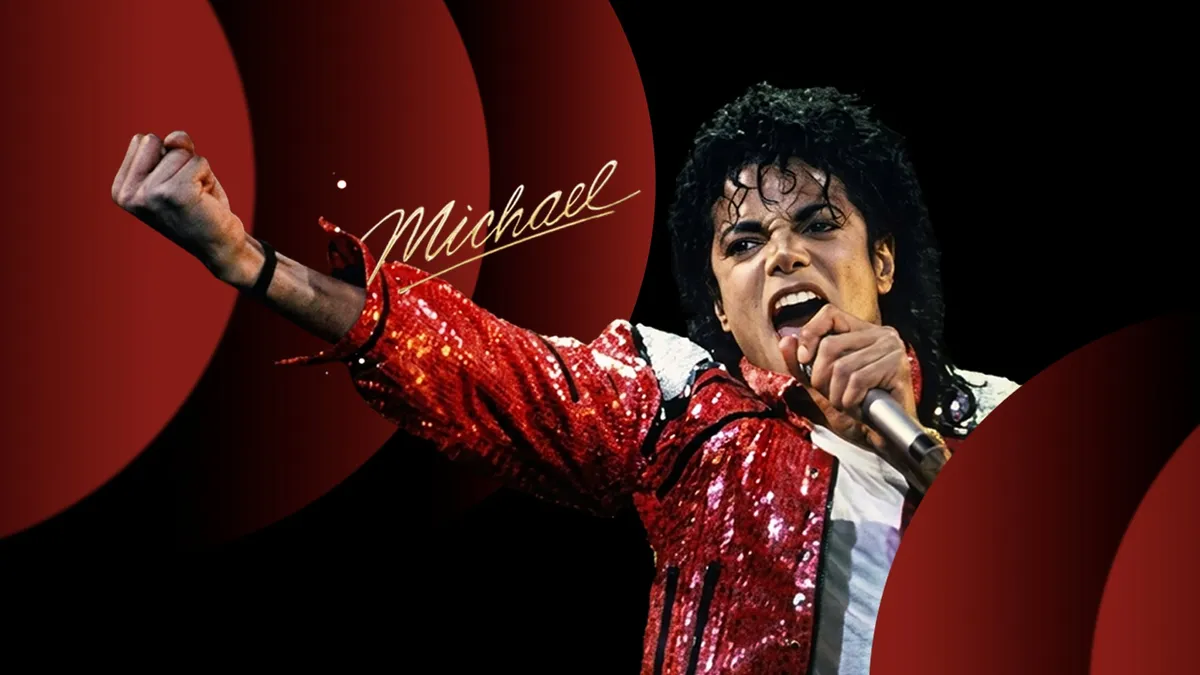
The recently released musical biopic ‘Michael’ has garnered significant attention, sparking diverse reactions both domestically and internationally. While its theatrical run in South Korea concluded with approximately 1.62 million viewers, the film has achieved monumental success on the global stage, surpassing $1 billion at the worldwide box office. This makes ‘Michael’ the first-ever musical biopic to achieve this milestone, eclipsing the previous record holder, ‘Bohemian Rhapsody,’ which grossed $911 million. However, it’s worth noting that ‘Bohemian Rhapsody’ remains the domestic box office champion for musical biopics in South Korea, drawing 9.94 million viewers.
‘Michael’ Dominates Global Box Office and Music Charts
The film’s impact extends beyond the silver screen, significantly influencing music charts. In the UK, Michael Jackson’s compilation album ‘The Essential Michael Jackson’ soared back to the number one spot on the Official Albums Chart, a position it hadn’t held in 17 years since 2009. In the United States, Jackson’s iconic song ‘Billie Jean’ re-entered the Billboard Hot 100 at number 17, with other hits like ‘Human Nature,’ ‘Beat It,’ and ‘Don’t Stop ‘Til You Get Enough’ also making reappearances on the charts. The film has effectively resurrected the King of Pop’s presence in streaming and physical sales markets.
Artistic Merit and Production Challenges
From a cinematic perspective, ‘Michael’ presents a somewhat uneven narrative. The film chronicles Jackson’s journey from his early days as the lead vocalist of The Jackson 5 to becoming a global pop superstar. However, the chronological structure is considered by some critics to be rather flat. The dramatic climax, depicting the abrupt cancellation of the ‘Bad’ tour in 1988, fails to leave a lasting impact, leaving viewers with a sense of incompleteness. This narrative imbalance is partly attributed to significant production hurdles.
The filmmakers initially intended to focus on the child sexual abuse allegations that surfaced in 1993 and their aftermath. However, they later discovered a clause in the settlement agreement with the Chandler family, who were central to the allegations, that prohibited the depiction or mention of the family in the film. Consequently, substantial portions of the already filmed material had to be removed, and the ending was reshot. This led to the film concluding in the ‘Bad’ era, before delving into the more controversial later years of Jackson’s life. The additional filming reportedly cost between $10 million and $15 million, leaving noticeable gaps in the narrative where the most contentious period of Jackson’s life should have been explored.
It is crucial to distinguish between the film’s failure to address the allegations and the absence of the allegations themselves. Michael Jackson consistently denied the accusations during his lifetime. Nevertheless, the controversies surrounding him remain an uncomfortable shadow alongside his musical legacy, a lingering question mark for his artistic estate.
The Musical Genius at Work
Despite the narrative shortcomings, music enthusiasts might find the film’s focus on Jackson’s creative process to be a compelling element. The most engaging moments in ‘Michael’ are not necessarily those revealing personal confessions or family secrets, but rather those that capture Jackson’s pivotal contributions to the music industry. The title ‘King of Pop’ is a moniker so familiar it sometimes feels like a faded crown. Yet, no clear successor has emerged to fully inherit that mantle.
The film powerfully conveys the feeling of witnessing the creation of that ‘crown.’ The recording studio scenes are particularly evocative. Early in the film, Berry Gordy, the founder of Motown Records, is shown patiently explaining the recording process to a young Michael, who is under the strict tutelage of his father, Joe Jackson. The introduction of The Jackson 5 to Gordy by future film and television producer Suzanne de Passe further underscores the immense talent Michael possessed from a very young age.
Watching live footage of The Jackson 5 performing ‘I Want You Back’ reveals the young Michael’s undeniable charisma, even amidst his brothers. He was the clear focal point, captivating the audience’s attention. This early promise is mirrored later in the film, juxtaposed with scenes of him collaborating with producer Quincy Jones (1933-2024) on his solo albums. While their partnership is famously associated with ‘Thriller,’ their collaboration began earlier with the 1979 album ‘Off the Wall.’ Together, they produced three seminal albums – ‘Off the Wall,’ ‘Thriller,’ and ‘Bad’ – cementing their status as one of the most successful artist-producer duos in pop music history.
‘Beat It’: A Genre-Bending Masterpiece
The recording studio scene where ‘Beat It’ comes to life is especially significant. For fans of Michael Jackson’s music, the iconic opening riff immediately triggers recognition and excitement. Quincy Jones challenged Jackson to create a rock-infused track, akin to The Knack’s ‘My Sharona.’ The resulting song, ‘Beat It,’ shattered the boundaries between pop, hard rock, R&B, and rock music, bridging racial divides in the music market. The guitar solo was performed by Eddie Van Halen (1955-2020) of the hard rock band Van Halen, a prominent figure in rock music at the time. Van Halen reportedly agreed to play on the track at Jones’s request and did not receive a separate performance fee.
‘Beat It’ marked a turning point, integrating rock guitar elements permanently into Jackson’s music. This fusion continued in later hits like ‘Dirty Diana,’ ‘Black or White,’ and ‘Give In to Me,’ where powerful guitar riffs seamlessly blended with pop, funk, and soul rhythms. Jackson’s genius lay not in creating genres in isolation, but in synthesizing diverse musical elements into a cohesive, universally appealing pop sound.
Cinematic Influences and Dance Innovation
The film also touches upon Jackson’s cinematic influences. Scenes depicting him watching classic films like Charlie Chaplin’s ‘Modern Times’ (1936), ‘The Wizard of Oz’ (1939), and ‘Singin’ in the Rain’ (1952) with his mother are not merely illustrative of his lonely childhood but also highlight the deep impact of cinema on his music and performance.
Jackson’s dance moves were not spontaneous creations but were meticulously developed through observation and assimilation. He studied the movements of legendary performers such as Fred Astaire, Gene Kelly, James Brown, and Sammy Davis Jr., incorporating elements from tap, vaudeville, and Broadway dance into his own style. While the moonwalk, a signature move, existed in various forms before Jackson, steps and poses reminiscent of his later performances can be seen in the 1974 film ‘A Boy and His Dog,’ where an actor playing a snake exhibits similar movements.
Jackson’s true originality stemmed from his ability to absorb diverse movement styles from different eras and synthesize them into a unique, inimitable language of his own. This cinematic sensibility culminated in the groundbreaking 1982 music video for ‘Thriller.’ Directed by John Landis, who also directed ‘The Blues Brothers,’ the 14-minute video was far more than a promotional tool. It was a short film complete with a horror narrative, special effects, choreography, dialogue, and end credits.
The iconic scene of zombies emerging onto the street and dancing blurred the lines between listening to music and watching a video. Michael Jackson was a pivotal figure in the transition of popular music from being primarily ‘listened to’ to being ‘watched.’ His videos challenged the predominantly white rock-centric programming of MTV at the time. The network’s decision to present Jackson with the Video Vanguard Award in 1983, later renaming it the Michael Jackson Video Vanguard Award in 1991, testifies to his profound impact.
The Enduring Legacy of the King of Pop
Watching the ‘Thriller’ music video from 1983 and a live performance from the same era at London’s Wembley Stadium in 1988 reveals a Michael Jackson even more cinematic than the one depicted in the film. However, the sound that most universally commands a physical reaction throughout the film is Jackson’s signature hiccup-like vocalization – the ‘hee-hee.’ His distinctive, short breaths, sighs, exclamations, and near-yelps, which he masterfully transformed into rhythmic elements, pushed the boundaries of vocalization and physicality.
The image of a young Michael constantly moving while singing in the recording studio during his Jackson 5 days recurs frequently in the film. This physicality became a defining characteristic, setting his vocals apart from other artists. His voice was inseparable from his body; the footwork, shoulder shrugs, hip twists, and breath control were directly translated into vocal tone and rhythm. His short exclamations and gasps were not accidental sounds but integral components of the music created by his dancing body.
Michael Jackson transcended race, borders, and generations, becoming a global icon who redefined pop music. He was also a unique and sensitive individual, known for bringing his pet chimpanzee, Bubbles, to formal events and harboring a fascination with Peter Pan and Neverland. To a generation of adolescents, he was an ageless idol. However, persistent controversies and his sudden death in 2009 left a lasting sorrow for those who cherished his music.
Recently, fans have expressed deep sadness and a sense of loss after watching the film, rediscovering the impact of Jackson’s passing. A new fan-created term, ‘Michosis’ (a portmanteau of ‘Michael’ and ‘psychosis’), has emerged on social media. While not a clinical diagnosis, this meme-like expression highlights how the film has revived interest in the star while simultaneously reminding fans of his absence.
‘Michael’ is not a comprehensive account of a single human life. It is an incomplete biopic that stops short of exploring the most complex aspects of his existence. Yet, within its imperfections, the moments when the stage lights illuminate and the first beat drops are undeniably powerful. Michael Jackson was more than just a singer who sold millions of records; he was an artist who unified music, dance, fashion, film, recording techniques, and music videos into a grand performance.
Therefore, the takeaway from this film is not a complete answer to the life of Michael Jackson. Instead, it is a renewed sense of awe at how one individual changed the standards of pop music and why, even 17 years after his death, countless people still recognize him by just a beat and a short breath. The crown may be old, but the throne remains vacant.
