

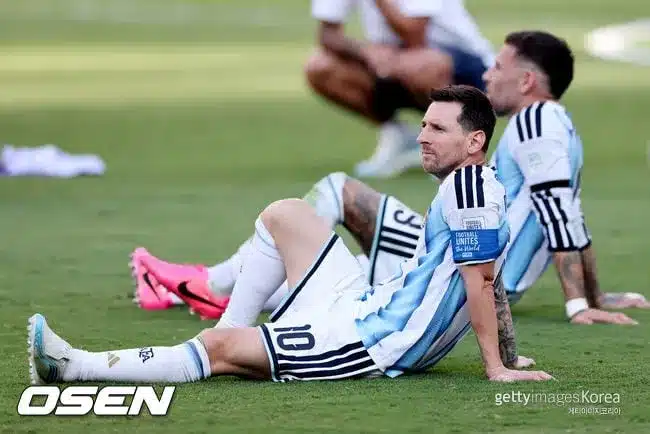
The final whistle blew, and Lionel Messi, the legendary Argentine captain, sat slumped on the ground. Around him, Spanish players celebrated their World Cup victory, a stark contrast to the somber scene unfolding on the pitch. Messi’s last World Cup appearance concluded not with the triumph he and his nation had long dreamed of, but with a heartbreaking 0-1 defeat to Spain in the 2026 FIFA World Cup final.
A Tense Final Falls Short of Expectations
The highly anticipated final, held at the New York New Jersey Stadium in East Rutherford, saw Argentina fall to Spain after extra time. Spain secured their second World Cup title, their first since 2010, thanks to a decisive goal from Ferran Torres in the second half of extra time. For Argentina, it was a bitter pill to swallow, marking a second consecutive final loss and a definitive end to Lionel Messi’s World Cup journey.
The match itself, however, failed to live up to the immense billing and expectations. Argentina had showcased a formidable attacking prowess throughout the tournament, scoring 19 goals en route to the final. They netted three goals against Cabo Verde in the Round of 32, another three against Egypt in the Round of 16, and three more against Switzerland in the Quarter-finals. Even in the Semi-finals, they managed to score two goals against England. Led by coach Lionel Scaloni, and propelled by the brilliance of Messi and Julián Álvarez, Argentina’s offense had been a constant threat.
Argentina’s Defensive Stance and Lack of Offense
In the final, however, the team appeared transformed. From the outset, Argentina adopted a deeply defensive posture, retreating into their own half. Even Messi was seen dropping back to help defend as Spain controlled possession high up the pitch. When possession was regained, Argentina struggled to build attacks effectively. Spain’s strategy involved packing most of their field players, excluding the goalkeeper, into their own half, creating a suffocating defensive block.
Argentina found themselves unable to break through Spain’s organized defense, focusing primarily on regaining possession rather than launching attacks. Messi, in particular, had a minimal impact on the game in the opening stages. Within the first 20 minutes, he touched the ball only twice, a testament to how little the ball reached the Argentine attack. Passes from midfield failed to penetrate Spain’s lines, and attacks down the flanks were stifled by Spain’s defensive pressure.
The first half concluded with a staggering statistic: Argentina registered zero shots. There were no touches of the ball within the Spanish penalty area. The second half offered little change in the game’s dynamic. Coach Scaloni attempted to inject more energy into the midfield by substituting Nicolás González for Leandro Paredes at the start of the second half, aiming to disrupt Spain’s possession and strengthen the midfield battle.
A Tactical Battle and Missed Opportunities
The match evolved into a physical contest, with both sides engaging in robust challenges. Paredes received a yellow card shortly after coming on for a foul on Rodri. Argentina continued to make substitutions, bringing on Nahuel Molina for Gonzalo Montiel, followed by Paulo Dybala for the injured Cristian Romero and Lisandro Martínez for Nicolás Otamendi, as they reshuffled their defense due to injuries to center-backs Romero and Otamendi.
Spain responded by introducing Ferran Torres, Pedri, Nico Williams, and Mikel Merino to bolster their attacking intent. Despite Argentina’s defensive adjustments, Spain’s shot count steadily increased. Goalkeeper Emiliano Martínez made several crucial saves, denying Spain on multiple occasions. Astonishingly, while Argentina had yet to register a single shot, Martínez had already made 10 saves.
Argentina’s goalless streak in shots continued for the entire 90 minutes of regulation time. This marked a historic low, as Argentina became the first team in World Cup final history, since records began in 1966, to fail to record a single shot during regular time. Their strategy appeared to be focused solely on avoiding defeat, relying on Martínez’s heroics in a penalty shootout.
Extra Time Drama and a Decisive Goal
This plan became more complicated when Enzo Fernández received a second yellow card in the 30th minute of extra time for a reckless tackle on Pau Cubarsí, reducing Argentina to 10 men. Martínez continued to be a formidable presence, saving a header from Nico Williams in the first half of extra time. Although Merino’s goal was later disallowed due to an offside call against Williams, Argentina remained hopeful of reaching a penalty shootout.
The deadlock was finally broken just 37 minutes into the second half of extra time. Pedro Porro delivered a cross from the right, which Williams headed down to Torres. Torres then fired a left-footed shot past the goalkeeper to score Spain’s decisive goal, their 20th shot of the match. It was only after conceding that Argentina began to push forward with any real urgency.
Nicolás Otamendi moved up to the furthest point of attack, and passes were directed towards Messi. Crosses from the flanks became more frequent. In the dying moments of extra time, Argentina created chaos within the Spanish penalty area. Commentators noted Argentina’s belated offensive efforts with sharp criticism. Guy Mowbray of the BBC remarked, “Lo and behold, Argentina can play,” a sarcastic jab at the team’s earlier lack of attacking intent.
The BBC highlighted that Argentina played more football in the final 5-10 minutes of regular time than they had in the entire 90 minutes prior. Their offensive push came too late, after conceding the goal. The risk-taking began only after falling behind.
A Missed Chance and a Somber Conclusion
In the final moments of extra time, a crucial opportunity fell to Argentina. Messi’s corner kick was partially cleared and fell to Simeone near the goal. However, as he leaned back, his shot sailed over the crossbar. BBC commentator Alan Shearer lamented, “Argentina isn’t likely to get a better chance than this,” and indeed, it was their final significant opportunity.
As the final whistle sounded, Spanish players flooded the pitch in jubilation. In contrast, Messi remained seated, gazing at the scene. The BBC captured the poignant moment: “Tears of joy on one side, tears of disappointment on the other. Messi sits on the pitch, watching the scenes unfold around him. Was this the final glimpse of a great player on the world stage? Only time will tell.”
While Messi had led Argentina to their first World Cup title in 36 years in 2022, earning the Golden Ball as the tournament’s best player, this final did not offer a fairytale ending. Despite scoring 19 goals leading up to the final, Argentina failed to register a single shot during regulation time in the most critical match. They struggled to get the ball to Messi and lacked the courage to attack until it was too late. Coach Scaloni’s defensive tactics, bolstered by goalkeeper Emiliano Martínez’s saves, held Spain for 105 minutes. Had they secured a victory, this pragmatic approach might have been lauded. However, conceding the single goal changed everything. Argentina’s belated foray into attacking football proved insufficient. Messi’s potential final World Cup ended not with a victory lap, but with him sitting alone on the field, watching Spain celebrate their triumph.
