

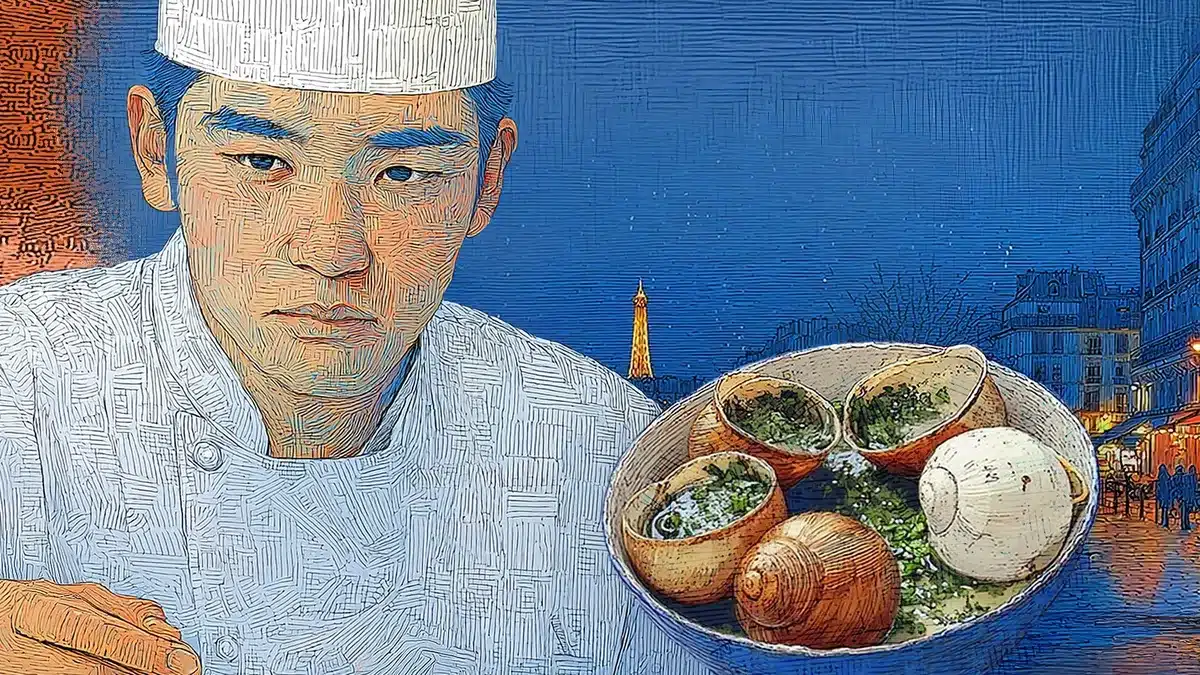
A Culinary Odyssey: Chef Kim Won-il’s Path to Parisian Kitchens
The journey to mastering French cuisine began with a challenging 24-hour flight from Gimpo Airport, a transit through Alaska, and finally, arrival in Paris. Onboard the KLM flight to Tokyo, then onward to Paris, I was accompanied by roughly 80 passengers, 40 of whom were newborn Korean babies being adopted by families abroad.
Upon landing in Paris, I immediately sought out Chef Gagey, a contact from my emergency list. He led me to a high-end French restaurant tucked away behind a department store in the city center. Presenting my letter of introduction and resume, provided by Mr. Ishinabe, I was warmly welcomed. When I mentioned I had no accommodation, Chef Gagey generously offered a room in his own home.
Chef Gagey had been practicing authentic French cuisine in France for three decades and had even received the ‘Culinary Citizen’s Rights’ from the French government, allowing him to reside there. During my breaks, he arranged for me to attend French language classes at the Alliance Française in Paris.
The Rigors of a Parisian Kitchen
My culinary career in Paris officially began at a French restaurant located in a back alley near Galeries Lafayette. On my first day, the French chefs were not particularly welcoming. My introduction, “Bonjour. Enchanté de vous rencontrer. Je m’appelle Won Il Kim. Je suis coréen” (Hello. Nice to meet you. My name is Won Il Kim. I am Korean), was met with dismissive “Where do you think you are?” remarks. The feeling of embarrassment and anger was immense. While Japan had embraced French culinary arts and produced many talented chefs since the Meiji era, Koreans were a rarity in such establishments at that time.
My first test was learning the proper way to prepare white and green asparagus. In France and Japan, if you don’t master a technique after the first lesson, you won’t be given further tasks. From then on, my mornings were spent meticulously cleaning vegetables: onions, potatoes, eggplants, mushrooms, green beans, carrots, and various herbs like broccoli, cauliflower, Brussels sprouts, zucchini, and spinach.
A Double Life: Day and Night
During the week, I worked at the French restaurant. By night, I toiled at Genji, a Japanese bento box specialty shop. My work began at 2 AM, preparing dishes until 11:40 AM the next day, delivering bento boxes to about 30 high-end department stores across Paris.
My earnings were around 4,500 to 5,000 francs per week. This income covered my rent for a two-room loft apartment, daily expenses, transportation, and the occasional purchase of books. My primary income stemmed from the bento delivery service; the French restaurant work was unpaid. At the restaurant, the owner chef would collect tips and distribute them among the staff.


The ingredients at the French restaurant were delivered primarily in wooden crates. The freshness and tenderness of the produce were astonishing. On days when I felt uninspired, I would sit at a nearby cafe, sipping coffee and enduring the tedious, unpleasant, and exhausting days.
An Unforgettable Trip to Deauville
One day off per week, I assisted Chef Gagey at his restaurant. Thanks to Mr. Ishinabe’s introduction, I received special treatment. One day, Chef Gagey asked me to accompany him to Deauville for a mussel dish called ‘moules marinières’. This establishment was known for its owner who would sail out to catch fresh mussels for incoming orders. The owner, myself, and Chef Gagey went out on a boat and collected the mussels ourselves.
After cleaning them thoroughly, we steamed them with shallots and white wine. The mussels were then separated from their shells and served with a ‘monter une sauce au beurre’ (a butter sauce) for the customers.
The Secret of Escargots and Potato Soup
One day, Chef Gagey asked if I had ever tried escargots. Having tasted them a few times in Seoul, I replied affirmatively. He then offered to show me a snail farm in Burgundy. We drove for two days and one night to reach Burgundy.
Burgundy is renowned for its vineyards and winemakers. Underneath the grapevines, snails the size of a fist were abundant. During the rainy season, they would fall to the ground. We collected these fallen snails, washed them, and placed them in a sieve with flour. The snails would crawl, shedding their sticky secretion. This process was crucial for preparing them for cooking.
After washing them thoroughly and removing the shells, the shells were boiled with soda to make them pristine white. Once dried, the snail meat was placed back into the shells. Topped with a garlic butter sauce (minced garlic, butter, parsley, salt) and baked in the oven, it became ‘escargots à la bourguignonne’. Remarkably, this dish was considered a commoner’s food in bistros.
Chef Gagey took me to many places, sharing the knowledge he had acquired over 30 years in France. The potato soup, served cold and known as Vichyssoise, which is a summer staple in French brasseries, was also something I learned during my travels with Chef Gagey. The origin of Vichyssoise is believed to be the Auvergne-Rhône-Alpes region in southeastern France.
A Life Forged in Hardship
The episodes from my time as an expatriate could fill several books. When I left Japan, my entire assets consisted of a determined spirit, a mere 20,000 yen, a used dictionary purchased from a secondhand bookstore, and a healthy body – that was all.
The abject poverty I endured made me a stronger human being than Damascus steel. The memories of that time are so painful that I often hesitate to recall them, even while writing. Thinking back on those days still brings tears to my eyes. Even while writing this account, my emotions surge, and I find myself clenching my fists and weeping alone.
I believe the life and happiness I enjoy today are a direct result of enduring that brutal hardship. Even now, when I feel my resolve wavering, I recall the kitchen floors of that era. It instantly strengthens my spirit. The most potent medicine for my life was the excruciating hardship I endured back then.
There were times when I resented my parents for bringing me into such a miserable existence. I remember nights spent weeping, asking, “Why did you give birth to me and make me live such a wretched life?” However, it was the mental and physical fortitude I ingrained during my time in the Marines that helped me rise again from that hellish existence. That same fighting spirit keeps me alive today.
Kim Won-il, Chef
Chef Kim Won-il is a distinguished Japanese chef with over 50 years of experience, a graduate of the prestigious Tsuji Culinary Institute, a leading institution for Japanese culinary education. Known as a ‘writing chef,’ he has authored over 100 books, including ‘Traditional Japanese Cuisine.’ He is currently compiling an encyclopedia of 6,700 cooking methods.
