

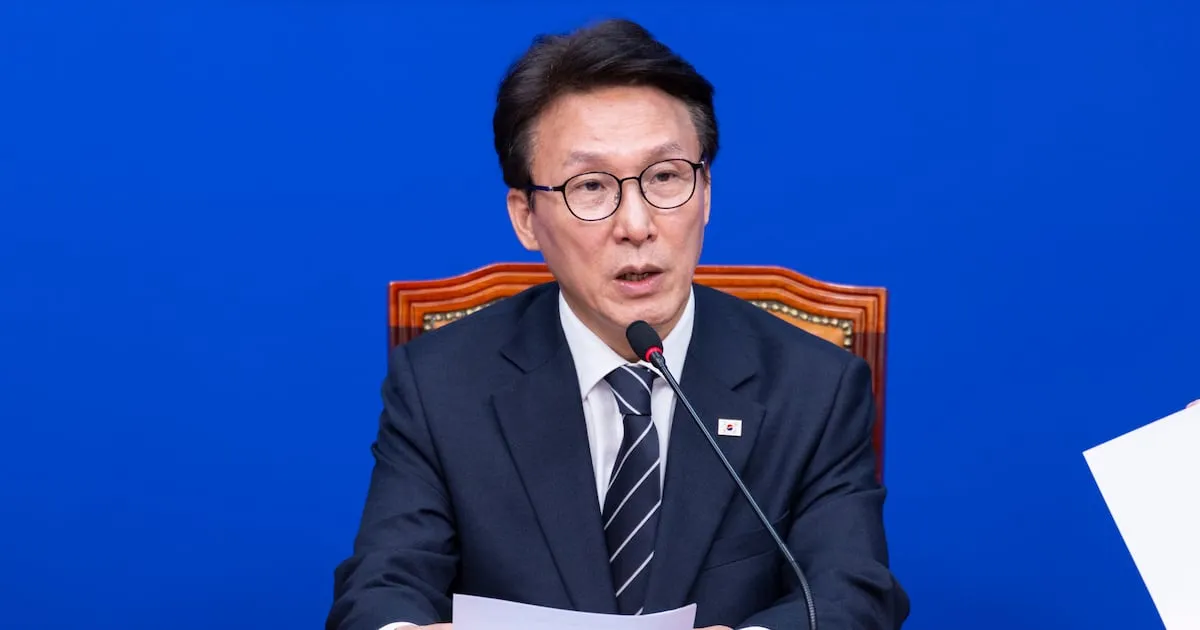
Kim Min-seok, leader of the Democratic Party, has called for a shift in political discourse, urging a move away from semantic disputes and towards substantive discussions on constitutional reform. He asserted that President Yoon Suk-yeol has clearly articulated his intentions regarding constitutional amendments and addressed the opposition’s concerns, stating it is time for a more serious debate on the matter.
Shifting the Political Narrative
Speaking at a press conference on May 20th, Kim Min-seok addressed the Democratic Party’s constitutional reform initiative. He emphasized that the perceived obstacles or “stumbling blocks” raised by the opposing party were, in his view, non-existent. This statement followed President Yoon Suk-yeol’s remarks on May 18th, where the President explicitly stated he had “no intention of seeking a second term.” The People Power Party had been demanding a clear declaration from President Yoon that he would not pursue a constitutional amendment to enable a second term.
Kim explained that President Yoon had consistently signaled his lack of intent for a second term since the presidential election campaign. Furthermore, Kim pointed out that the constitutional framework itself makes such a scenario impossible. He found the repeated demands for President Yoon to renounce a second term peculiar, likening them to demands that he reveal some hidden agenda.
Defining Constitutional Boundaries
The Democratic Party leader stressed the importance of codifying certain historical events and principles within the constitution. He specifically mentioned the May 18th Gwangju Democratization Movement (5.18), advocating for its inclusion in the constitution as a fundamental principle. He also called for a clear distinction between accepting the significance of the May 18th movement and opposing it.
Kim articulated the Democratic Party’s commitment to focusing on the people’s livelihood and national affairs. He stated that the party’s approach to constitutional reform is rooted in improving the lives of citizens and fostering national unity. The core of constitutional reform, he argued, should be about enhancing the welfare of the populace and unifying the nation.
A United Front for National Progress
Looking ahead, Kim Min-seok outlined a path for the Democratic Party centered on achieving success in several key areas: improving livelihoods, effective governance, successful constitutional reform, national integration, and securing a consecutive term in power. He issued a rallying cry for the nation, the people, the democratic forces, and the party itself to unite more firmly around President Yoon Suk-yeol.
Kim urged for collective support for the President and the government, pledging that the party would pursue its strategic objectives with unwavering determination. He emphasized that this unified approach is crucial for navigating the complexities of national governance and achieving shared goals. The party’s strategy, he indicated, would involve a comprehensive effort to strengthen the presidency and ensure the stability and progress of the nation.
Key Areas for Reform and National Unity:
- Focus on Livelihoods: Prioritizing policies that directly benefit the economic well-being of citizens.
- Constitutional Clarity: Ensuring the constitution reflects fundamental democratic principles and historical truths, such as the 5.18 Gwangju Democratization Movement.
- National Integration: Working towards unifying the country and fostering a sense of shared purpose among all citizens.
- Presidential Support: Providing a strong and stable foundation for the President and the administration to govern effectively.
- Party Strategy: Developing and executing a clear strategic plan to achieve the party’s objectives and secure future mandates.
Kim’s remarks signal a desire to move past what he perceives as unproductive political squabbles and to engage in a more meaningful dialogue about the future direction of the country, grounded in constitutional principles and the pursuit of national prosperity and unity.
