

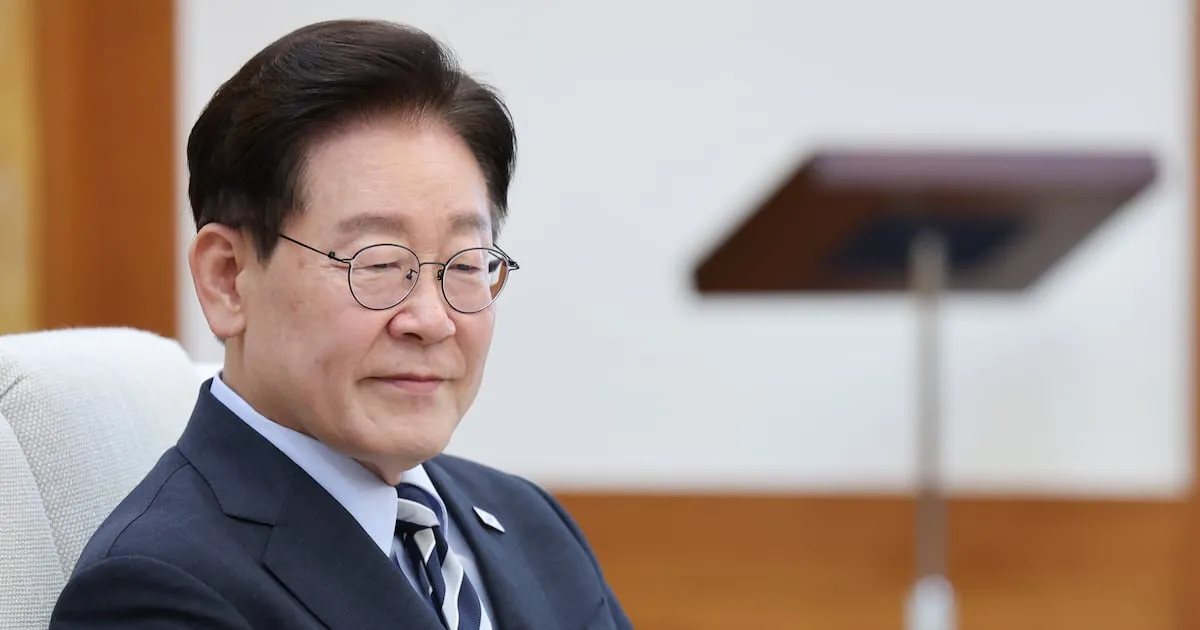
The approval rating for the current president has fallen to a new low of 37%, according to a recent poll by Korea Research. Concurrently, negative evaluations of the president’s job performance have reached their highest point, standing at 56%.
Presidential Approval Rating Declines
The survey, conducted by Korea Research between September 15th and 17th, involved 1,002 adults nationwide. The results, released on September 18th, indicated that 37% of respondents approved of the president’s job performance. This figure represents a 1 percentage point decrease from the first week of September, marking a new low.
Conversely, the percentage of respondents who disapproved of the president’s performance rose by 5 percentage points to 56%. This widening gap between positive and negative assessments now stands at 19 percentage points.
Regional and Age Demographics Show Varied Responses
Analysis of the survey data reveals significant variations across different regions and age groups.
Regional Breakdown:
- Seoul: Positive evaluations stood at 30%, while negative assessments reached 64%, more than double the positive rate.
- Incheon and Gyeonggi Province: 39% approved, and 53% disapproved.
- Daejeon, Sejong, and South Chungcheong Province: 35% approved, and 58% disapproved.
- Busan, Ulsan, and South Gyeongsang Province: 34% approved, and 61% disapproved.
- Daegu and North Gyeongsang Province: Approval ratings were lowest in this region, with only 26% approving and 69% disapproving.
- Jeonnam, Gwangju, and North Jeolla Province: This region showed a majority in favor, with 61% approving and 31% disapproving.
Age Group Analysis:
- Ages 18-29: 33% approved, and 53% disapproved.
- Ages 30-39: 31% approved, and 62% disapproved.
- Older age groups (50s, 60s, and 70s and above) also showed a higher proportion of negative evaluations.
- Ages 40-49: This group was evenly split, with both positive and negative evaluations at 47%.
Key Reasons for Negative Evaluations
The survey also sought to identify the primary drivers behind the negative assessments of the president’s job performance. The most cited reason was the government’s real estate policy, mentioned by 20% of respondents who disapproved. Personnel appointments (16%) followed as the second most significant factor contributing to negative sentiment.
Conversely, for those who gave positive evaluations, foreign policy was the most highly regarded aspect of the president’s work, cited by 26% of positive respondents.
Political Party Support
In terms of political party support, the Democratic Party garnered 40% of the vote in the survey. The People Power Party received 27%. The other parties, including the New Reform Party and the Reform Party, each received 3% support.
Survey Methodology
The poll was conducted using a random digit dialing (RDD) system via telephone interviews (CATI) with mobile phone numbers provided by three telecommunication companies. The response rate for the survey was 9.8%. The margin of error at a 95% confidence level is ±3.1 percentage points.
Further details regarding the survey findings can be found on the website of the Central Election Survey Deliberation Commission.
