

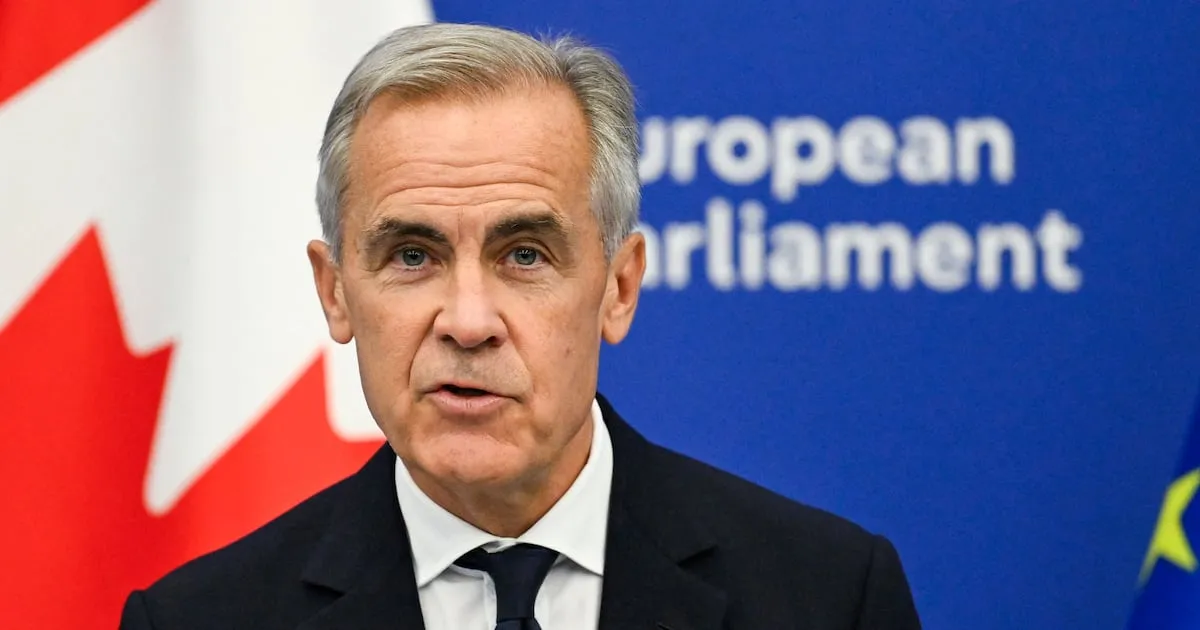
Canadian Prime Minister Justin Trudeau has expressed a positive stance on the European Union’s proposal to grant Canada associate member status. Speaking in Strasbourg, France, Trudeau stated that while Canada and Europe are each strong individually, their combined strength is even greater.
EU Proposes New Partnership with Canada
The initiative was formally introduced by Ursula von der Leyen, President of the European Commission, during a speech on the future of European policy. Von der Leyen proposed opening the door for Canada to become the EU’s first associate member, a move Trudeau has welcomed. He indicated that public opinion in Canada largely favors closer ties with Europe, describing the proposed alliance as a unique and constructive approach to defining future partnerships.
Strategic Cooperation in Critical Minerals and Energy
Prime Minister Trudeau highlighted the potential for significant collaboration between Canada and the EU, particularly in the realm of critical minerals. Canada possesses substantial reserves, with over 34 types of essential mineral resources. Trudeau suggested that a partnership could fulfill Europe’s need for stable supply chains, support Canada’s advanced processing capabilities, and contribute to shared objectives in energy transition and defense.
Following his address, Trudeau held a joint press conference with Roberta Metsola, President of the European Parliament. He clarified that the final structure of the proposed partnership, which he referred to as a “Partnership for the Future” rather than solely “associate member” status, would ultimately be decided by the Canadian Parliament. He noted that von der Leyen had used both terms and that the naming convention was a matter for Europe to resolve.
Further discussions are anticipated at the upcoming EU summit scheduled for the end of next month, where the details of the bilateral relationship are expected to be further defined.
Mixed Reactions and International Context
The proposal has not been met with universal acclaim. Notably, former U.S. President Donald Trump voiced opposition, suggesting that if Canada’s move was perceived as a hostile act, the United States might impose significant tariffs or halt trade with Europe on various products. This reaction underscores the geopolitical sensitivities surrounding the proposed EU-Canada partnership.
Within the EU itself, some member states have expressed surprise at the sudden nature of the proposal. French Foreign Minister Jean-Noël Barrot indicated that the proposal had not yet been discussed among member states. He stated that France would determine its position after a thorough review of the specific details included in the plan.
The EU’s framework for international agreements allows for treaties with third countries or international organizations. Historically, the EU has established agreements with nations like Norway, Iceland, and Liechtenstein, forming a single market. However, the EU treaties do not contain specific provisions for an “associate member” status, suggesting that the proposed framework for Canada might be a novel approach to deepening ties beyond existing agreements.
Canada’s Position on Global Partnerships
Prime Minister Trudeau emphasized that Canada’s engagement with the EU is rooted in shared values and a mutual interest in strengthening democratic alliances. He pointed to polling data indicating strong Canadian support for a more intimate relationship with European nations. The concept of a “Partnership for the Future” aims to create a robust framework for cooperation that addresses contemporary global challenges, from economic stability to technological advancement and security.
The Prime Minister’s remarks suggest a forward-looking approach, positioning Canada as a key partner for Europe in an increasingly complex global landscape. The emphasis on shared prosperity and security underscores the potential benefits of such a deepened relationship, while acknowledging the need for careful consideration and parliamentary approval within Canada.
The upcoming summit will be a crucial juncture for clarifying the scope and implications of this proposed partnership, setting the stage for potential future collaborations that could reshape transatlantic relations.
