

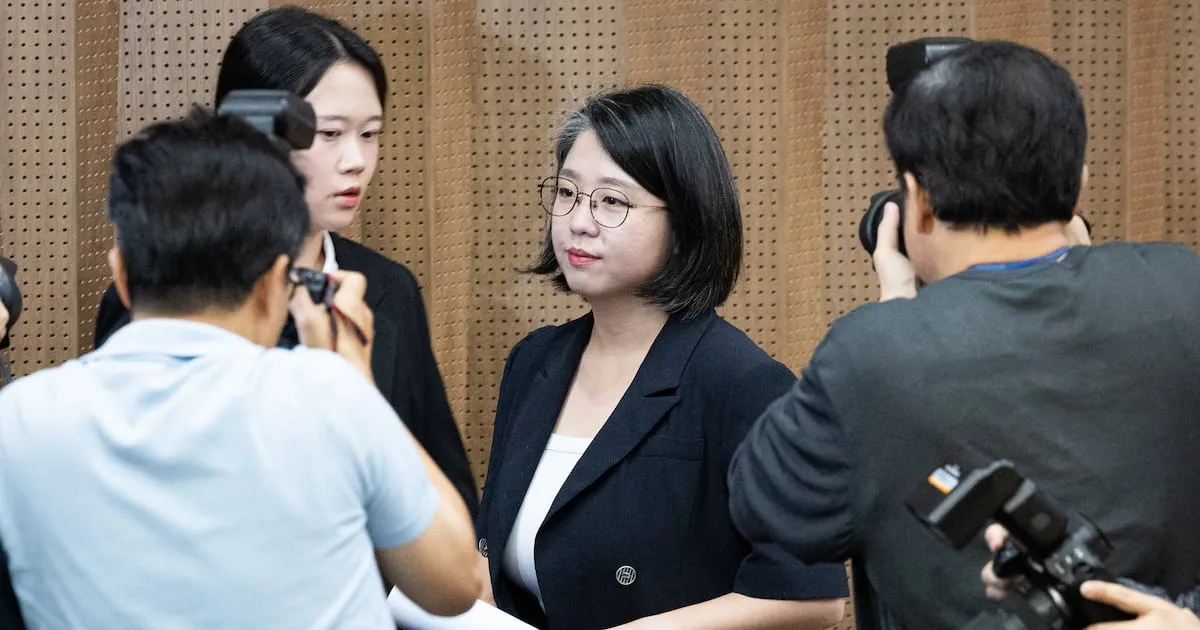
Yong Hye-in, a proportional representative member of the Basic Income Party, has withdrawn her nomination for the Gender Equality and Family Ministry post following public scrutiny over past remarks. The decision came after discussions involving the party and the Democratic Party, with officials confirming that the Democratic Party conveyed a message to Yong regarding the need to step down.
Background of the Nomination and Controversy
Yong Hye-in’s nomination for the ministerial position, announced on October 13th, quickly became a focal point of public debate. Critics pointed to Yong’s previous statements, particularly those made during her time as a legislator, which were perceived by some as not aligning with national sentiment or public expectations. While not legally disqualifying, the nature of these past comments raised concerns about her suitability for a sensitive government role.
Kim Tae-seon, the deputy head of the Democratic Party’s leader’s office, addressed the situation on Facebook shortly after Yong’s withdrawal announcement. He stated that while Yong’s nomination was not legally problematic, certain aspects of her past statements did not fully meet the public’s expectations and national sentiment. Kim revealed that he personally conveyed a message from Democratic Party leader Kim Min-seok to Yong, urging her to consider stepping down.
“Regarding candidate Yong, there were aspects that, while not legally violating the law, did not fully align with national sentiment and public expectations,” Kim wrote on Facebook. “Therefore, I, as the deputy head of the office, conveyed the decision of Party Leader Kim Min-seok, who considered public opinion, to candidate Yong to step down.”
Yong Hye-in’s Stance and Decision
In a press conference held earlier on the same day, Yong Hye-in had reiterated her commitment to resolving remaining 의혹 (suspicion or doubt) through a personnel committee. However, she also disclosed that she had received a request from the Democratic Party. According to Yong, the Democratic Party communicated that, considering the public’s lack of broad consensus on the dual appointment of a proportional representative legislator and a ministerial post, the candidate should make a decision.
Shin Ji-hye, the supreme council member of the Basic Income Party, confirmed that the request for Yong to withdraw was conveyed on the previous day, October 12th. When asked about the identity of the person who delivered this message, Shin deemed it inappropriate to disclose specific names.
Shin further explained that Yong Hye-in met with Kim Tae-seon on October 12th. Following this meeting, Yong discussed the matter with the leadership of the Basic Income Party before ultimately deciding to withdraw her nomination.
Government Response and Future Expectations
Kang In-sun, the senior presidential secretary for public relations, issued a statement following Yong Hye-in’s press conference. The statement expressed respect for Yong’s decision, viewing it as a personal choice made to alleviate the burden on state affairs and people’s livelihoods. “We respect the candidate Yong’s decision,” Kang stated. “We believe the candidate made the decision herself to reduce the burden on state affairs and people’s livelihoods.”
The Democratic Party’s deputy head of the leader’s office, Kim Tae-seon, concluded his statement by expressing his hope for Yong’s continued significant role in advancing progressive politics, completing progressive alliances, and reforming the election system. This suggests that despite the withdrawal from the ministerial post, Yong Hye-in remains a valued figure within the progressive political landscape.
Broader Implications
The situation highlights the delicate balance political parties must strike between nominating candidates with specific policy platforms and ensuring public acceptance and consensus. Yong Hye-in’s background as a vocal advocate for basic income and her past legislative actions were central to the debate. While her supporters viewed her as a strong candidate to champion progressive policies, opponents raised concerns about her perceived lack of broad appeal for a ministerial role that requires significant public trust and consensus-building.
The involvement of the Democratic Party in urging Yong’s withdrawal underscores the interconnectedness of political alliances and the pressure to maintain party unity and public image. The decision-making process, involving direct communication between party officials and the nominee, reflects the complex negotiations that often occur behind the scenes in political appointments. The presidential office’s response, emphasizing respect for the decision and framing it as a move to ease burdens, indicates an effort to manage the political fallout and move forward.
Ultimately, Yong Hye-in’s withdrawal from the Gender Equality and Family Ministry nomination serves as a case study in the challenges of political appointments, where past statements, public perception, and inter-party dynamics converge to shape outcomes. The focus now shifts to the Basic Income Party and the Democratic Party to navigate these complexities and continue their work on progressive reforms.
Conclusion
Yong Hye-in’s withdrawal from the Gender Equality and Family Ministry nomination marks a significant development in South Korean politics. The controversy surrounding her past remarks and the subsequent request for her to step down, conveyed by the Democratic Party, led to her decision. While the presidential office respects her choice, the incident underscores the importance of public consensus and careful consideration of nominees’ backgrounds in sensitive government positions. The Basic Income Party and its allies will likely continue to focus on their policy agenda, with Yong Hye-in expected to play a role in future progressive endeavors.
