

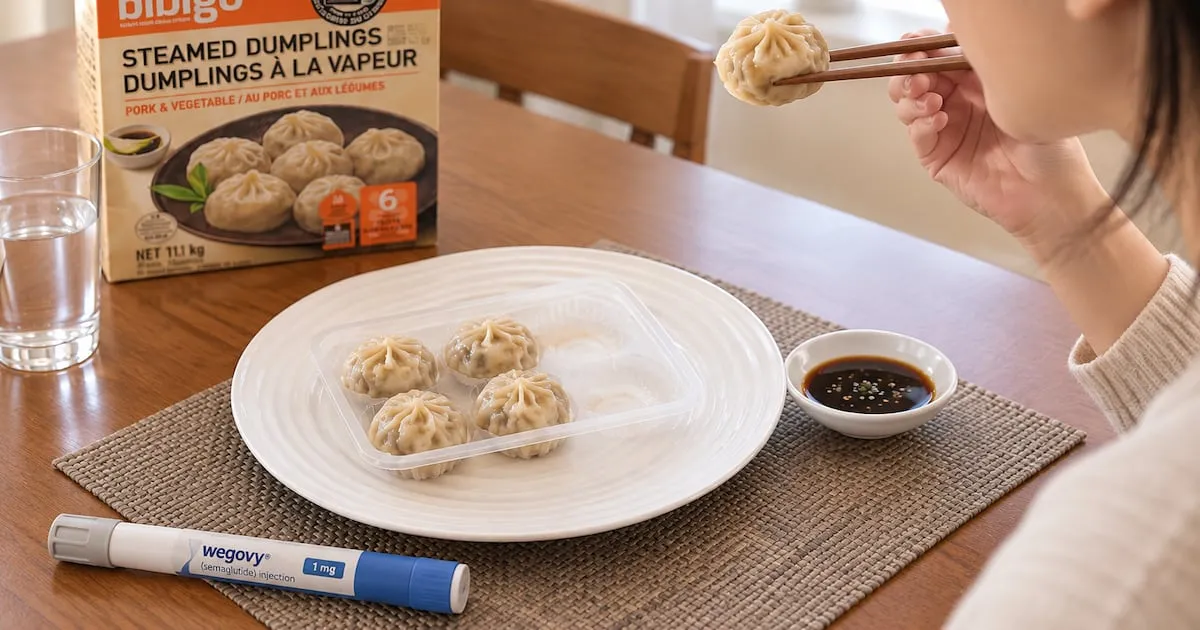
The growing popularity of GLP-1 based medications for weight loss, such as Mounjaro and Wegovy, is creating a ripple effect across the food industry. While many food manufacturers are concerned about reduced consumption, a segment of the packaging industry is experiencing a significant boom. Dongwon Systems, a leading South Korean food packaging supplier, is among the companies benefiting from this trend.
The GLP-1 Effect on Food Consumption
GLP-1 receptor agonists work by slowing gastric emptying, which leads to increased feelings of fullness and reduced appetite. Consequently, individuals taking these medications tend to eat smaller portions and opt for foods that are easier to digest in smaller quantities. This shift in eating habits is prompting changes in how food products are packaged and sold, particularly in the United States, a major market for these drugs.
A Gallup poll indicated that by 2026, an estimated 11% of U.S. adults are expected to be prescribed GLP-1 medications for weight management, a substantial increase from around 3% in 2024. This growing user base represents a demographic with considerable purchasing power, despite consuming less food. The high cost of these medications, still in their early stages of market penetration, contributes to the disposable income available for other goods and services, including premium food options in smaller, more convenient packaging.
Packaging Industry Adapts to Smaller Portions
In response to these evolving consumer behaviors, food companies are recalibrating their product strategies. CJ CheilJedang, for instance, has modified some of its Bibigo frozen dumplings sold at Costco in the U.S. to feature smaller packaging. Instead of larger packs, individual dumplings are now portioned into smaller, six-piece packs, with each pack containing a total of 36 dumplings. This approach has reportedly been well-received by consumers.
Retailers like Costco are also adjusting their product offerings by reducing the quantity of items sold in bulk. For example, a bagel product that was previously sold in packs of six, two packs per package (totaling 12 bagels), is now offered in packs of eight. While this change, coupled with a price adjustment from $5.99 for 12 to $4.99 for eight, has drawn some consumer complaints about reduced value, it reflects a broader market trend driven by the GLP-1 phenomenon.
This trend is not limited to the U.S. or specific product categories. Major food corporations, including South Korean giants like Nongshim, Ottogi, and Samyang Foods, as well as global players like Japan’s Ajinomoto, are increasingly adopting smaller, lighter packaging formats for their products. This strategy aims to maintain freshness and appeal to consumers who prefer smaller, more manageable portions.
The Cost of Smaller Packaging
From a food manufacturer’s perspective, the shift to smaller, individual packaging presents a significant challenge in terms of cost. Producing a large 2kg bag requires different materials and processes than creating multiple small, individually sealed trays or retort pouches. The need for advanced packaging technologies to maintain freshness in smaller units increases the overall cost of packaging materials.
However, for companies that supply these packaging materials, this trend is a boon. Dongwon Systems, a subsidiary of Dongwon F&B, is a prime example. As South Korea’s leading business-to-business (B2B) food packaging company, Dongwon Systems offers a wide range of packaging solutions, including glass bottles, cans, plastic and paper packaging, and aluminum foil. The company reported a 15% increase in operating profit for the first half of the year, reaching 44.4 billion KRW, compared to 38.4 billion KRW in the same period last year.
Dongwon Systems’ total revenue was 1.4335 trillion KRW last year, with 488.5 billion KRW generated from overseas sales, accounting for 36% of its total revenue. The company’s international growth is driven by exports of high-value packaging products such as cans, retort pouches, and functional coated packaging, as well as eco-friendly, recyclable packaging materials like laminated films. Through its acquisition of Vietnamese packaging companies TTP and MVP in 2019, Dongwon Systems has also secured a strong position for exporting seafood and pet food packaging to Southeast Asia and North America.
Challenges for Traditional Packaging Segments
While packaging suppliers like Dongwon Systems are thriving, not all segments of the packaging industry are equally benefiting. Samhwa Crown & Seal, a leading domestic manufacturer of bottle caps and part of the Haitai-Jinro Group, has seen its profitability decline. Despite a 3.4% increase in sales to 87.7 billion KRW in the first half of the year, operating profit dropped by 23.4% compared to the previous year.
Samhwa Crown & Seal’s revenue is heavily reliant on bottle caps, primarily for alcoholic beverages. The broader beverage market, particularly beer, has been sluggish, with a reported 15.3% decrease in beer shipments in South Korea this year compared to the previous year. This overall market contraction impacts companies focused on traditional packaging components.
However, even the beverage sector is not immune to the trend toward smaller portions. In the U.S. beer market, for instance, there’s a noticeable shift towards smaller can and bottle sizes. While standard beer bottles typically range from 340ml to 450ml, newer offerings are appearing in half-sized volumes of approximately 198ml to 255ml. Craft breweries like Sierra Nevada Brewing Co. and Constellation Brands (owner of Corona beer) are expanding their sales of mini cans and bottles, some as small as 135ml, catering to consumers who prefer lighter consumption.
Conclusion: A Shifting Landscape
The rise of GLP-1 medications is fundamentally altering consumer behavior related to food and beverage consumption. This shift is creating distinct winners and losers within the food and packaging industries. While food manufacturers face the challenge of adapting to reduced portion sizes, packaging companies specializing in smaller, more sophisticated, and portion-controlled solutions are poised for significant growth. Companies like Dongwon Systems are strategically positioned to capitalize on this evolving market, demonstrating how innovation in packaging can align with and even drive changes in consumer habits.
