

South Korea has decided to freeze the maximum regulated prices for petroleum products for another four weeks, aiming to stabilize domestic fuel costs amidst fluctuating international oil markets and growing public burden from recent extreme weather events. The decision, effective from July 22, will keep the cap on gasoline at 1,784 won per liter and diesel at 1,773 won per liter.
Government Decision on Fuel Price Caps
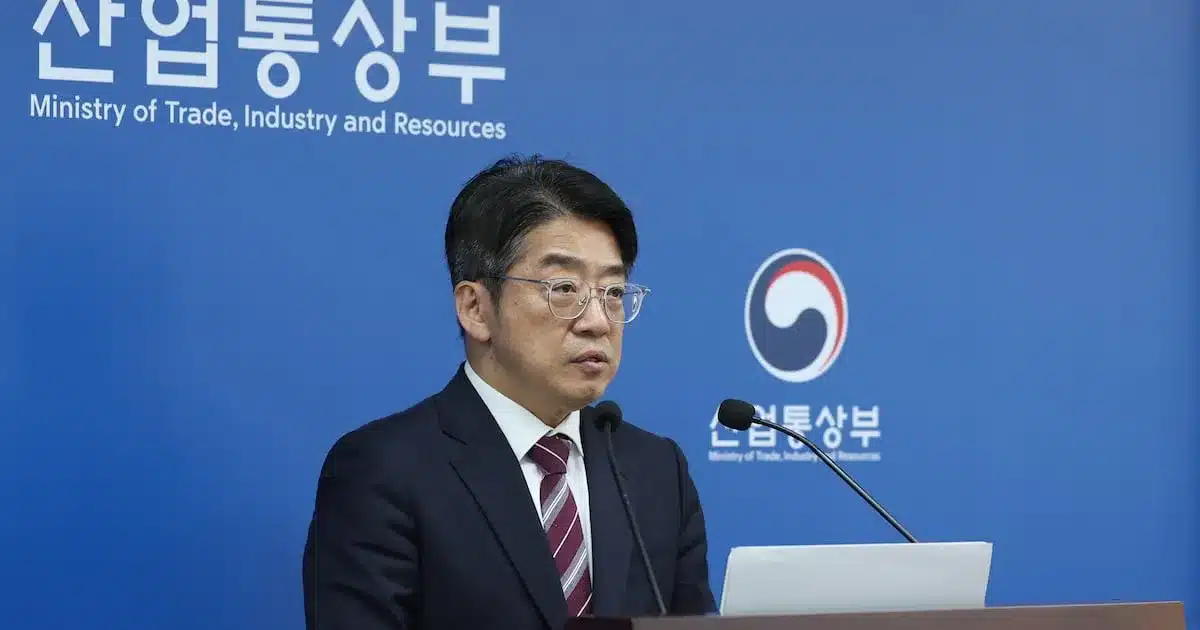
The Ministry of Trade, Industry and Energy announced on July 21 that the government would maintain the current price ceilings for petroleum products. This move comes after careful consideration of the global oil market situation and the need to alleviate the financial strain on consumers, particularly concerning the rising cost of living. The existing price caps are set at 1,784 won per liter for gasoline, 1,773 won per liter for diesel, and 1,380 won per liter for kerosene.
Factors Influencing the Decision
The international oil market has experienced significant price swings in recent weeks. After initially falling below $80 per barrel in early July, crude oil prices have surged back into the $90s. This rebound is largely attributed to the ongoing conflict in the Middle East, which has heightened geopolitical tensions. As of July 20, benchmark Brent crude oil was trading at $93.8 per barrel, Dubai crude at $95.6 per barrel, and West Texas Intermediate (WTI) at $87.8 per barrel. This represents an increase of up to $12 per barrel compared to the first week of July, when Brent crude was $81.7, Dubai crude $88.6, and WTI $82.5.
An official from the Ministry of Trade, Industry and Energy highlighted the renewed instability in the Middle East. “Following the expiration of the 60-day deadline for the U.S.-Iran nuclear deal memorandum of understanding (MOU) in June, tensions between the two countries have persisted, increasing the risk of instability in the Middle East,” the official stated. While acknowledging the potential for further international oil price increases, the ministry noted that current levels are comparable to those when the previous price cap was set.
Furthermore, the government cited the significant burden on citizens due to recent extreme weather conditions, including heavy rainfall and concentrated downpours. These events have exacerbated household expenses, prompting the government to factor in the cumulative impact on the public’s cost of living when making the decision to freeze fuel prices.
Domestic Fuel Price Trends
Domestic gasoline prices have been on a downward trend since June 27, when the government first implemented a price reduction of 150 won per liter for the capped products. As of July 20, the national average price for gasoline stood at 1,862 won per liter, and for diesel at 1,845 won per liter. Despite the recent international price hikes, the domestic capped prices are intended to provide a buffer against more drastic increases at the pump.
Government’s Flexible Price Management Strategy
The South Korean government plans to continue its flexible operation of the maximum price system for petroleum products. This strategy involves a comprehensive consideration of various factors, including the evolving situation in the Middle East, the supply and demand dynamics of oil, the impact of inflation and living costs on households, and the necessity of demand management. By maintaining a dynamic approach, the government aims to balance the need for price stability with the realities of the global energy market.
The decision to freeze prices reflects a delicate balancing act. On one hand, international oil prices are sensitive to geopolitical events, particularly in the Middle East, which could lead to further upward pressure. On the other hand, the government is acutely aware of the domestic economic pressures faced by its citizens, which have been amplified by recent natural disasters. The price cap mechanism is a key tool employed to mitigate the immediate impact of global price volatility on the average Korean household.
Looking ahead, the government will continue to monitor international oil market trends and domestic economic conditions closely. The goal is to ensure that fuel prices remain as stable as possible, supporting economic activity while preventing undue hardship for consumers. The continued operation of the price cap system underscores the government’s commitment to managing the impact of external economic shocks on its population.
The current price caps are set to remain in effect for the next four weeks. During this period, the government will reassess the situation based on updated international oil price data and domestic economic indicators. This proactive approach aims to provide a degree of predictability for consumers and businesses alike, helping them to plan their finances in an increasingly uncertain global economic environment.
The Ministry of Trade, Industry and Energy emphasized that the decision was made with the public’s best interest in mind, seeking to cushion the blow of potential price shocks and contribute to overall economic stability. The government’s commitment to managing fuel prices remains a key component of its broader economic policy, particularly in light of ongoing global economic challenges.
