

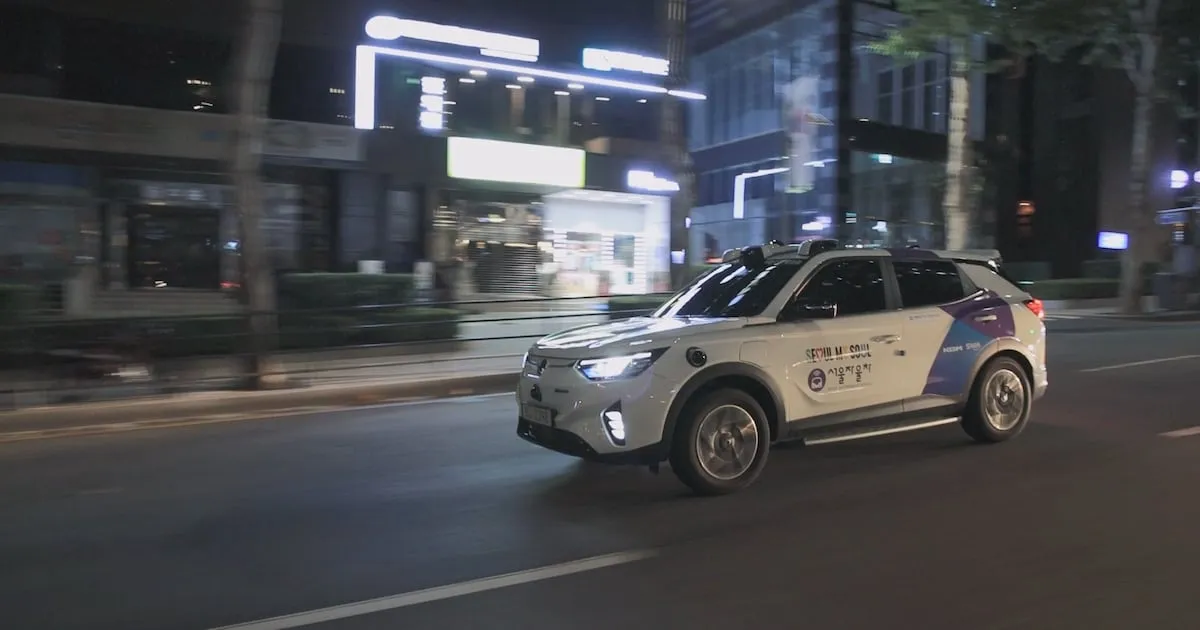
The South Korean government is reportedly exploring the possibility of allowing Chinese self-driving vehicles to enter the domestic market under specific conditions. This consideration comes as Chinese autonomous vehicle technology is undergoing real-world testing within South Korea to validate its driving data and safety standards. The move is seen as a response to the perceived gap in domestic self-driving technology competitiveness compared to China.
Inter-Agency Report Highlights Technology Gap
Key government ministries, including the Ministry of Land, Infrastructure and Transport, the Ministry of Economy and Finance, and the Ministry of Trade, Industry and Energy, have jointly submitted a report titled “Report on Inter-Agency Measures to Strengthen the Competitiveness of the Self-Driving Industry.” This report, compiled following visits to leading Chinese autonomous vehicle companies in Beijing from March 18-20, details findings on the advanced state of China’s self-driving sector.
The delegation visited prominent Chinese firms such as Baidu, Pony AI, and the Beijing Autonomous Driving Test Center. The government’s concern stems from the potential for Chinese companies, with their advanced technology, to capture a significant share of the South Korean market should they decide to enter it in full force. This concern is underscored by the substantial real-world testing mileage accumulated by Chinese players.
Mileage Disparities in Autonomous Driving Testing
Current figures highlight a considerable difference in testing experience. Baidu has reportedly accumulated 300 million kilometers of driving data, while Pony AI has logged 70 million kilometers. In stark contrast, the total mileage for domestic South Korean companies combined is only 13 million kilometers. This significant disparity has fueled discussions about how to foster domestic capabilities while potentially engaging with foreign technology.
On-the-Ground Assessment of Chinese Technology
Members of the government delegation experienced Chinese driverless vehicles firsthand, providing a critical assessment of their performance. Reports indicate that the vehicles demonstrated the capability for aggressive lane changes and overtaking maneuvers. Furthermore, they operated without encountering hazardous situations even in complex, narrow alleyways. The delegation concluded that the technology is at a level where commercialization is feasible.
This on-the-ground validation suggests that Chinese autonomous driving systems are robust and reliable in diverse urban environments, raising the stakes for domestic industry players who have yet to reach similar testing milestones.
Existing Presence and Future Ambitions of Chinese Companies
Chinese self-driving companies are not entirely new to the South Korean market. Pony AI, for instance, has already established a foothold. Following an investment in the KOSDAQ-listed company Jembax Link in 2024, the firm rebranded itself as Pony Link and incorporated self-driving into its business objectives. Pony AI received temporary operating permits last December and has been conducting trials with ten autonomous vehicles in areas like Gangnam in Seoul and Pangyo in Gyeonggi Province.
Baidu has also expressed intentions to enter the South Korean market and is reportedly in the process of reviewing relevant regulations and market conditions. This proactive approach by Chinese firms indicates a clear strategic interest in expanding their operations into South Korea.
Uncertainty Surrounding Conditional Entry Requirements
Despite the ongoing considerations, the South Korean government has not yet finalized the specific conditions or requirements for the potential conditional entry of Chinese self-driving vehicles. The details regarding safety standards, data privacy, cybersecurity protocols, and other regulatory aspects remain to be determined. This lack of defined criteria leaves the future landscape of autonomous vehicle competition in South Korea open to further development and negotiation.
The government’s deliberation process is expected to involve extensive consultation with industry stakeholders, technology experts, and relevant regulatory bodies to ensure that any decision made serves the best interests of national technological advancement and public safety. The outcome of these discussions will be crucial in shaping the trajectory of the autonomous driving industry within the country.
Fostering Domestic Innovation Amidst Global Competition
The government’s cautious approach reflects a dual objective: to embrace technological advancements while safeguarding the competitiveness of its domestic industry. The potential influx of advanced foreign technology presents both opportunities for innovation and challenges for local businesses. Strategies to bolster domestic research and development, encourage strategic partnerships, and create a supportive regulatory environment are likely to be key components of the government’s response.
As the global race for autonomous driving supremacy intensifies, South Korea is navigating a complex path. Balancing international collaboration with the nurturing of indigenous capabilities will be paramount in ensuring a robust and future-ready automotive sector.
