

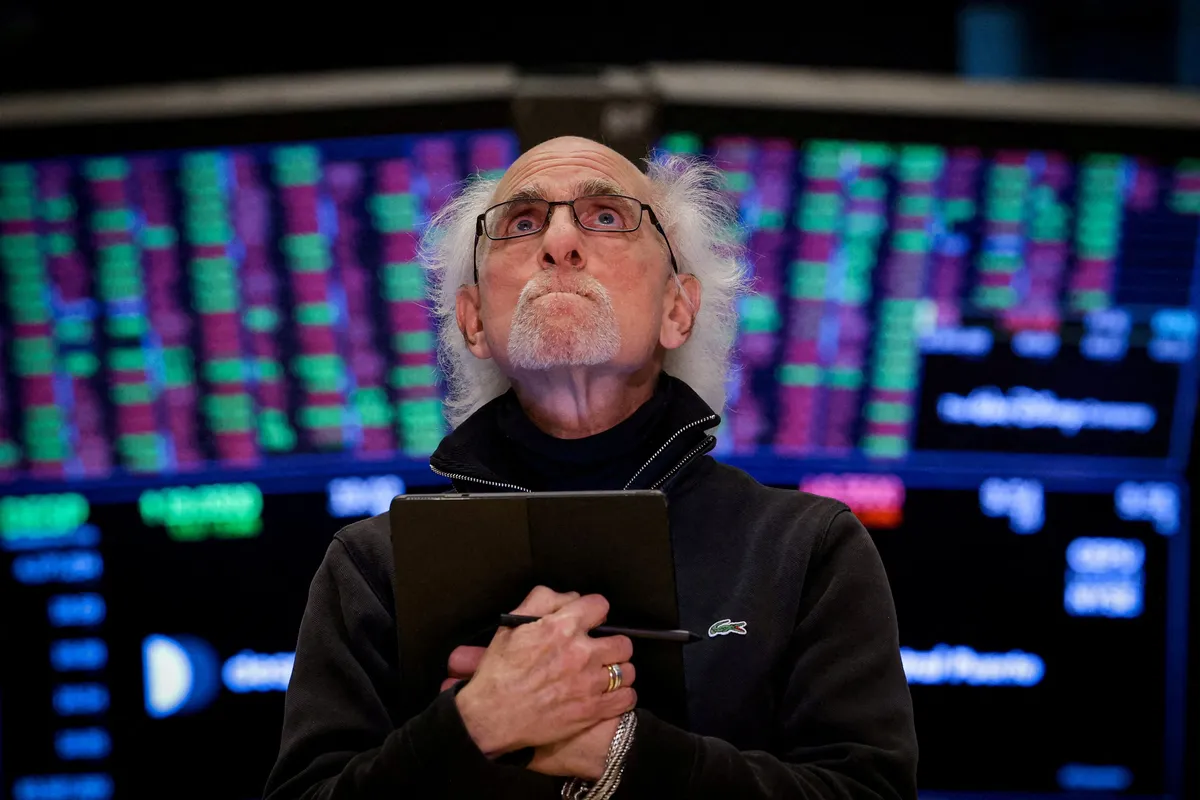
New York’s major stock indices concluded trading in the red on May 13th, as escalating geopolitical tensions in the Middle East and a subsequent surge in oil prices unsettled investors. The renewed concerns over inflation, fueled by rising energy costs, have sparked anxieties that the U.S. Federal Reserve might consider further interest rate hikes, dampening market sentiment.
Market Indices Decline Amid Geopolitical Fears
The Dow Jones Industrial Average, a barometer for large-cap U.S. stocks, finished the trading session down 138.37 points, or 0.26%, at 52,498.64. The broader S&P 500 index also experienced a downturn, closing 0.79% lower at 7,515.34. The tech-heavy Nasdaq Composite saw a more significant drop, plummeting 1.55% to end the day at 25,873.18.
Strait of Hormuz Tensions Drive Oil Prices Higher
The core driver behind the market’s unease was the heightened tension surrounding the Strait of Hormuz, a critical chokepoint for global oil transportation. Reports indicated ongoing confrontations between the United States and Iran in the strategic waterway. Former U.S. President Donald Trump announced via social media the reinstatement of maritime blockade measures to counter what he termed Iran’s “vessel provocations.” Trump stated that the U.S. would act as a protector of the strait, imposing a 20% transit fee on all vessels passing through in exchange for security.
This announcement triggered a sharp increase in international oil prices. West Texas Intermediate (WTI) crude futures surged by 9.4%, surpassing $78 per barrel. Similarly, Brent crude, the global benchmark, rose by 9.6%, exceeding $83 per barrel. The rapid ascent in oil prices immediately reignited fears of inflation, as energy costs are a significant component of consumer prices.
Inflation Worries Prompt Rate Hike Speculation
The market’s focus quickly shifted to the potential response from the Federal Reserve. Traders began to price in the possibility of further interest rate increases aimed at curbing inflationary pressures. Christopher Waller, a Federal Reserve Governor, commented that interest rate hikes might be necessary to manage rising inflation. According to CME’s FedWatch tool, the probability of the Fed implementing a 0.25% rate increase in July climbed to over 41% following these developments.
Market analysts anticipate continued volatility in the near term. Ian Lyngen, a strategist at BMO Capital Markets, noted that the situation in the Strait of Hormuz is currently dictating global market price trends and could worsen before stabilizing. Paul Christopher, a strategist at Wells Fargo Investment Institute, echoed this sentiment, predicting that the confluence of rising oil, inflation, and interest rates would fuel stock market fluctuations.
Ben Pulliam, Chief Investment Officer at WealthSums Investment, suggested that the market might trade within a narrow range until a definitive resolution to the Middle East conflict emerges. He emphasized that the underlying economic factors driving the market are complex and sensitive to geopolitical events.
SK Hynix and AI Semiconductor Stocks Face Sell-off
In a notable development, shares related to Artificial Intelligence (AI) and semiconductors experienced a broad decline. SK Hynix’s American Depositary Receipts (ADRs), recently listed on the Nasdaq, plummeted by 9%. This sharp drop mirrored a significant decline of over 15% in SK Hynix’s stock price on the South Korean market earlier in the day. The sell-off is largely attributed to investors taking profits after a rapid ascent in related stocks.
Other memory chip-related stocks also felt the pressure, with SanDisk falling 5.5%. Despite the recent pullback, some investment professionals remain optimistic about the long-term prospects of the AI sector. Pulliam commented that while there has been some recent rotation of capital, investment in AI-related ventures remains robust. Sonu Barghese, a strategist at Carson Group, predicted that the AI boom could re-emerge as the dominant market force once the current period of geopolitical uncertainty subsides and the official earnings season begins.
Fabio Basile, an analyst at JPMorgan, characterized the recent weakness in semiconductor stocks as a temporary phenomenon, stemming from an overconcentration of investment capital. He asserted that the fundamental growth trajectory of the AI industry remains intact.
Conclusion
The New York stock market’s performance on May 13th was heavily influenced by a volatile mix of Middle East geopolitical tensions and rising oil prices, leading to a broad market decline. Concerns over potential inflation and subsequent interest rate hikes by the Federal Reserve added to investor caution. While the semiconductor and AI sectors experienced a notable sell-off, many analysts believe the long-term outlook for AI remains strong, anticipating a potential market rebound as geopolitical risks subside and earnings season progresses.
