

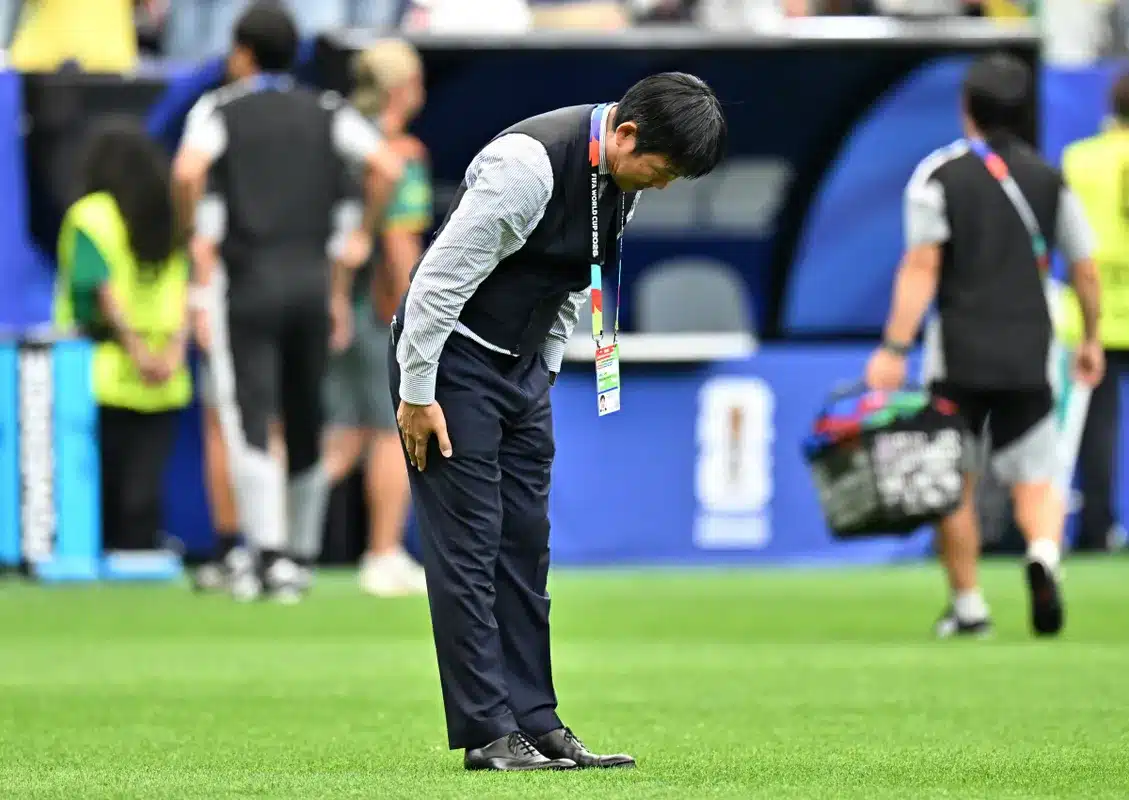
Following their early exit from the 2026 FIFA World Cup, Japanese football is undergoing a period of introspection, with former national team stars identifying individual player development as a key area for improvement. While the team has historically relied on strong teamwork, legends like Yasuyuki Konno and Keisuke Honda suggest that a greater emphasis on individual skill and growth is necessary for Japan to advance further in future tournaments.
Japan’s World Cup Struggles and the Search for Answers
Japan’s journey in the 2026 FIFA World Cup concluded in the Round of 32, a familiar stage for the national team. Despite aspirations of reaching the knockout rounds, the team fell 1-2 to Brazil, marking another instance where their tournament run was cut short. This outcome has prompted a nationwide discussion within Japanese football circles about the underlying reasons for their performance.
Former Japan international Yasuyuki Konno, speaking during the broadcast of the Switzerland vs. Colombia match on November 8th (Korean time), expressed a degree of uncertainty about the exact causes of Japan’s limitations. “We’ve never advanced beyond the Round of 16 before, so honestly, I don’t know the answer,” Konno admitted. Japan has historically struggled to progress past the group stages in the World Cup, never having secured a victory in the tournament’s knockout phase.
Legends Weigh In: The Importance of Individual Talent
Keisuke Honda, another prominent figure in Japanese football and a former national team player now active as a pundit, echoed Konno’s sentiment. He stated, “Japanese football hasn’t experienced what lies beyond this point, making it difficult to provide a definitive answer.” Honda elaborated on the diverse strategies employed by successful teams in the World Cup, noting that some rely on formidable teamwork, while others leverage the exceptional talents of individual players.
“There are various approaches,” Honda observed. “The crucial factor is how Japan’s unique style is applied. While the Japanese national team is undoubtedly strong in terms of teamwork, it wasn’t enough to overcome the challenges of reaching the next stage this time.”
Honda’s Call for Individual Skill Enhancement
Even before the match against Brazil, Honda had emphasized the need for individual player growth. He suggested that while Japan’s tactics and preparation were nearly flawless, the primary area requiring enhancement was the development of individual player capabilities.
“The fundamental reason for defensive vulnerabilities lies with the individual,” Honda asserted. “If the current Japanese national team players strive to play in higher-level leagues or clubs and compete daily, their individual skills will inevitably improve.”
Looking at the long term, Honda believes the defeat against Brazil highlighted the necessity for significant reforms within the football association. “From a medium-to-long-term perspective, the loss to Brazil has made us realize the need for the entire association to implement educational reforms for players aged 10 to 20 over the next decade or two,” he commented. He stressed the importance of returning to the basics and focusing on nurturing talent from a young age.
Broader Issues: Grassroots Football and Development
Honda also drew attention to broader societal factors affecting football development in Japan. He shared a post on his personal social media on July 7th, which quoted a sentiment that resonated deeply with him: “How can a country that prohibits playing football in parks become a football powerhouse?” Honda agreed, stating, “Truly, that is the correct way of thinking.”
Data from Japanese media outlets indicates a disparity in local regulations regarding the use of public spaces for football. In 2019, among smaller Japanese cities with a population of less than 100,000, 63.9% of local governments did not restrict football activities in parks. However, this figure dropped significantly to 14.3% in larger cities, including Tokyo, where only 18.2% of such areas allowed unrestricted football play.
This restriction in urban areas, where a larger pool of young talent resides, could potentially hinder the organic growth and widespread practice of the sport. The legends’ insights suggest that while tactical discipline remains a strength, fostering individual brilliance and addressing systemic issues, including grassroots access to facilities, are critical steps for Japanese football to achieve its World Cup ambitions.
Conclusion: A Path Forward for Japanese Football
The collective insights from Japanese football legends like Konno and Honda point towards a dual focus for the future: enhancing individual player skills through more competitive experiences and addressing the structural barriers that may limit grassroots engagement. While Japan’s commitment to teamwork is commendable, the path to consistent knockout-stage success in the World Cup may require a more robust development of individual talent and a more accessible environment for aspiring footballers across the nation.
