

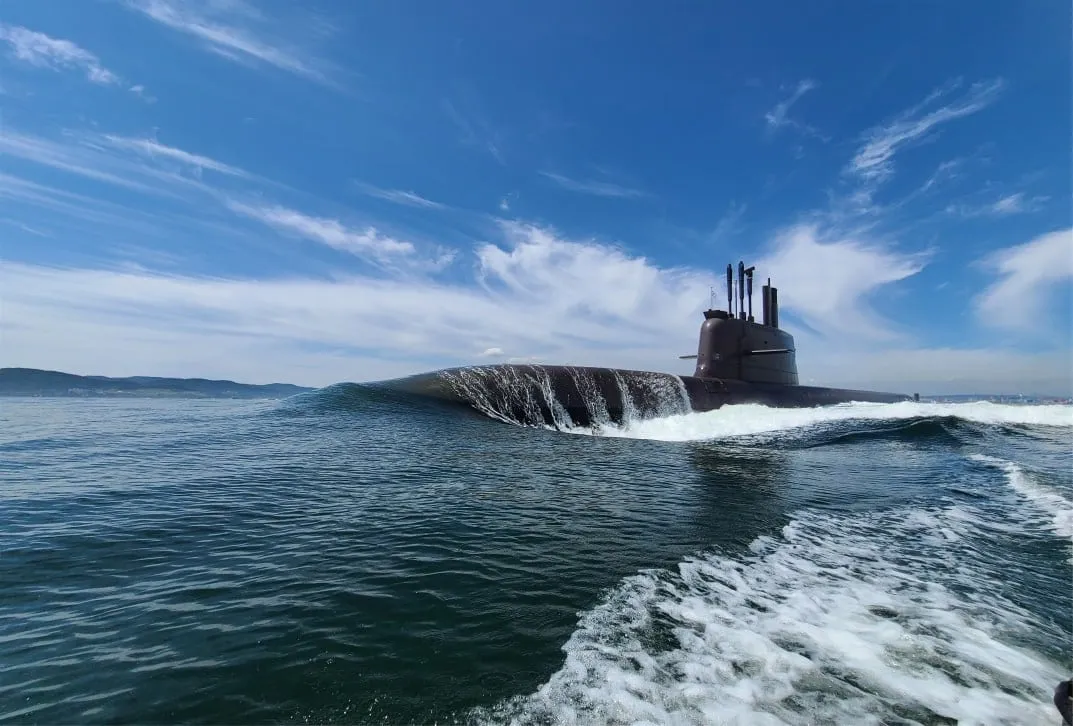
Germany is optimistic about securing a lucrative submarine contract with Canada, believing it has a significant advantage over its competitor, South Korea. The German government is actively campaigning for the project, known as the Canadian Surface Combatant (CSC) program, which involves the construction of up to 12 diesel-electric submarines to replace Canada’s aging fleet.
German Government’s Strong Push for the Contract
Lars Klingbeil, the German Minister of Finance, expressed confidence during a visit to the Thyssenkrupp Marine Systems (TKMS) shipyard. He stated that the entire German federal government is engaged in a comprehensive campaign to ensure the success of this defense cooperation with Canada.
Klingbeil emphasized Germany’s strong position in the bidding process, highlighting the superior quality of German manufacturing capabilities. “We are in a very advantageous position in many respects,” he remarked, underscoring the reliability and advanced technology offered by German defense contractors.
TKMS CEO Optimistic About Winning Bid
Oliver Burkhardt, CEO of TKMS, echoed the Minister’s optimism, stating, “We are confident that we have a strong chance of winning the contract.” He identified interoperability among NATO allies as a key selling point for their bid.
Burkhardt further explained that if TKMS secures the contract, it would represent the largest submarine procurement deal in the history of naval cooperation among NATO member states. The project aims to modernize Canada’s naval capabilities significantly.
Project Scope and Value
The Canadian Submarine Project (CSP) involves the acquisition of up to 12 new diesel-electric submarines to replace the Royal Canadian Navy’s current Victoria-class submarines, which are nearing the end of their operational life. The total value of the project, including construction, maintenance, repair, and operations (MRO) over 30 years, is estimated to be as high as 60 billion Canadian dollars (approximately $44 billion USD).
Competition Heats Up Between Hanwha Ocean and TKMS
The competition for this major defense contract is primarily between South Korea’s Hanwha Ocean and Germany’s TKMS. Both companies have been identified as strong contenders, with their respective governments actively supporting their bids.
South Korea has also been making a concerted effort to secure the contract. Kang Hoon-sik, a spokesperson for the South Korean presidential office, described the situation as a “50-50 situation” regarding the chances of winning. He highlighted the potential for a “win-win” scenario between Canada and South Korea due to their complementary defense structures.
South Korea’s Strengths in Naval Technology
Hanwha Ocean, a leading South Korean defense company, has already showcased its capabilities by being selected for the final decision group in the Jangbogo-III Batch-2 submarine project, reportedly beating out several international competitors. This achievement underscores Hanwha’s technological prowess and its ability to deliver advanced submarine solutions.
The competition is fierce, with both nations leveraging their industrial strengths and government support to win the significant contract. The final decision is expected to have a substantial impact on the global submarine market and the naval defense capabilities of the involved nations.
Canada’s Strategic Naval Modernization
The acquisition of new submarines is a critical component of Canada’s long-term defense strategy, aimed at enhancing its maritime security, intelligence gathering, and operational presence in various global theaters. The chosen design and manufacturer will play a crucial role in shaping the future of the Royal Canadian Navy.
