

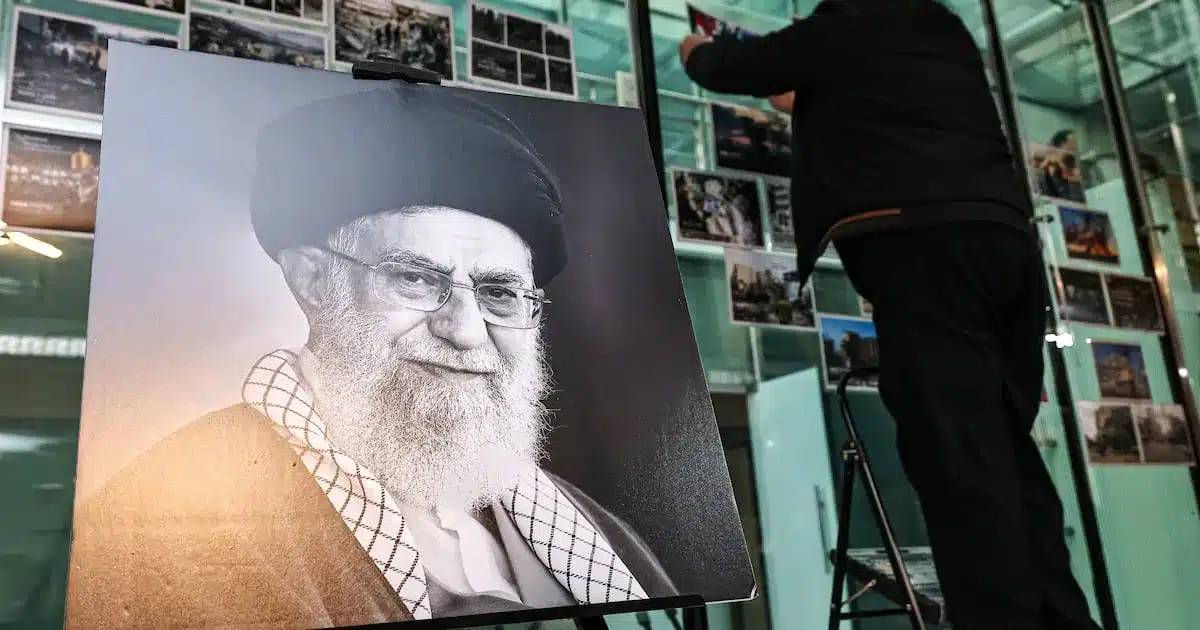
Iran has commenced a week-long funeral procession for its former Supreme Leader, Ayatollah Ali Khamenei, beginning on December 4th. The ceremonies mark the end of a 126-day period following his death, which the Iranian government attributes to attacks by the United States and Israel. The funeral events are scheduled to take place across several significant locations within Iran and Iraq, including the capital Tehran and the Shiite holy city of Mashhad.
Extensive Funeral Schedule Across Multiple Cities
The body of Ayatollah Khamenei was transported to the Imam Khomeini Grand Prayer Hall in Tehran on the day prior to the official start of the funeral. For two days, from December 4th, the public will have the opportunity to pay their respects at this location. Following the initial ceremonies in Tehran, the procession will move to Qom, a major religious center in central Iran, on December 6th. The funeral activities will then extend to Iraq on December 7th, with services planned in the Shiite holy cities of Karbala and Najaf, as well as Baghdad.
The culmination of the funeral events is set for December 9th at the Imam Reza shrine in Mashhad, located in northeastern Iran. Mashhad holds particular significance as it is the hometown of Ayatollah Khamenei and another important Shiite pilgrimage site. This extensive schedule underscores the profound respect and national mourning observed in Iran.
Anticipating Massive Public Turnout
Iranian officials have projected an unprecedented turnout for the public viewing ceremonies in Tehran on December 4th and 5th, anticipating that over 20 million people, more than 20% of Iran’s population, will gather. This figure is expected to surpass the attendance at the funeral of the first Supreme Leader, Ayatollah Ruhollah Khomeini, in June 1989, which drew an estimated 10.2 million mourners to Tehran. To accommodate the expected crowds, the Tehran municipality has prepared 50 million loaves of bread and opened approximately 5,000 mosques and 700 schools to serve as temporary shelters for attendees. Commercial businesses within the capital are mandated to close during this period to allow full participation in the national mourning.
International Dignitaries and Security Measures
The funeral is expected to draw a significant international contingent, with approximately 200 high-ranking officials from around 100 countries invited to attend. Notable attendees include Pakistan’s Prime Minister Shehbaz Sharif and China’s Vice Chairman of the Standing Committee of the National People’s Congress, He Wei. The Iranian government has also extended invitations to around 600 foreign journalists to cover the events. In anticipation of the large gatherings and potential geopolitical sensitivities, security measures have been significantly heightened. The area around the main prayer hall in Tehran has been effectively sealed off, and military forces and anti-riot units have been deployed throughout the city to maintain order and prepare for any contingencies. The decision to hold the funeral on a date coinciding with the 250th anniversary of the United States’ founding is seen by some analysts as a deliberate political statement aimed at the U.S.
Mourning Period and Political Undertones
The funeral arrangements have been notably delayed, considering the Islamic tradition of burying the deceased within 48 hours of death. This delay is widely interpreted as a precautionary measure against potential retaliatory actions from the United States and Israel, whom Iran blames for Khamenei’s death. The slogan chosen for the funeral, “We will certainly rise,” reflects Iran’s determination to seek retribution. Banners bearing Khamenei’s image and this slogan have been displayed throughout Tehran. The extended mourning period and the significant mobilization of resources highlight the deep impact of Ayatollah Khamenei’s passing on Iran and the broader geopolitical landscape.
The timing of these significant national events, occurring during a period of heightened regional tension, underscores the complex political and security environment in which Iran is operating. The government’s preparations and pronouncements suggest a strong intent to use the funeral as a platform to consolidate national unity and project a message of defiance and resolve to the international community.
