

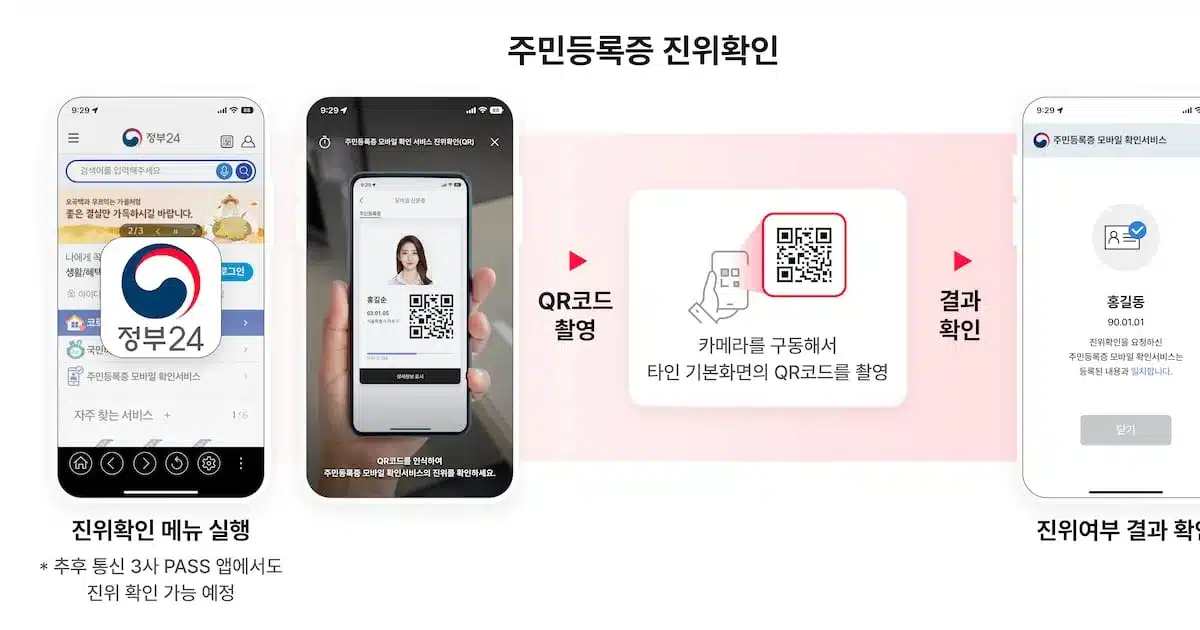
The South Korean government is currently evaluating the potential discontinuation of the mobile resident registration card verification service. The Ministry of the Interior and Safety announced on June 28th that it plans to decide by the end of this year whether to abolish the service, following an assessment of its effectiveness.
Background of the Mobile Resident Registration Card Service
The mobile resident registration card service embeds information typically found on a physical resident registration card, such as name, face, and resident registration number, into a smartphone QR code. This service was designed for convenience, allowing individuals to prove their identity and age for purchases like cigarettes at convenience stores or entry into establishments like bars.
However, concerns have been raised regarding the potential for QR code forgery, particularly with advancements in artificial intelligence. Additionally, the process requires business operators to directly scan and verify the authenticity of the QR code, which can be cumbersome.
Reasons for Reconsideration
The government is reportedly considering streamlining resident registration card verification processes due to the emergence of the ‘mobile resident registration card’ service, which offers similar functionality to the physical card. Launched in March of the previous year, the mobile resident registration card utilizes blockchain technology to prevent forgery and can serve as a replacement for the physical card.
An official from the Ministry of the Interior and Safety stated, “Approximately 8.7 million people are currently using the mobile resident registration card verification service. We have requested an evaluation to clearly determine the pros and cons of continuing or abolishing the service.”
Future Outlook
The evaluation will focus on the service’s utility, security vulnerabilities, and user adoption rates. The government aims to make an informed decision that balances convenience with the need for robust identity verification methods. Further details on the assessment criteria and timeline are expected to be released as the review progresses.
The existing mobile resident registration card verification service has been in place to offer a digital alternative for age and identity checks. Its potential discontinuation signals a move towards consolidating identity verification methods, likely favoring the newer blockchain-based mobile resident registration card.
User Impact and Alternatives
If the service is indeed scrapped, users who rely on it will need to revert to using their physical resident registration cards or the newer mobile resident registration card service. The government is expected to provide clear guidance and transition plans for users if the decision is made to discontinue the current mobile verification service.
The ongoing review highlights the government’s commitment to adapting digital services to evolving technological landscapes and user needs, while also addressing security concerns. The final decision will likely be communicated through official government channels.
