

Extreme Heat Amplifies Overcrowding Challenges in Correctional Facilities
CHUNGJU, SOUTH CHUNGCHEONG PROVINCE – The oppressive heat of mid-July has intensified the already severe overcrowding issues within correctional facilities, creating challenging conditions for both inmates and staff. A recent visit to the Chungju Women’s Correctional Institution revealed the stark realities faced by those confined within its walls.
Inside the Facility: A Glimpse into Daily Life
Upon entering the correctional institution, the air was thick with the humid heat of a 34.1°C (93.4°F) day. The initial impression of a sterile, orderly environment quickly gave way to the cramped living quarters. In one room, approximately the size of two small study rooms, 11 individuals were seen huddled together, a testament to the severe lack of space.
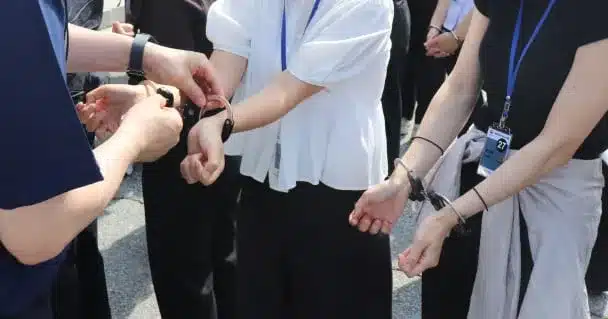
The process for new inmates is rigorous. After answering questions about their former lives, professions, and home environments, they undergo a thorough physical examination. This includes a meticulous inspection of hair, even down to the roots, to prevent the concealment of any sharp objects. Personal items like necklaces are confiscated, and even hair clips are prohibited to maintain security.
Following the examination, inmates are issued uniforms. The Chungju Women’s Correctional Institution, one of the few correctional facilities exclusively for women in the country, houses both convicted individuals and those awaiting trial. Convicted inmates wear a dark blue uniform, while those awaiting trial are in a lighter sky blue. During the summer, a thin sky-blue life vest is worn over a faded green short-sleeved top, paired with long trousers.
A numbered badge, indicating their inmate number ‘6001’ instead of a name, is affixed to the left chest. The facility also assesses the psychological state of new arrivals, as individuals with mental health conditions require separate management before being assigned to general population units.
Statistics from the Ministry of Justice indicate a significant rise in inmates with mental health conditions, increasing by 92% from 3,296 in 2016 to 6,345 last year.
Cramped Quarters and the Struggle for Comfort
Inmate ‘6001’ was led to the fourth floor of the housing block. The windows, positioned high on the wall, offered only a view of the sky. The assigned living space, a shared room, measures approximately 16.62 square meters (about 5 pyeong). While officially designated for five individuals, it often accommodates between nine and eleven.
This severe shortage of facilities means inmates spend most of their time in these rooms, eating and sleeping, except during designated times for exercise, work, or visits. On this particular day, ten inmates in uniform, along with one correctional officer, occupied the space, leaving little room to stretch out. Lying on the floor made it difficult to turn over, with many forced to sleep on their sides, increasing the potential for friction and conflict.
Correctional officers note that as temperatures rise, disputes over space become more frequent, a phenomenon described as a “fight for the fan.” The wall-mounted fans, designed to combat the heat, automatically switch off for ten minutes every 50 minutes of operation. The lack of continuous cooling creates a suffocating environment, leading to heightened irritability.
To address the issue of heatstroke, the Ministry of Justice is considering installing air conditioning units. While these would not be placed within individual cells but in the corridors, they would also improve the working conditions for correctional staff. Despite potential criticism, there is a growing voice from within the correctional facilities emphasizing the necessity of at least minimal cooling to prevent heat-related accidents.
Daily Routines and the Choice to Work
Meals are also consumed within these cramped quarters. Food is brought in containers, and inmates serve themselves as much as they desire. Some inmates reportedly skip meals or rely on snacks purchased with commissary funds to manage their weight.
Bathing is permitted once a day, but controlling the duration of showers in such a confined environment is practically difficult.
Mandatory Labor and Inmate Choices
Individuals sentenced to correctional facilities are not subject to mandatory labor unless they receive a sentence that includes penal labor. Those with suspended sentences are deprived of their freedom but are also obligated to participate in work programs. The process of going to a work site is referred to as “chu-yeok” (출역).
After lunch, a visit was made to the vocational training center, where inmates learn skills such as flower arrangement, baking, and hairdressing. These programs typically last a year, and the Ministry of Justice supports inmates in obtaining at least two certifications to aid in their successful reintegration into society upon release.
However, a significant number of inmates refuse to participate in “chu-yeok.” A source within the correctional facility stated, “More than half of inmates serving suspended sentences are not participating in work. While they would receive wages for working, if their families can sufficiently send them commissary funds, they prefer not to work and get sweaty.” Enforcing participation for those who refuse is reportedly difficult.
Inside the living areas, shelves displayed items purchased by inmates with commissary funds. These included vitamins, toothpaste, and skin and lotion products commonly found in the market, reflecting the specific needs of a women’s correctional facility.
Inmates address each other based on age, using terms like ‘Unnie’ (older sister) or ‘Aegi-ya’ (baby), and even intimate terms like ‘Jagiya’ (darling) among close friends. The correctional facility discourages such close bonding, fearing that these relationships might lead to further criminal activity after release.
Jeong Seong-ho, the head of the Ministry of Justice, visited the Chungju Women’s Correctional Institution and commented, “The occupancy rate here is about 120%, indicating a very serious problem of overcrowding. We will strive to improve the working environment for our staff and ultimately ensure public safety.”
