

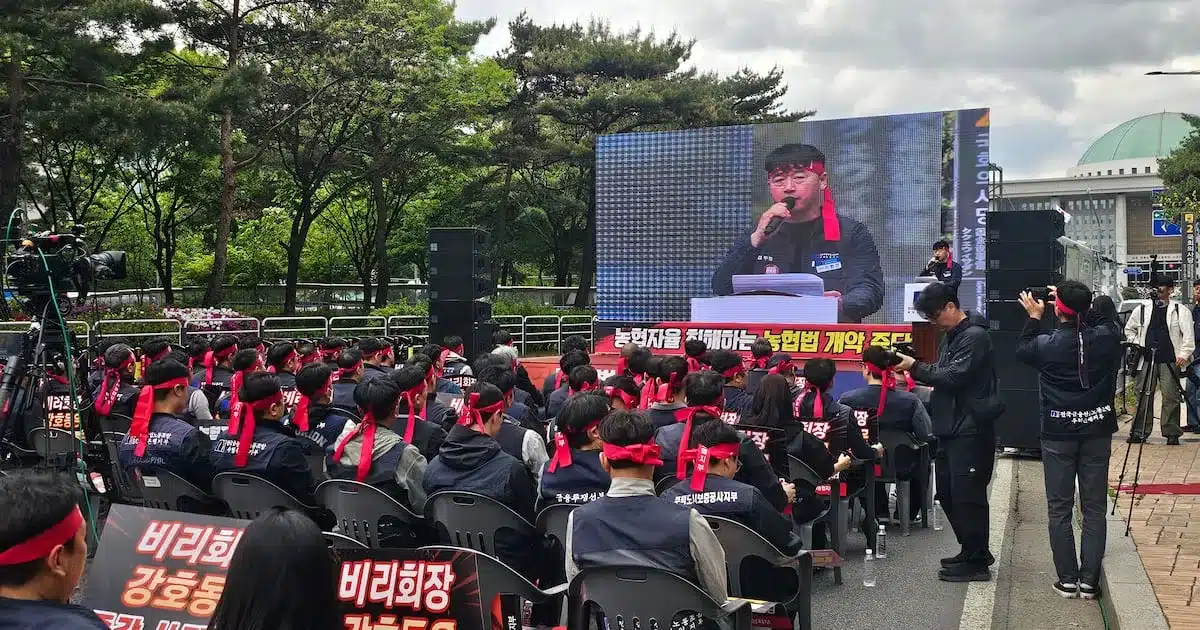
Agricultural cooperatives and farmers across the nation are pushing back against proposed amendments to the Agricultural Cooperatives Act, citing risks to their operational independence.
The Ministry of Agriculture, Food and Rural Affairs seeks to enhance oversight through the Fair Trade Commission on internal cooperative governance and introduce direct elections for central committee executives. Critics view these changes as a veiled attempt to centralize control.
NH Executives Host Key Forum
Executives from NH Agricultural Cooperative Federation gathered on April 28 at a conference room near the National Assembly in Yeouido, Seoul, for a briefing session on the proposed revisions and strengthening of direct election rights for branch managers.
Key demands include accurately assessing the amendment’s content, ensuring genuine autonomous management for cooperatives, and fully incorporating enhanced direct election rights for branch officials into the legislation.
Leaders Voice Strong Concerns
Ryu Gi-seop, chairman of the Korea Agricultural Association, emphasized the need for member input, stating, “We hope to deeply reflect the true voice of cooperative members in the revisions.” He added, “Without amending the core law, properly adjusting cooperative self-governance will prove challenging.”
NH executives advocate clarifying the amendment’s internal provisions by establishing a dedicated “NH Audit Committee.” This body would grant super-voting rights to NH executives and regional cooperatives in shareholder meetings, while allowing up to two central staff members on the committee.
Prior Rally Underscores Unity
Earlier, around 500 cooperative leaders and farmers rallied outside the National Assembly under the banner of the “Farmers’ Opinion Collection Movement,” urging a halt to the revisions.
Their five-point proposal targets central decision-making dominance, bolstering legal safeguards for document handling, addressing recruitment biases at branches and among staff, curbing arbitrary audit personnel selections, and reforming central committee election processes.
