

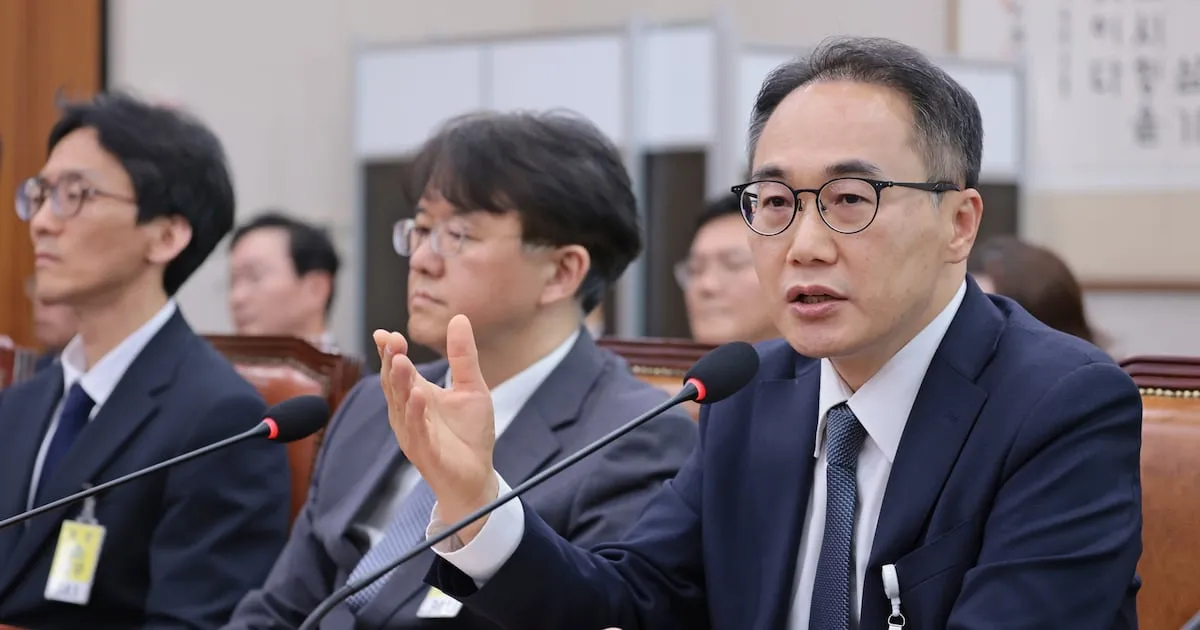
Prosecutor Lee Won-seok delivered a scathing critique of the Daejang-dong scandal perpetrators during a National Assembly hearing on April 16, labeling them ‘public water thieves’ and stating the affair inflicts massive damage on the Democratic Party.
Lee, heading the investigation team, appeared before the special committee on government audits. He directly condemned the actions at Daejang-dong headquarters and those of former deputy chief Kim Young, Minjoo Yeon-gwon deputy chief, and Uirye executive director, asserting these incidents unfolded under the president’s direct oversight without any sign of remorse.
Harsh Words on Reporting and Accountability
“These matters became self-evident right before the president’s eyes, yet there’s no such shameless behavior,” Lee declared. He added that reporting to headquarters fails to alter Daejang-dong’s image: “It remains criminal even after intense scrutiny.”
On compensation practices, Lee remarked, “South Korea’s changers pocket 1 won of unreturned funds and hand back 1000 won as compensation. In truth, the value from one heart is zero won.” He further noted that perpetrators inflate interest on principal while legally concealing massive gains.
Investigation Uncovers Vast Illegal Gains
The probe identified 7,524 million won in total illegal benefits extracted from civilian victims across Daejang-dong branches. However, in one October case at Seoul Central District Prosecutors’ Office’s 1st Financial Crimes Division, only 428 million won was returned by Kim Si, with adjustments limited to 473 million won. No credits were applied for labor or political expenses.
Subsequent headquarters reports reduced adjustments to zero won. By December, unreturned principal was repackaged and deposited into Daejang-dong’s 2nd division.
Lee emphasized, “Public prosecution chiefs and headquarters reporting treat Daejang-dong suspects and branches as aligned entities.” He accused authorities of sheltering nine executives who evaded probes on March 7 by issuing warrants, only to later impose penalties. A Seoul High Prosecutors’ Office task force now leads the ‘pre-arrest detention rights’ review for large-scale real estate slush funds.
Criticism of Government and Justice Ministry
Addressing government prosecutors, Lee stated no proper individualized entries exist for entry-level officials under current regulations. “Even after seeing Kim Young deputy chief urge Minjoo president’s major faction to deploy full personnel, government prosecutors fail to investigate branch involvement adequately,” he said.
Lee warned that altering statements from government original chiefs and recovery chiefs to match presidential directives undermines judicial trust and burdens the National Assembly inappropriately.
