

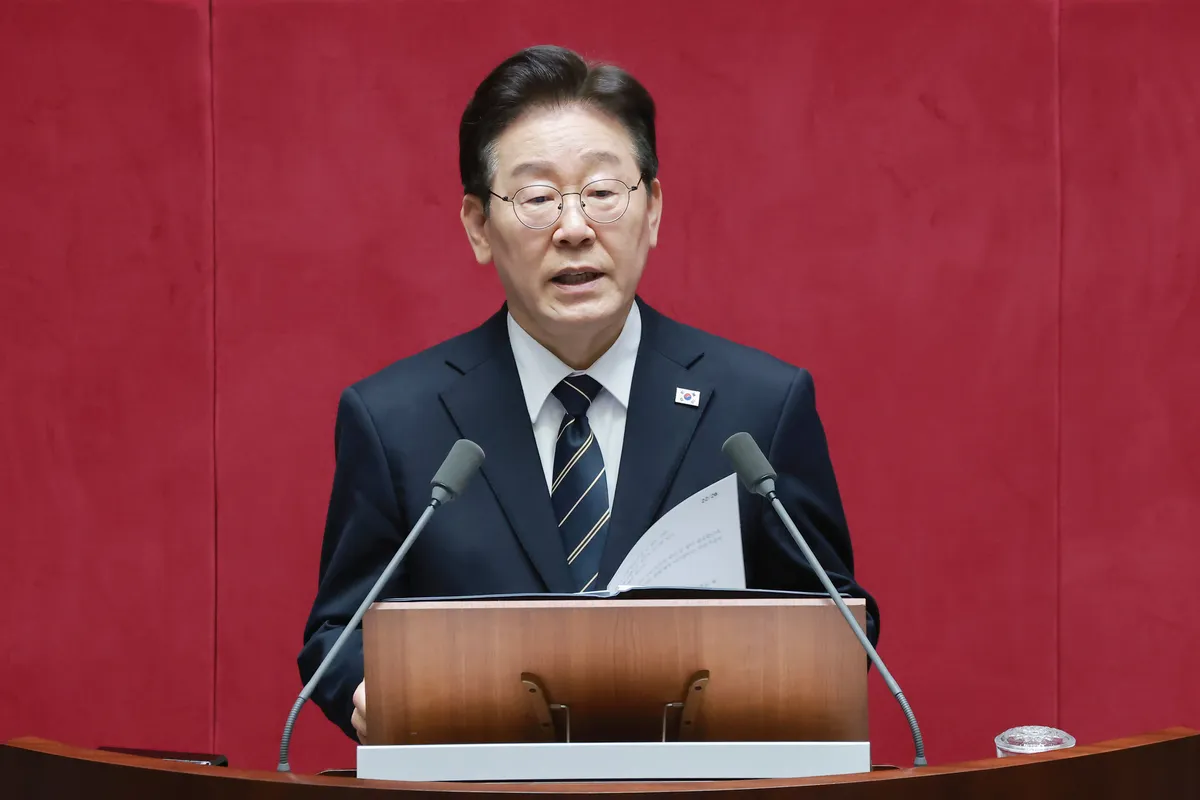
Lee Jae-myung, leader of the Democratic Party, delivered a policy presentation at the National Assembly on April 2, outlining his vision for the 2026 presidential election. He described the current economic challenges as a “fierce storm” rather than a minor issue, positioning the upcoming election as a critical referendum on citizens’ livelihoods.
Criticism of Economic Policies
During the plenary session, Lee highlighted soaring KOSPI index levels above 5,000 points alongside reduced semiconductor activity and a revival of previous administration initiatives. He argued that the administration’s projected outcomes remain uncertain and emphasized the need for substantial economic recovery measures.
“The reason behind the current administration’s instability stems from a massive crisis, not trivial matters,” Lee stated. He noted using the term “crisis” 28 times in his speech, underscoring the severity of the situation.
Supplementary Budget Breakdown
The government allocated a supplementary budget totaling 26.2 trillion won. This includes 10.1 trillion won for high oil price compensation targeting 70% of citizens—about 35.77 million people—providing 100,000 to 600,000 won each as a “high oil price relief fund.” Additional funds cover long-term care operations and daily wages (2.8 trillion won), minimum wage stability and corporate support (2.6 trillion won), regional development (9.7 trillion won), and national project promotions (1 trillion won).
Lee criticized the budget as a “blind election ploy without exploding national debt,” warning that tax hikes and goal mismatches could exacerbate economic activity contractions.
Public Sentiment and Party Reactions
Citizens express concerns over a potential “post-election tax bomb,” viewing the election as a reflection of immediate livelihood pressures. Jang Dong-hyuk, floor leader of the People Power Party, countered that while framed as a presidential race, it resembles a senatorial contest and accused the opposition of promoting fear through exaggerated claims of up to 6 million won tax burdens.
Democratic Party floor leader Jeong Cheong-rae dismissed comparisons to U.S. President Donald Trump’s remarks, noting no substantial policy insights in Lee’s address.
Call for Urgent Action
Lee urged prioritizing citizens’ tax burdens over external influences, stressing that economic revival demands bold leadership. He committed to ongoing participation even under energy constraints and appealed directly to citizens, including Minjoo Party members, during the session.
“No matter the circumstances, this speech pins hopes on a single lifeline,” Lee declared, vowing to overcome the crisis through determination and public support.
