

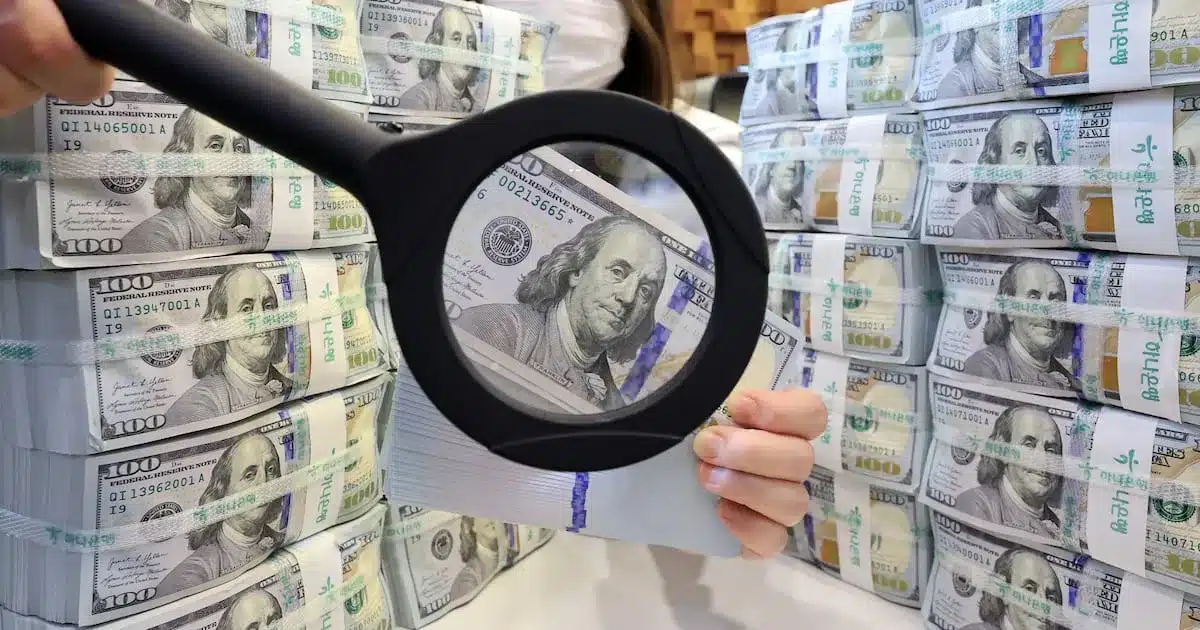
The exchange rate between the South Korean Won and the U.S. Dollar saw a slight decrease on the morning of October 23rd, settling at 1476.6 Won per Dollar. This represents a drop of 3.5 Won from the closing price of the previous trading day. Analysts attribute this movement primarily to positive market sentiment following strong earnings reports from Alphabet, Google’s parent company, which exceeded investor expectations.
Market Reacts to Alphabet’s Strong Performance
Min Gyeong-won, a researcher at our bank’s Woori Research Institute, commented that Alphabet’s financial disclosures “restored the market’s preference for risk assets.” This suggests that when investors feel more confident, they tend to allocate capital towards assets perceived as riskier, which can include emerging market currencies like the South Korean Won. An increased appetite for risk assets typically leads to an appreciation of the Won, as opposed to a depreciation.
Alphabet announced its second-quarter earnings on October 22nd (local time), reporting revenues of $119.8 billion. This figure marks a significant 24% increase compared to the same period in the previous year. Furthermore, the company’s revenue surpassed the market consensus forecast of $116.9 billion, as compiled by market research firm Refinitiv.
Google Cloud Drives Revenue Growth
A key driver behind Google’s impressive financial results was the substantial growth in its cloud computing division. Google Cloud’s revenue surged by 82% year-over-year, reaching $24.8 billion (approximately 37 trillion Won). This robust performance in the cloud sector significantly contributed to the overall positive earnings report, boosting investor confidence in the company’s future prospects.
Foreign Investor Inflows Support Won
In addition to Alphabet’s strong performance, the influx of foreign investment into South Korea’s stock market on October 23rd is also believed to be influencing the Won-Dollar exchange rate. Foreign investors were observed to be net buyers of South Korean stocks, with a net purchase amount totaling 706.8 billion Won by around 9:00 AM.
This substantial net buying activity by foreign investors has coincided with a recovery in the KOSPI, South Korea’s main stock market index. The KOSPI broke through the 7000-point mark shortly after 9:00 AM on the same day, indicating a broader positive trend in the domestic financial markets. The combination of strong corporate earnings and positive foreign investment flows has created a favorable environment for the South Korean currency.
Understanding Exchange Rate Dynamics
The Won-Dollar exchange rate is influenced by a multitude of factors, including macroeconomic indicators, interest rate differentials, geopolitical events, and investor sentiment. In this instance, the positive earnings surprise from a major global technology company like Alphabet appears to have temporarily shifted investor risk appetite. When global markets are perceived as more stable and corporate outlooks are bright, investors often seek higher returns in markets beyond traditional safe-haven assets.
The South Korean economy, with its strong export-oriented industries and significant presence in global technology supply chains, is particularly sensitive to global economic conditions and investor confidence. A strengthening Won can make South Korean exports more expensive for foreign buyers, potentially impacting trade balances. Conversely, a weaker Won can make exports more competitive but increase the cost of imports.
The role of foreign portfolio investment is also critical. When foreign investors increase their holdings of South Korean stocks and bonds, they need to convert their currency into Won, thereby increasing demand for the Won and putting downward pressure on the exchange rate (meaning the Won strengthens). The observed net buying of 706.8 billion Won by foreign investors on October 23rd directly contributes to this increased demand for the local currency.
Future Outlook and Influencing Factors
While the recent decline in the Won-Dollar exchange rate is a positive sign for the South Korean economy, it is important to note that exchange rates are subject to continuous fluctuation. Several factors will continue to shape the Won’s trajectory in the coming weeks and months. These include:
- Global Economic Conditions: The overall health of the global economy, particularly in major trading partners like the United States and China, will play a crucial role. Signs of economic slowdown or recession could dampen investor sentiment and lead to a reversal of the current trend.
- Monetary Policy: Decisions by central banks, such as the U.S. Federal Reserve and the Bank of Korea, regarding interest rates can significantly impact currency values. Higher interest rates in one country tend to attract foreign capital, strengthening its currency.
- Geopolitical Risks: Any escalation of geopolitical tensions, particularly in regions affecting global trade or energy prices, could trigger a flight to safety, benefiting currencies like the U.S. Dollar and potentially weakening the Won.
- Corporate Earnings: Continued strong performance from South Korean corporations, as well as other major global companies, will be vital in sustaining positive market sentiment and encouraging foreign investment.
- Trade Balances: South Korea’s export and import figures will also influence the exchange rate. A persistent trade surplus generally supports a stronger Won.
The market will be closely monitoring upcoming economic data releases and corporate news for further clues on the direction of the Won-Dollar exchange rate. The interplay between global economic factors, domestic economic health, and investor behavior will continue to dictate the currency’s movement.
In conclusion, the recent dip in the Won-Dollar exchange rate to 1476.6 Won reflects a combination of positive corporate earnings, particularly from Alphabet, and increased foreign investment in the South Korean stock market. This trend underscores the sensitivity of the Won to global market sentiment and capital flows, highlighting its role as a key indicator of economic confidence in the region.
