

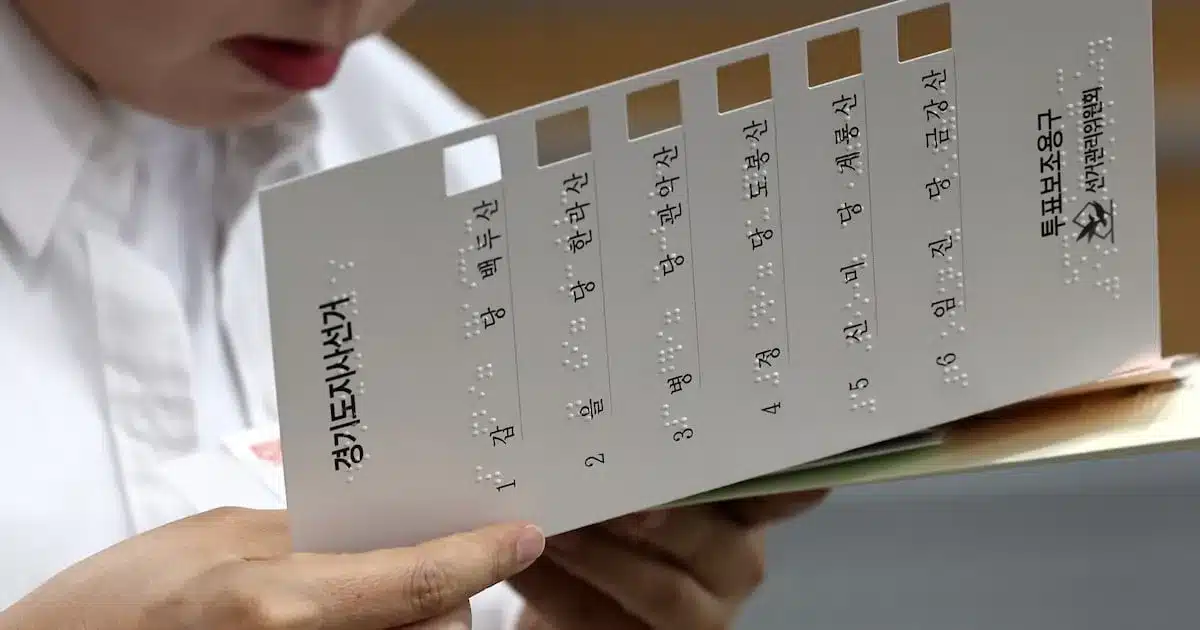
Ballot Blunders and Misplaced Aids Disrupt Voting for Vulnerable Citizens
Recent elections have been marred by a series of unfortunate incidents, particularly affecting disabled and elderly voters. Reports indicate that issues ranging from inaccurate assistive devices to mishandled ballot processes have caused confusion and frustration at numerous polling stations nationwide.
Challenges in Assisting Voters
Guidance materials for managing the votes of disabled and elderly citizens, including procedures for ballot assistance and the use of tactile voting aids, are in place. However, a lack of specific, mandatory training for poll workers on these matters has led to varying levels of preparedness across different polling stations.
Specific Incidents Reported
In one instance at the 8th polling station in Segok-dong, Gangnam-gu, a visually impaired couple encountered a tactile voting aid that was incorrectly prepared. A concerned individual, reportedly unable to trust the assistance provided by poll workers, entered the voting booth with a companion to cast their ballot. This vote was later confirmed as valid after review by the election commission.
At the 4th polling station in Suseo-dong, Gangnam-gu, a complaint was received stating that a tactile voting aid intended for a visually impaired voter mistakenly indicated ‘Gangbuk-gu’ instead of ‘Gangnam-gu’.
Further issues were reported in Sejong, where ballot assistance was provided to accompanying individuals rather than the voters themselves. In the Gyeonggi region, voters who had pre-registered to vote at specific locations were reportedly offered early voting options, causing further disorientation.
Other confirmed cases of errors include misprints on visual aids for Seoul’s education office, incorrect tactile ballot markings in Gangnam-gu’s 4th electoral district, misprinted ballot aids for the Ulsan education office, and a tactile voting aid with an incorrect number in Daejeon.
Call for Systemic Improvements
Lawmaker Kim Ye-ji emphasized the need for a fundamental redesign of the physical and human infrastructure to ensure that disabled voters can cast their ballots on equal footing with non-disabled citizens. “We need to rethink the entire system from the ground up to ensure equal voting rights for everyone,” stated Kim Ye-ji.
