

Nation Unites in Football Frenzy
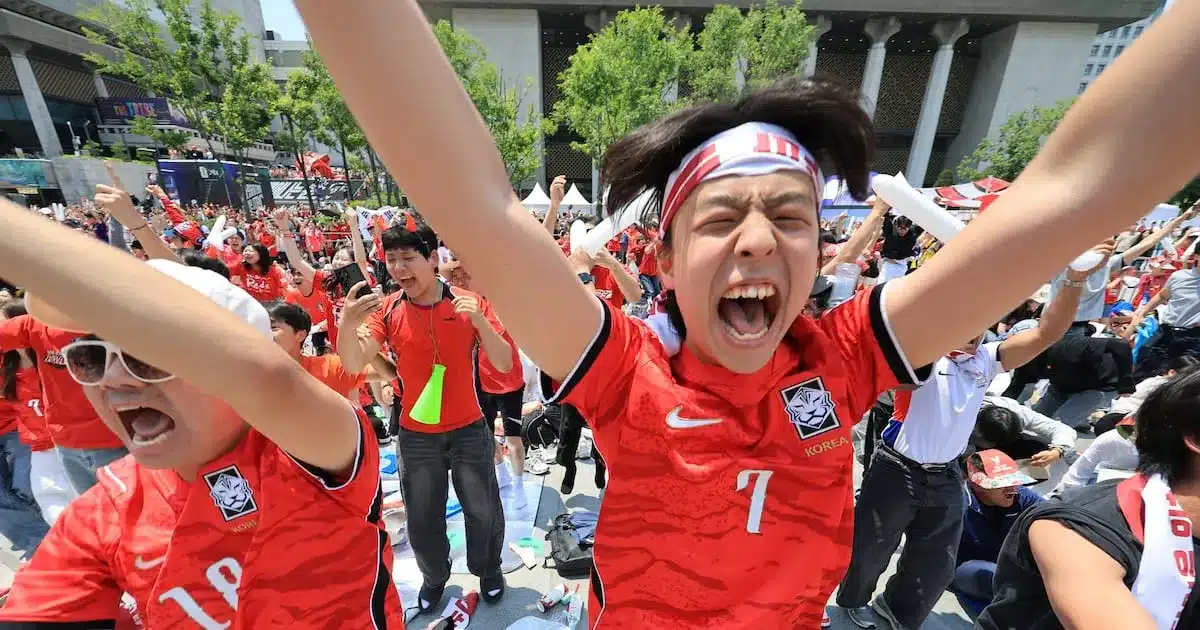
The roar of the crowd echoed through Seoul’s Gwanghwamun Square on June 12th as citizens gathered to support the national football team in their 2026 World Cup qualifying match against the Czech Republic. The team secured a dramatic comeback victory with a final score of 2-1, igniting widespread celebrations among the assembled supporters.
Just days later, on June 19th, the nation once again rallied behind their team for their second group stage match against Mexico. Despite a narrow 1-0 defeat, the spirit of unity and support remained strong. Spectators, many adorned in red clothing and headbands, braved the sweltering heat, with temperatures reaching 34 degrees Celsius, to cheer on their national heroes.
Fans Express Unwavering Support
The atmosphere in Gwanghwamun Square was electric. Citizens of all ages came together, chanting “Republic of Korea!” and expressing their fervent wishes for the team’s success. One fan, who arrived from dawn, shared, “I came early to create memories with my child.” Another expressed hope, “We hope our support helps the team advance to the Round of 16.” The collective passion was palpable, with an estimated 20,000 people filling the square for the match against Mexico.
Even in the face of disappointment after the loss to Mexico, the mood remained positive. Some fans even offered congratulations to Mexican supporters, showcasing a spirit of sportsmanship that transcended the game itself. The unifying power of football was evident, demonstrating how the sport can bring people together, regardless of their background or affiliations.
Looking Ahead to the Next Challenge
The national team is set to face its next challenge on June 25th, when they will play their final group stage match in Group A against the Democratic Republic of Congo. The team aims to secure a favorable result to advance further in the tournament.
The recent matches have highlighted a powerful sentiment: when it comes to supporting the national football team, political divides fade away, replaced by a shared sense of national pride and camaraderie. The World Cup has become a symbol of national unity, bringing the country together one game at a time.
