

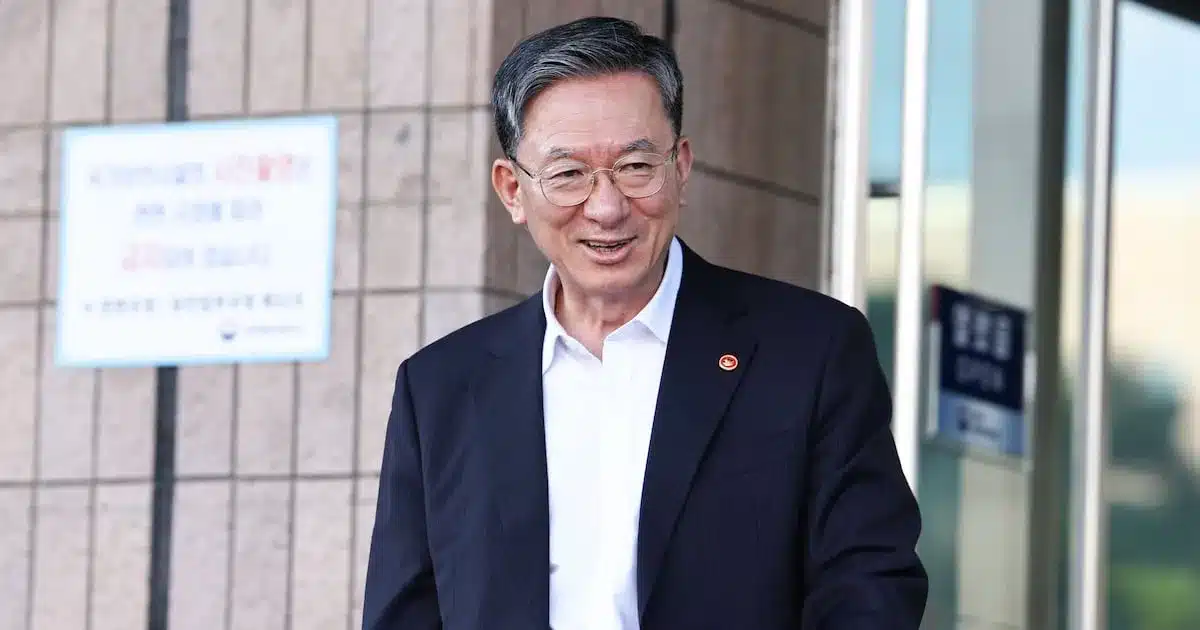
Jung Sung-ho, the outgoing Minister of Justice, has spoken candidly about his tenure, citing deep concerns over the nation’s criminal justice system and expressing regret over unresolved issues. In his final address before departing the Ministry of Government Buildings on September 24th, after his resignation was accepted by President Lee Jae-myung, Jung highlighted the persistent anxieties surrounding criminal justice reform and the establishment of new investigative bodies.
Reflections on Criminal Justice Reform
Jung stated that for months, he grappled with the critical question of whether South Korea possessed a robust institutional framework capable of preventing crime and ensuring that perpetrators face accountability. He revealed that these profound deliberations led to sleepless nights and ultimately, a sense of reaching an insurmountable limit, prompting his decision to resign.
A key area of concern for the departing minister was the perceived shortcomings in the process of amending the criminal investigation law. He specifically pointed to the need for a clear legal basis for joint investigation units and the proper functioning of special police investigators, who operate without prosecutorial supervision. Jung emphasized that discussions on these matters, including the role of a potential public prosecution service, would need to continue with the relevant political parties.
Addressing the Future of Investigations
Looking ahead to the dissolution of the Supreme Prosecutors’ Office in October and the anticipated launch of a public prosecution service, Jung addressed concerns about potential disruptions in investigative functions. He suggested that the scope of investigations handled by the central investigation unit could be gradually built up, overlapping with existing national police and investigative agencies.
“The work of the public prosecution service cannot be halted,” Jung asserted, stressing the importance of maintaining its capabilities for both initiating and sustaining investigations. He countered arguments suggesting a significant reduction in prosecutors and investigators due to the transfer of direct investigative powers to bodies like the central investigation unit.
“This is a misunderstanding,” Jung explained. “Given that the prosecution currently lacks supplementary investigative authority, a substantial increase in the number of prosecutors is essential to ensure that investigations are not compromised.” He underscored that the effectiveness of investigations relies on adequate staffing and resources within the prosecution service.
Challenges and Hopes for the Ministry of Justice
When asked about his one-year term as Minister of Justice, Jung expressed a sense of incompletion. He noted that the Ministry of Justice’s responsibilities extend far beyond prosecution, encompassing crucial areas such as crime prevention, rehabilitation, immigration control, and international cooperation. However, he lamented that these vital functions have been consistently underfunded and overlooked organizationally.
“I did my utmost to normalize these aspects, but I leave with regret that I could not achieve everything,” Jung admitted. He expressed confidence that the Ministry of Justice, with its pool of highly capable officials, would navigate the upcoming leadership transition without significant issues. He anticipated that the incoming minister would make crucial policy decisions and work to restore the Ministry’s standing as a trusted institution.
Judicial Independence and Presidential Appointment Powers
On the contentious issue of the relationship between the judiciary and the executive branch, particularly concerning the appointment of Supreme Court justices, Jung offered his perspective. He stated that the President, as the head of the executive branch directly elected by the people, holds the authority to appoint Supreme Court justices.
“The President is the superintendent of the executive branch, directly elected by the people, and holds the power of appointment for the Supreme Court,” Jung remarked. He expressed a hope that the judiciary would give further consideration to how this issue could be resolved, respecting the President’s appointment powers.
Jung’s remarks provide a critical look at the ongoing debates surrounding criminal justice reform in South Korea, emphasizing the need for a strong and well-resourced prosecution service while also touching upon the delicate balance of power between different branches of government.
