

Wyoming Site Hosts First Commercial Small Modular Reactor in U.S.
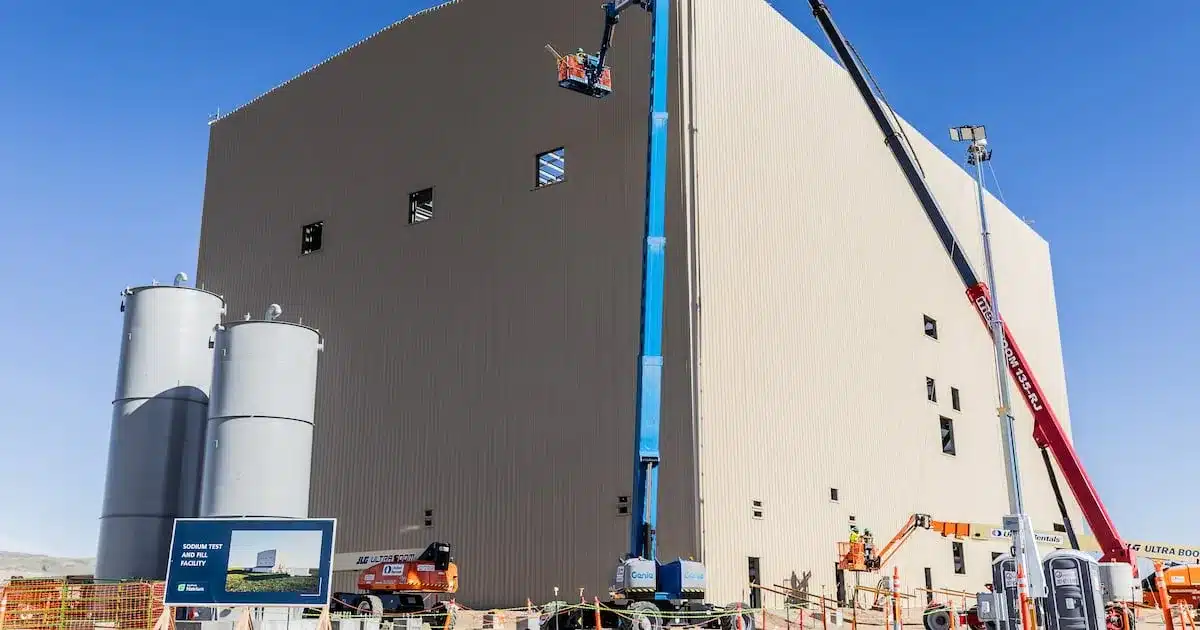
Construction is underway at the Kemmerer site in Wyoming for the United States’ first commercial Small Modular Reactor (SMR). This advanced nuclear technology is gaining significant attention as a potential solution to meet the escalating energy demands of the Artificial Intelligence (AI) era and to achieve carbon neutrality goals.
The Kemmerer Unit 1, a 345-megawatt (MW) SMR, represents a new generation of nuclear power. The project marks the first new commercial reactor approved by the U.S. Nuclear Regulatory Commission (NRC) in a decade, signaling a new dawn for SMR technology. The facility is on track for commercial operation in 2031.
TerraPower’s Innovative Sodium-Cooled Fast Reactor Technology
Developed by TerraPower, a company founded by Bill Gates in 2008, the Kemmerer project utilizes the technology of a Sodium-Cooled Fast Reactor (SFR). Unlike traditional reactors that use water as a coolant, SFRs employ liquid sodium. This allows for higher heat absorption, leading to increased power generation efficiency. Additionally, the radioactive waste generated is reduced by approximately 90% compared to conventional reactors.
During a site visit, Chris Levesque, CEO of TerraPower, emphasized the safety of this technology. “While current reactors are already sufficiently safe, SFRs are approximately 1,000 times safer by probability,” Levesque stated.
The global SMR market is projected to grow significantly, reaching an estimated $72.4 billion by 2033.
SMR Construction and Safety Features
The construction site in Wyoming features an ‘assembly center’ where pre-fabricated modular components are brought together for on-site assembly. Key infrastructure, including the reactor, generator, and spent fuel storage facilities, are nearing completion. The modular nature of SMRs allows for simpler construction and installation compared to large-scale traditional reactors.
Patrick O’Halloran, Vice President of TerraPower, highlighted the safety benefits inherent in the design. “The reactor itself is located underground, significantly reducing the potential for radioactive material to spread externally. Furthermore, the footprint required for construction is substantially smaller,” O’Halloran explained.
Eight of the twelve planned units for TerraPower’s SMR deployment are contracted by Meta for data center power supply.
Government Support and Strategic Investments
The Kemmerer project has benefited from the attention and support of the Trump administration, which has championed a “nuclear renaissance.” Former President Trump’s administration issued an executive order in 2025 to expand nuclear power generation capacity from 100 GW to 400 GW by 2050.
TerraPower has also received support from the Department of Energy’s Advanced Reactor Demonstration Program (ARDP).
SK Innovations and its parent company, SK Inc., became the second-largest shareholder in TerraPower in 2022, investing $250 million. This strategic investment aims to leverage TerraPower’s expertise and advanced technology for the construction of South Korea’s first fourth-generation SMR, with commercialization targeted for 2035.
SMRs: A Versatile Energy Solution
Levesque expressed confidence in the applicability of SMRs in densely populated areas. “I believe there are no issues with constructing SMRs in densely populated regions,” he said. “Considering construction time, budget, economic viability, and safety, I look forward to seeing SMRs deployed in South Korea as well.”
SMRs are also being considered as a key component of future U.S. investment strategies, particularly in light of the new trade agreement set to be implemented on June 18th. Levesque anticipates SMRs may be included in future trade agreements.
Understanding Small Modular Reactors (SMRs)
Small Modular Reactors (SMRs) are compact versions of traditional nuclear reactors, integrating key components into a smaller unit. They are considered “next-generation reactors” due to their significantly lower probability of accidents, estimated at once in a billion years, and limited impact in the event of an incident.
By consolidating major components like the reactor and steam generator found in large-scale reactors (1000-1400 MW), SMRs can be reduced to one-third or even one-fifth of the size, typically operating below 300 MW.
