

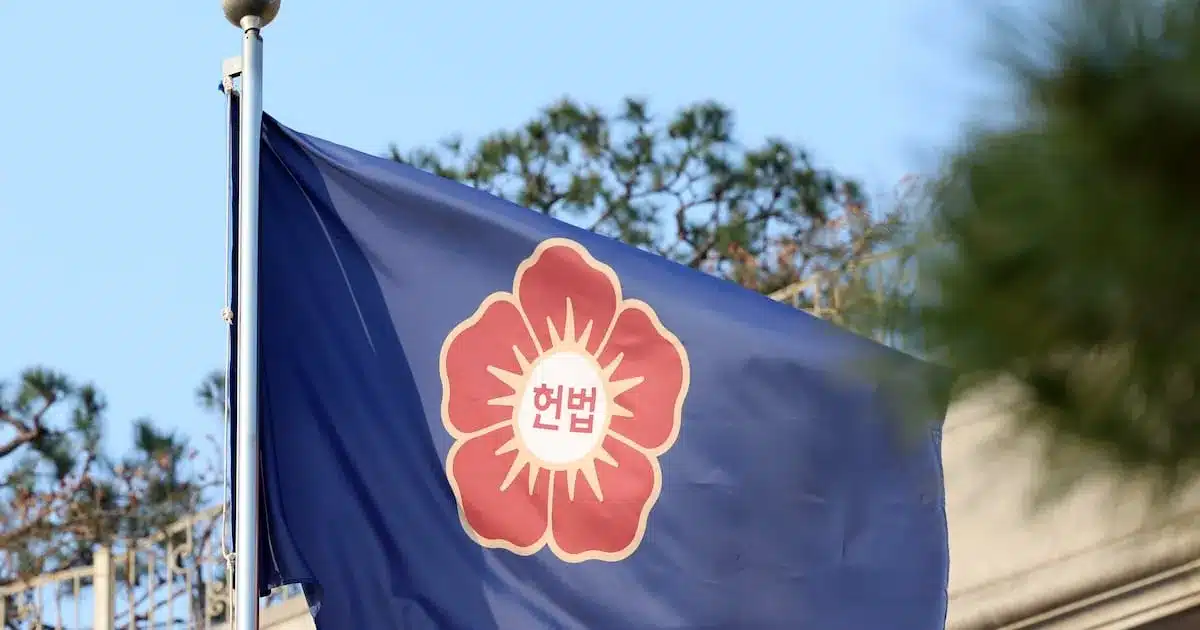
South Korea’s Constitutional Court has ruled that a law prohibiting political activities by university professor labor unions is unconstitutional. The landmark decision, announced on October 23rd, found that the existing legislation infringes upon the principle of equality and the fundamental rights of professors.
Key Ruling Details
The court’s decision, made by a majority of 7 to 2, specifically addressed Article 3 of the University Professor Labor Union Act. This article stipulated that ‘labor unions of professors shall not engage in any political activities.’ The Constitutional Court determined that this blanket prohibition is incompatible with the nation’s constitution.
The core of the court’s reasoning lies in the perceived inconsistency of allowing individual professors to participate in political activities, such as joining political parties and engaging in election campaigns, while simultaneously forbidding their collective union from doing the same. This disparity, the court concluded, creates an unequal playing field and violates the fundamental right to equality guaranteed to all citizens.
Background and Legal Challenge
The legal challenge originated from a group of university professors who argued that the restriction on their unions’ political activities was discriminatory. They contended that if individual professors are permitted to exercise their political freedoms, then their collective bargaining unit, the labor union, should also be allowed to engage in similar activities. This argument formed the basis of the constitutional appeal.
Historically, labor unions in South Korea have faced various restrictions, particularly concerning political engagement. The rationale behind such restrictions often centers on the idea of maintaining the neutrality of educational institutions and preventing labor disputes from becoming overly politicized. However, this particular ruling signifies a shift in how the judiciary views the political rights of organized academic professionals.
Implications for University Governance and Labor Relations
This ruling has significant implications for the landscape of higher education and labor relations in South Korea. It potentially empowers professor unions to engage more actively in political discourse and advocacy related to educational policy, funding, and academic freedom.
Potential for Increased Union Influence
With the prohibition lifted, professor unions may now:
- Lobby lawmakers on issues affecting higher education.
- Participate in public campaigns related to educational reforms.
- Endorse or oppose political candidates whose platforms align with or diverge from the union’s interests.
- Engage in broader discussions about national policies that impact universities and their faculty.
Balancing Academic Freedom and Political Neutrality
The decision raises important questions about the balance between academic freedom, the right to political participation, and the perceived need for political neutrality within educational institutions. While the court has affirmed the right of unions to engage politically, the practical application of this right will likely be subject to ongoing debate and interpretation.
Critics of the ruling might express concerns that increased political activity by professor unions could lead to greater politicization of university campuses, potentially distracting from core academic missions or creating divisions within the academic community. They might argue that the original law aimed to protect the educational environment from partisan conflicts.
Conversely, proponents of the ruling emphasize that political engagement is a legitimate exercise of democratic rights and that professors, as citizens and professionals deeply invested in the future of education, should not be silenced collectively. They may point out that individual professors’ political activities already exist, and the union’s participation could provide a more organized and effective voice for academic concerns.
Broader Context of Labor Rights in South Korea
This ruling can be viewed within the broader context of labor rights in South Korea. While the country has a robust industrial sector with strong labor movements, the rights and activities of professional groups, particularly within the public and quasi-public sectors like higher education, have sometimes been subject to different legal frameworks and societal expectations.
The Constitutional Court’s decision underscores a trend towards recognizing and protecting the collective rights of professionals, aligning them more closely with the rights afforded to workers in other sectors. It reflects a judicial interpretation that views political participation as an integral aspect of freedom of association and expression, even for organized groups within specialized fields.
Future Outlook
The full impact of this constitutional interpretation remains to be seen. It will likely lead to adjustments in how professor unions operate and interact with the political sphere. Universities and policymakers will need to navigate the new legal landscape, ensuring that the exercise of these newly affirmed political rights is conducted responsibly and in a manner that respects the diverse interests within the academic community.
The ruling serves as a significant development, potentially reshaping the role and influence of professor labor unions in South Korean society and its policy-making processes. It reaffirms the principle that collective rights, when exercised within constitutional bounds, are essential components of a democratic society.
