

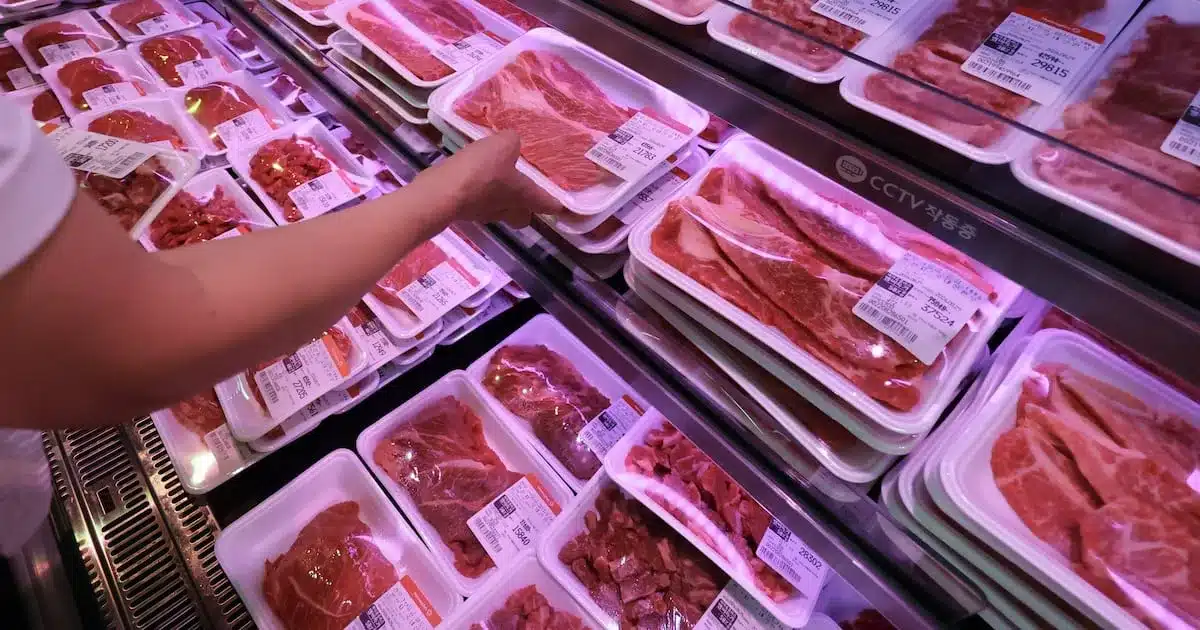
As the Korean Thanksgiving holiday, Chuseok, approaches, consumers are facing significantly higher prices for essential food items, particularly livestock products like beef and pork, as well as eggs. The surge in costs is placing a considerable burden on household budgets, with the price of Hanwoo, Korea’s premium beef, experiencing the most dramatic increase due to a combination of high demand during the festive season and supply shortages.
Hanwoo Beef Prices Skyrocket
According to projections from the Korea Rural Economic Institute’s Agro-Fisheries Trade Analysis Center, the wholesale price of Hanwoo beef is expected to rise by 14.5% this year compared to last year, reaching an average of 22,500 won per kilogram. This upward trend is anticipated to continue into the fourth quarter, with wholesale prices projected to be 5.8% higher than last year and 13.5% higher than the five-year average. During the peak Chuseok season, wholesale prices are estimated to range between 24,000 and 25,000 won per kilogram, marking an increase of 14.3% to 19.0% compared to the previous year.
These wholesale price hikes are already translating into higher costs for consumers. As of September 4th, the retail price for Hanwoo beef sirloin averaged 15,308 won per 100 grams, a substantial 19.9% increase from the same period last year. Other cuts have also seen significant price jumps, with ribeye increasing by 22.6% and brisket by 17.7%.
Factors Driving the Beef Price Increase
The primary driver behind the escalating beef prices is a significant reduction in the number of cattle being raised for slaughter. Several years ago, a sharp decline in market prices led many farmers to reduce their herds. Consequently, the number of cattle brought to slaughter this year is estimated at 864,000 head, an 8.8% decrease from the previous year and a 5.0% drop from the five-year average. Projections for the fourth quarter indicate a further 14.1% decrease in slaughter numbers compared to the same period last year, with only an estimated 178,000 head expected.
Adding to the supply challenges are increased feed costs, further pressuring farmers. The decline in the cattle population is expected to persist into next year, with an estimated 828,000 head in 2025 and 827,000 head in 2028. The Ministry of Agriculture, Food and Rural Affairs anticipates that the cattle population will not recover to average levels until late 2027 or early 2028, with a notable increase not expected until 2029.
Impact on Other Meats and Eggs
The rising cost of Hanwoo beef is also influencing the demand and prices for imported beef. For instance, the wholesale price of U.S. chilled chuck roll has increased by 20.1% year-on-year, reaching 4,019 won per 100 grams.
Pork prices, while having stabilized somewhat from sharp increases earlier in the year attributed to African Swine Fever, remain elevated compared to last year. The wholesale price for pork is currently between 5,800 and 6,000 won per kilogram (a 2.4% increase from last year), and the retail price for pork belly is averaging 2,862 won per 100 grams (a 1.6% increase from last year).
The Ministry of Agriculture, Food and Rural Affairs forecasts that pork prices will gradually stabilize after the Chuseok holiday due to decreased demand. Egg prices, despite a recovery in production, are still reflecting higher costs for consumers. As of September 4th, a carton of 30 eggs averaged 7,199 won, a 3.7% increase from the previous year.
Government Intervention Measures
In response to the rising food prices and to ensure adequate supply during the holiday season, the government has announced plans to release significant quantities of key agricultural products. These measures include releasing 22,000 tons of beef, a record 67,000 tons of pork (2.4 times the usual amount), and 4,900 tons of eggs (twice the normal quantity).
The combination of reduced livestock numbers, increased feed costs, and high holiday demand has created a challenging economic environment for consumers preparing for the Chuseok festivities. The government’s intervention aims to mitigate some of this pressure by increasing supply in the market.
Looking Ahead
The outlook for livestock supply suggests a continued period of reduced numbers for the next few years. Farmers are navigating a complex landscape of fluctuating market prices, rising operational costs, and the long lead times required to rebuild herds. Consumers, meanwhile, are bracing for continued high prices for staple meats and other festive foods as they prepare for one of Korea’s most significant traditional holidays.
