

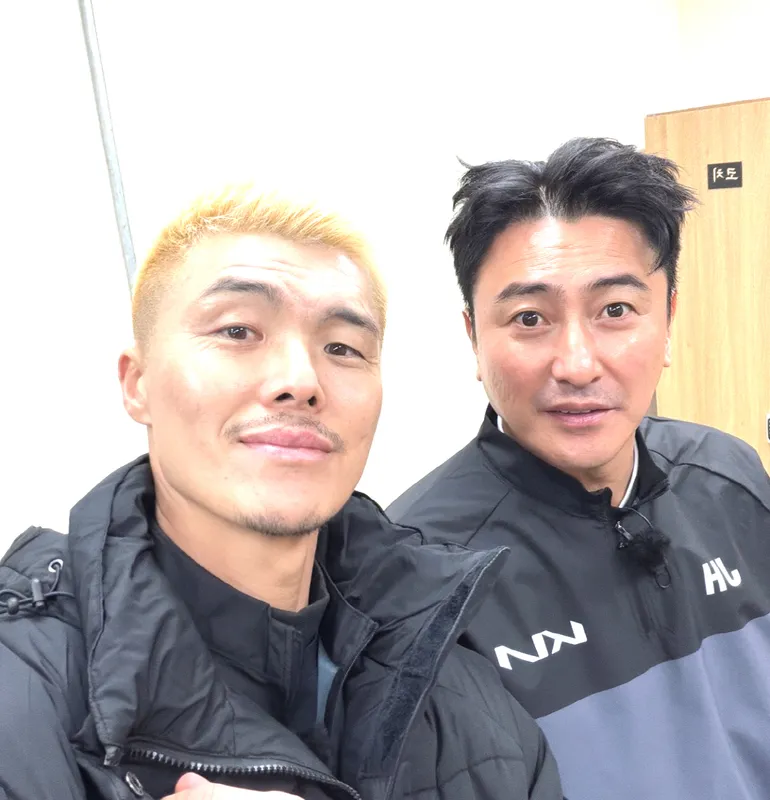
Former South Korean national team player Kim Young-gwang has voiced strong opinions regarding the state of Korean football, advocating for significant systemic changes. His remarks come in the wake of a postponed parliamentary hearing concerning the Korean Football Association (KFA), a delay that appears to have fueled his frustration.
Criticism of Outdated Structures
In a personal social media post on the 17th, Kim Young-gwang stated, “Looking at the postponed parliamentary hearing, I felt it once again. The core of the problem isn’t about who is senior or junior, but lies within the outdated system of Korean football. In the past, players remaining silent was seen as a virtue, but that is no longer the case.” This statement directly addresses what he perceives as a fundamental flaw in the sport’s administration and culture in South Korea.
Background of the Postponed Hearing
The parliamentary hearing, initially scheduled for the 22nd, was intended to scrutinize the KFA’s operations, including the selection process for the national team coach and the association’s overall management. The Culture, Sports, and Tourism Committee of the National Assembly had planned this session to thoroughly examine these critical areas.
However, the hearing was postponed due to ongoing negotiations and differing opinions among political parties regarding the composition of the parliamentary committees for the latter half of the year. The session has since been rescheduled for the 30th, a delay of approximately one week. Lee Jae-jung, a member of the Democratic Party and the committee chairperson, confirmed the postponement in a phone conversation on the 16th, citing the need to consider the current state of negotiations within the National Assembly.
Kim Young-gwang’s Call for Accountability
Kim Young-gwang expressed his dismay at the postponement and the broader issues it represents. “It has become natural to raise one’s voice against wrong decisions and unfair practices,” he asserted. “For a long time, the KFA has swept numerous problems under the rug, operating within a culture of academic background and seniority, and has tried to evade responsibility by relying on past glories.”
He emphasized that the current generation of fans and football stakeholders are no longer willing to accept such practices. “I am not speaking to attack any specific individual,” Kim clarified. “I am speaking with the hope that Korean football will improve.” His plea is for a fundamental shift in how the sport is managed and governed.
Emphasis on Systems Over Individuals
The former national player stressed the need to prioritize systems over individuals. “Now, the system must come before people,” Kim stated. “Common sense and fairness must become the standards, and a culture of accountability needs to be established. I hope that, through this incident, Korean football will move beyond dwelling on the past and transform in a healthier direction.”
Kim Young-gwang has consistently advocated for reform, particularly in light of the national team’s performance and challenges leading up to the 2026 World Cup qualifiers. He believes that a thorough overhaul is not just beneficial but essential for the future success and integrity of the sport in South Korea.
Broader Context and Future Outlook
Kim’s comments highlight a growing sentiment within the Korean football community for greater transparency and merit-based decision-making. The KFA has faced criticism in the past regarding its governance, with accusations of cronyism and a lack of responsiveness to the evolving landscape of international football. The reliance on traditional hierarchies, such as seniority and personal connections, has often been cited as a barrier to progress and innovation.
The postponement of the parliamentary hearing, while a procedural matter, has inadvertently brought these underlying issues to the forefront. It provides a platform for figures like Kim Young-gwang to articulate their concerns more forcefully. His call for a system that values fairness and accountability, rather than personal relationships or past achievements, resonates with many who wish to see Korean football reach new heights.
As the sport navigates the challenges of international competition and domestic development, the debate initiated by Kim Young-gwang underscores the critical need for structural reforms. The expectation is that such discussions will lead to tangible changes, fostering a more robust and competitive environment for players, coaches, and the sport as a whole in South Korea. The focus now shifts to whether these calls for systemic change will translate into concrete actions by the KFA and relevant governing bodies.
The path forward for Korean football, as articulated by its former stars, hinges on its ability to adapt and modernize its administrative structures. The emphasis on building a strong, fair, and transparent system is seen as the most viable route to sustained success and a healthier football culture.
