

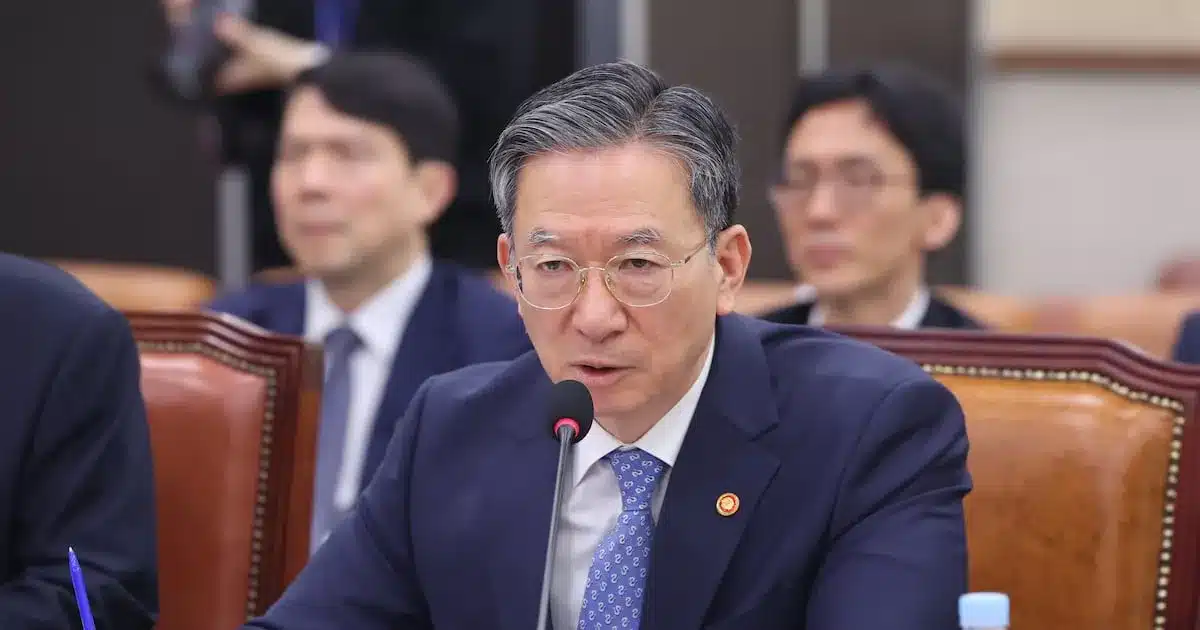
Justice Minister Jung Sung-ho sharply criticized prosecutors for directly supporting President Yoon Suk-yeol’s efforts to neutralize political opponents, insisting they must face consequences for their actions.
Strong Remarks at National Assembly Event
During a recent appearance at the National Assembly, Jung declared that investigations targeting Yoon’s election chief prosecutor constituted a blatant constitutional violation orchestrated by those close to the president. “The probe directly contributed to Yoon’s political self-preservation within his inner circle,” he stated.
Jung highlighted longstanding issues within the prosecution, noting that decisions emerging from government audit processes over the past three decades demand urgent reform. “Even as individuals, prosecutors must acknowledge and correct these flaws,” he emphasized, expressing solidarity with investigators enduring undue pressure.
“I empathize with the frustrations and sense of injustice felt by those officials,” Jung added. “The public outrage and anger from citizens must resonate in the administration.”
Ongoing Investigations Under Scrutiny
Current parliamentary probes focus on seven major cases under the Yoon administration, including high-profile inquiries into opposition leader Lee Jae-myung and others. Over 100 names have surfaced in these investigations, prompting the Justice Ministry to audit nine auditors involved in special prosecutor legislation related to Lee.
Court rulings have labeled these efforts as “fabricated collaborations between the government and its allies.” Jung countered that such responses stem from prosecutors’ conduct during the Yoon tenure, underscoring the need for accountability.
Call for Electoral Justice Reforms
Addressing past election interference, Jung accused prosecutors of victimizing stakeholders through flawed reasoning. “Exposing those responsible in national elections aligns with restoring justice,” he said. “Obstructing probes into justice’s enemies prevents true accountability.”
The minister stressed that investigations should target perpetrators of “reason-based crimes,” ensuring equitable treatment across political lines. These statements reflect broader demands for prosecutorial independence amid ongoing political tensions.
