

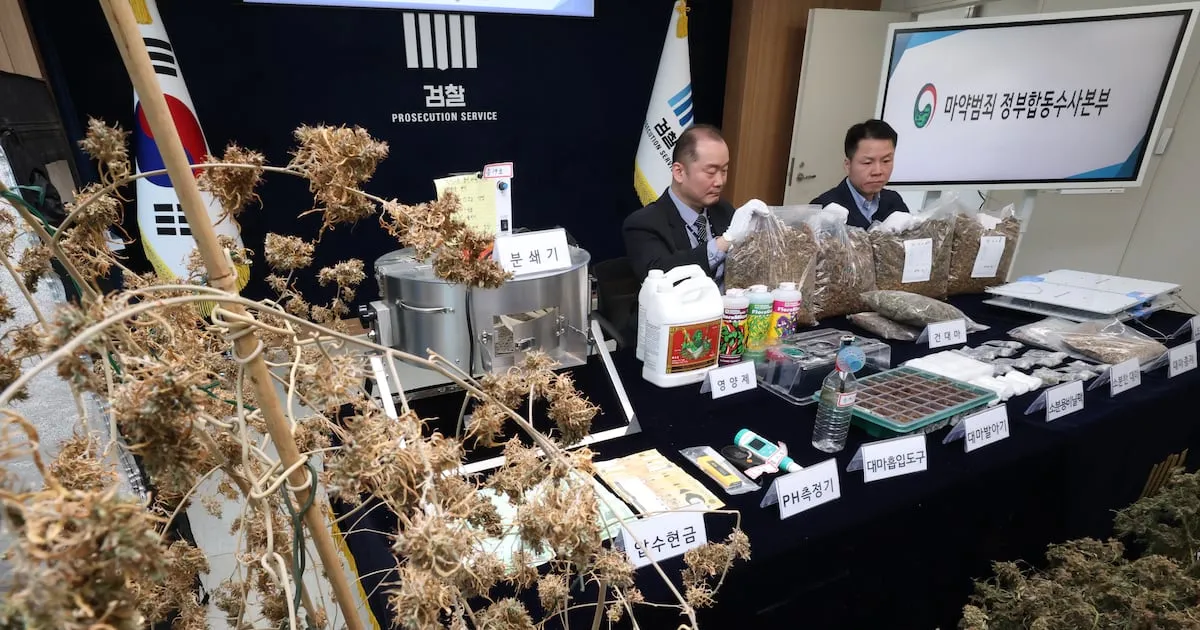
South Korea’s specialized joint investigation units, instrumental in tackling major crimes like drug trafficking and voice phishing, are slated for disbandment in October. This comes as part of a broader restructuring of the prosecution service. The government is exploring alternative models, including a proposed ‘joint investigation unit’ involving the National Police Agency, the Supreme Prosecutors’ Office, and the Korea Customs Service, or even a ‘public joint unit’ that could include customs investigators. However, this latter proposal faces significant legal hurdles regarding the scope of investigation and evidence collection, particularly concerning the involvement of customs officials who traditionally lack investigative authority.
End of an Era for Specialized Crime Units
Currently, nine joint investigation units operate nationwide, focusing on serious offenses such as narcotics, voice phishing, and financial crimes. These units bring together personnel from various agencies, including prosecutors, police, and customs officials, pooling their expertise and authority to tackle complex cases. For instance, a narcotics joint unit in Suwon leverages customs’ intelligence on smuggled goods, police expertise in tracking suspects, and prosecutorial authority to secure warrants and prosecute cases. Such collaborative efforts have yielded significant results, with the Suwon unit reportedly dismantling eight drug trafficking rings and arresting 235 individuals, including 109 key figures, within six months of its inception.
The planned dissolution of the prosecution service’s investigative powers in October poses a critical challenge to the continued operation of these joint units in their current form. Prosecutors play a vital role from the initial stages of an investigation, guiding the direction, securing warrants, and deliberating legal frameworks. If customs investigators are to assume similar responsibilities within a new structure, questions arise about their legal standing and the admissibility of evidence they collect. Furthermore, the current co-location of different agencies within a single unit facilitates seamless collaboration. Without this, inter-agency cooperation might become more fragmented and less efficient.
Proposed Alternatives and Legal Challenges
The Ministry of the Interior and Safety is considering establishing ‘joint investigation divisions’ within the Supreme Prosecutors’ Office, comprising personnel from the police, National Tax Service, Financial Services Commission, and Korea Customs Service. Proposed structures include divisions in Seoul for voice phishing, financial crimes, and virtual asset fraud; a division in Daejeon for national tax crimes; and a narcotics unit in Suwon. A significant drawback to this model is the absence of prosecutors in the initial investigative stages, a role they currently fulfill in the existing joint units.
To address this, the Ministry is also contemplating the ‘public joint unit’ model, which would involve customs investigators. Minister of the Interior and Safety, Lee Sang-min, explained that while customs investigators might not conduct direct investigations, they could participate by providing legal advice and assisting in securing warrants. However, the Ministry of Justice has raised concerns about the legal feasibility of this approach. Justice Minister Kang Sung-ju pointed out that allowing customs investigators, who are statutorily barred from conducting investigations, to participate in investigative processes could lead to issues with the validity of evidence and the overall integrity of the investigation. He emphasized that clear guidelines are needed to avoid problems during the prosecution phase.
Navigating the Legal Landscape
Legal experts stress the need for clear legislative grounds to define the boundaries between ‘legal advice’ and ‘investigative involvement’ for customs officials. Professor Lee Seong-il from Konkuk University Law School suggests that to prevent disputes over whether legal consultation constitutes investigative participation, investigative agencies should formally request consultations, and prosecutors should document their responses in writing. He acknowledges the practical difficulties of this approach in the real-time, co-located environment of joint investigation units.
Professor Lee further proposed that for joint investigation units to function effectively, the law should explicitly grant prosecutors a certain level of investigative authority, perhaps through exceptions in the Criminal Procedure Act or separate legislation. This would provide a clear legal basis for their involvement and ensure the continued effectiveness of these crucial crime-fighting bodies. The Ministry of Justice had previously requested amendments to the Criminal Procedure Act to allow prosecutors to support joint investigations by other agencies, but these proposals did not pass the National Assembly.
Conclusion: The Path Forward
As October approaches, the future of South Korea’s specialized joint investigation units hangs in the balance. The proposed restructuring aims to adapt to the evolving legal landscape following the reduction of the prosecution service’s investigative powers. While the ‘joint investigation division’ model offers a potential pathway, the ‘public joint unit’ involving customs investigators presents significant legal challenges concerning investigative authority and evidence admissibility. Resolving these legal ambiguities and establishing a clear legislative framework will be crucial to ensuring that South Korea can continue to effectively combat complex crimes without compromising the integrity of its justice system.
