

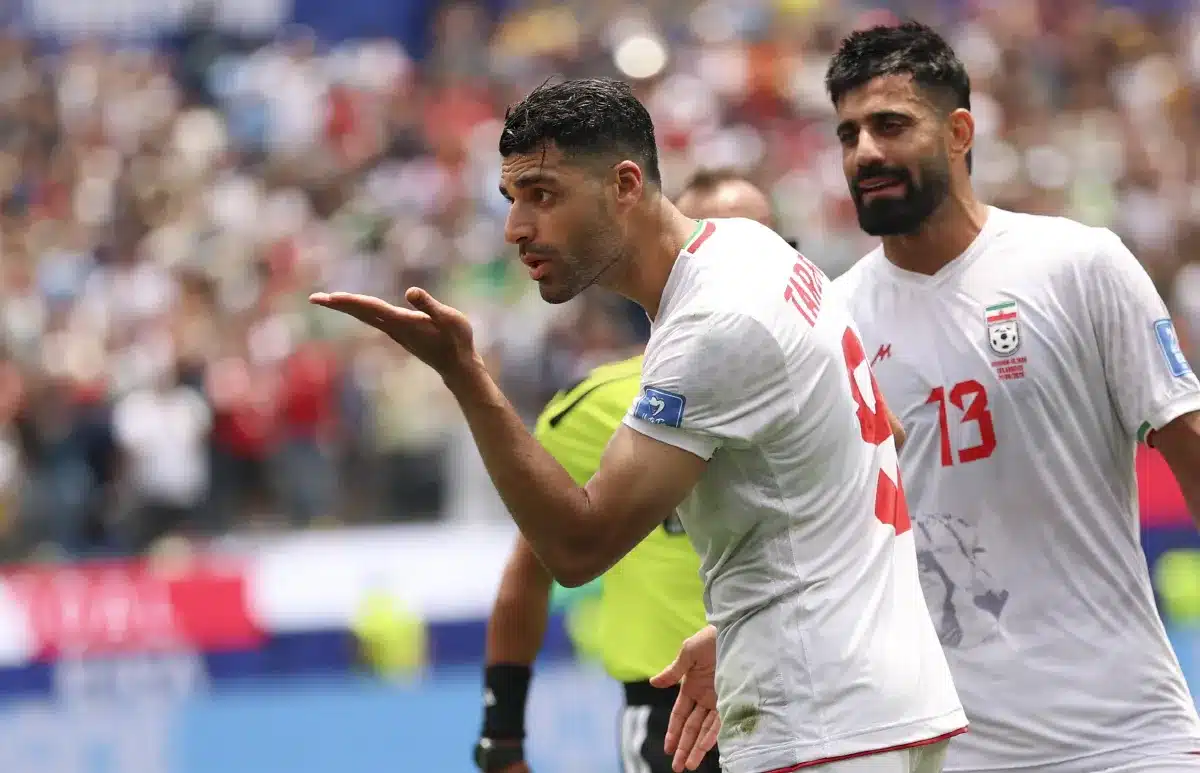
Iran’s captain, Mehdi Taremi, has voiced strong criticism against FIFA, alleging a lack of support and significant logistical hurdles that hampered the national team’s performance during the 2026 World Cup qualifiers. The team, managed by Amir Ghalenoei, was eliminated after finishing third in Group G with three draws against New Zealand, Belgium, and Egypt, failing to advance to the knockout stages and ultimately finishing 9th overall.
Taremi’s Outburst Against FIFA
Taremi, a prominent figure for the Iranian squad, expressed his frustration, stating, “We had to be exhausted. We raised issues from the start of the tournament.” He directly addressed FIFA President Gianni Infantino, claiming Infantino had promised to resolve travel and logistical problems arising from U.S. sanctions against Iran. However, Taremi asserted that no action was taken, describing the World Cup experience as “a disaster.”
“FIFA must resolve all the problems here,” Taremi declared. “Unfortunately, the issues were not resolved from the beginning.” He emphasized that the situation was fundamentally unfair and that Iran felt abandoned, with no one stepping in to assist them. “If they want us to be eliminated, we will be eliminated. But this environment is too unfair. We couldn’t even get rest because of the travel. We lacked support staff on the ground. Nobody helped us,” he added, highlighting the team’s struggle with inadequate rest and insufficient on-site personnel.
Logistical Nightmares Plague Iran’s Campaign
Iran’s journey to the World Cup was fraught with difficulties from the outset. Initially, the team planned to establish its base camp in Arizona, USA. However, due to the deteriorating security situation and visa complications, they were forced to relocate their base camp to Tepic, Mexico.
Securing visas proved to be another significant obstacle. The U.S. government reportedly denied visa applications for key Iranian football federation officials, including the general secretary, team delegation head, and media liaison. While visas were eventually issued to essential personnel such as players, coaching staff, and medical personnel, the initial rejections and subsequent delays created considerable stress and disruption.
FIFA President Infantino, in response to such issues in the past, had commented on the limitations of the organization, stating, “We must understand that we are not the ‘kings’ who can govern governments or police. We are a sports organization.” This statement, while acknowledging FIFA’s role, did little to alleviate the practical challenges faced by the Iranian team.
Travel Restrictions and Protests
The Iranian national team also faced severe restrictions regarding their movement within the United States. The U.S. government permitted the team to enter the country only 24 hours before their matches. Furthermore, strict regulations mandated their immediate return to their base camp in Tepic, Mexico, immediately after each game concluded, preventing any opportunity for rest or acclimatization.
These arduous and restrictive travel arrangements between Mexico and the U.S. led to an official protest lodged by the Iranian delegation with FIFA. The constant back-and-forth travel, coupled with the limited time allowed in the host country, significantly impacted the players’ physical and mental condition. Eventually, the U.S. government relented, allowing the team to enter the country a few days before their final group stage match in Seattle.
Impact on Performance and Player Morale
Taremi’s comments underscore the profound impact these logistical and administrative challenges had on the team’s morale and performance. The lack of adequate rest, the constant travel fatigue, and the perceived lack of support from governing bodies created an environment far from conducive to peak athletic performance. The captain’s outburst serves as a stark reminder of the non-sporting factors that can significantly influence a team’s World Cup aspirations.
The team’s inability to secure proper accommodation and rest, coupled with the stress of visa issues and travel restrictions, contributed to their inability to advance. Taremi’s final remarks before their last group game highlighted this sentiment: “We had to be exhausted. We raised issues from the start of the tournament. If FIFA thinks this is fair, that is their judgment. It was never fair.” His words reflect a deep sense of injustice and frustration felt by the Iranian squad throughout their World Cup campaign.
