

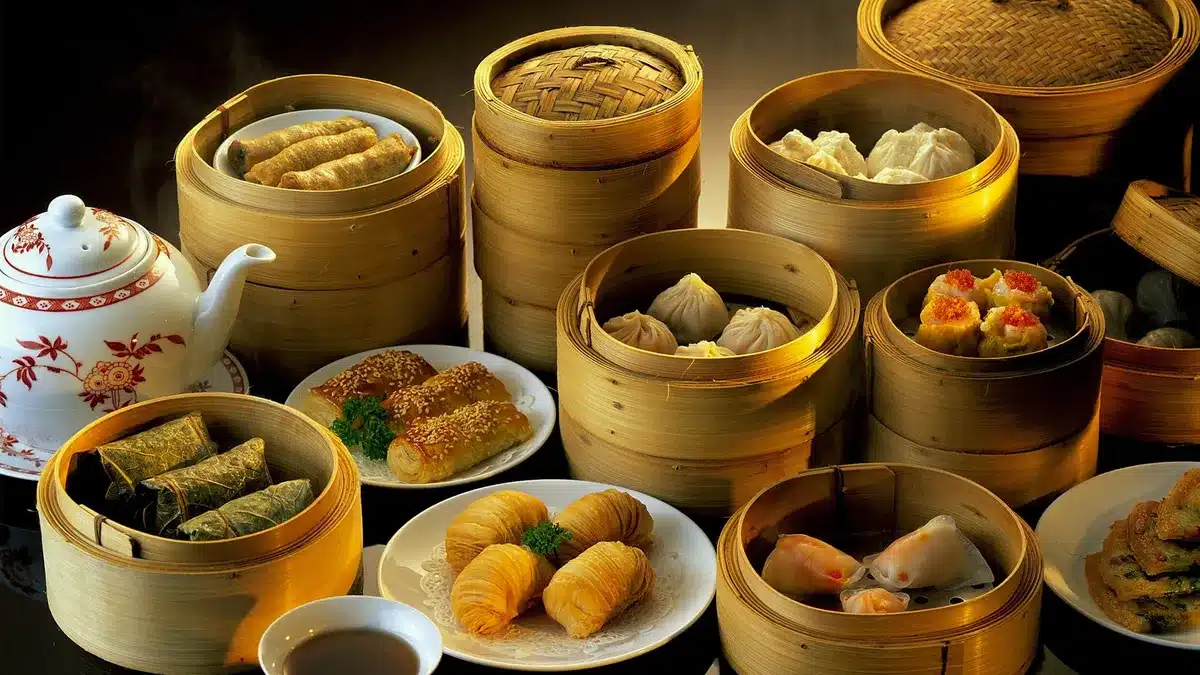
Preserving tradition in the heart of Hong Kong
In the bustling culinary landscape of Hong Kong, where restaurants rise and fall with rapid frequency, a select few establishments stand the test of time. These venerable institutions, known as ‘laopou’ (old shops), offer a glimpse into the city’s rich gastronomic heritage. Among them, Lin Heung Tea House in Sheung Wan stands as a testament to the enduring appeal of traditional dim sum.
The scene at Lin Heung is a vibrant spectacle: seasoned waitresses expertly navigate the crowded dining room, pushing trolleys laden with steaming dim sum. They call out the names of the dishes – ‘Har Gow!’, ‘Siu Mai!’, ‘Cheung Fun!’ – a lively chorus that has become increasingly rare in Hong Kong’s modern tea houses. This traditional service style, where patrons signal their desired items from passing trolleys, is under threat due to escalating rents, forcing many establishments to reconfigure their spaces, sacrificing the aisle room necessary for the trolleys.
A Century of Culinary Evolution
Lin Heung’s story began not in Hong Kong, but in Guangzhou in 1889. It started as a small confectionery shop, quickly gaining renown for its exquisite lotus seed paste pastries. The delicate aroma and exquisite taste of their offerings so captivated patrons that they bestowed upon the shop the name ‘Lin Heung,’ meaning ‘lotus fragrance.’ Over time, it evolved into a grand tea house, becoming a central pillar of Cantonese culinary culture.
The first Hong Kong branch opened in 1926. Following the Chinese Communist Revolution in 1949, the Guangzhou original and the Hong Kong branch became independent entities, each forging their own path.
The Essence of Hong Kong Dim Sum
While Hong Kong boasts a diverse array of international cuisines, dim sum is undeniably the city’s culinary ambassador. The evolution of dim sum into its current form is largely credited to Guangzhou, earning it its status as a quintessential Cantonese dish. It’s estimated that over a thousand varieties of dim sum originated in Guangdong province alone.
As commerce and trade flourished in Guangzhou, tea houses became popular gathering spots. Patrons would enjoy tea accompanied by simple snacks, known as ‘yi dai chai’ (one tea, two dishes). This practice eventually evolved into ‘yum cha’ (drinking tea), a term still widely used by Hong Kongers to refer to the dim sum experience, with dim sum restaurants often called ‘yum cha houses.’
Guangzhou was the epicenter of dim sum and yum cha culture until the Chinese Civil War erupted in 1927. Many dim sum chefs sought new opportunities in Hong Kong, then a British colony, bringing with them not only dim sum expertise but also a broader spectrum of Chinese culinary traditions.
Dim Sum Etiquette: A Nod to History
A unique custom observed in dim sum restaurants is the subtle gesture of gratitude. When a waitress refills your teacup, a gentle tap on the table with two fingers – the index and middle finger curled together – signifies ‘thank you.’ This tradition is said to originate from a time when an emperor, disguised in commoner’s clothing, personally served tea to his subjects. To avoid revealing his identity, a grateful subject would discreetly bend their fingers to mimic a bow.
The ‘Four Heavenly Kings’ of Dim Sum
A common misconception in Korea is that dim sum is synonymous with dumplings. While dumplings are a part of dim sum, the category encompasses a much wider range of dishes. From steamed fish balls and delicate rice noodle rolls (cheung fun) to braised chicken feet (fong jow), the diversity of ingredients and preparation methods is vast.
However, four dim sum varieties are almost universally found on menus and are often referred to as the ‘Four Heavenly Kings’: Har Gow (shrimp dumplings), Siu Mai (pork and shrimp dumplings), Char Siu Bao (barbecued pork buns), and Egg Tarts. These staples represent the pinnacle of dim sum craftsmanship.
- Har Gow (蝦餃): Often used as a benchmark for a chef’s skill, har gow features a translucent, delicate wrapper encasing plump shrimp. The wrapper must be thin enough to see the filling yet strong enough to hold its shape during steaming. A masterfully crafted har gow will have at least seven pleats, with true artisans achieving ten or more.
- Siu Mai (燒賣): The most popular dim sum item, often enjoyed as a street snack. These open-topped dumplings are typically filled with minced pork and wrapped in a yellow dumpling skin. Variations include additions of shrimp, mushrooms, or toppings like roe or diced carrots.
- Char Siu Bao (叉燒飽): Fluffy steamed buns filled with succulent barbecued pork glazed with a sweet and savory sauce. The combination of the tender, flavorful filling and the soft bun is a delight. Both steamed and baked versions exist, with some establishments offering unique takes, such as a pineapple bun topping.
- Egg Tart (蛋撻): A delightful fusion of British and Portuguese influences, the egg tart showcases Hong Kong’s international character. Its flaky pastry crust and creamy, sweet custard filling make it a perfect dessert to conclude a dim sum meal. The Cantonese name ‘daan taat’ is a phonetic adaptation of the English word ‘tart.’
A Legacy Reborn
Lin Heung Tea House faced closure in the summer of 2022 due to operational challenges. Its potential demise was met with widespread sadness, with many Hong Kongers lamenting the loss of a piece of their history. Fortunately, the establishment made a remarkable comeback in 2024 under new management. However, their journey was again met with uncertainty due to redevelopment plans for the building on Wellington Street. Despite concerns that Lin Heung might finally disappear, it found a new home nearby on Des Voeux Road, reopening its doors to continue its legacy.
During a visit to Hong Kong in May, a notice at the airport announced the upcoming opening of a Lin Heung branch. It was a welcome sight, signaling the restaurant’s resilience in overcoming a challenging century marked by economic fluctuations, real estate pressures, and a global pandemic. The prospect of a new century for this historic establishment felt promising.
