

Empty Aisles Plague Homeplus Stores During Critical Restructuring Phase
Customers visiting Homeplus stores are encountering a stark reality: empty shelves and the absence of essential goods. This situation is unfolding as the retail giant undergoes a significant restructuring, including the closure of 37 stores nationwide. The impact is palpable, with shoppers expressing frustration and concern over the dwindling product availability.
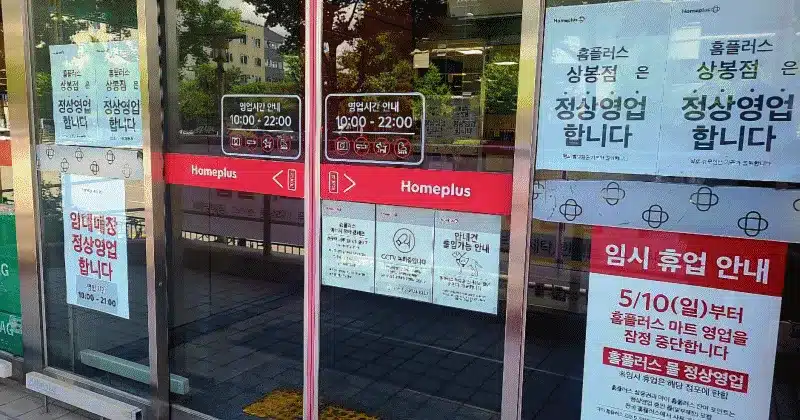
At the Homeplus Shinnae branch in Jungnang-gu, Seoul, the usually bustling underground food market is eerily quiet. Escalators leading to the section are now cordoned off, with a sign at the entrance indicating ‘Normal operation suspended.’ Inside, the lights are off, and access is restricted. A local resident, Park Hyang-nam, 71, lamented the inconvenience, stating, “I used to come here often because it was close to home and had a hospital, a dry cleaner, and a Daiso on the first and second floors. Now, I have to go to the neighboring E-Mart in Muk-dong or the Sangbong branch of Homeplus.”
Store Closures and Supply Chain Disruptions
The Shinnae branch is one of 37 Homeplus locations slated for closure. While Homeplus had temporarily suspended operations at these stores due to its restructuring plan, a decision has now been made to permanently shut them down. This will reduce the total number of Homeplus-operated stores to 67 nationwide. Many of the remaining stores, even those still operating, are preparing for closure or are in the process of withdrawing operations by the end of the month.
The impact extends beyond the soon-to-be-closed locations. Even stores that remain open are grappling with significant product shortages. At the Homeplus branch in Mapo-gu, Seoul, private brand (PB) products are being used to fill gaps on the shelves. In the beverage aisle, only the front rows of products are stocked, with the back completely empty. The frozen food section, which should display various cheeses, instead features PB tumblers, and the area designated for eggs is filled with wine and knives.
Choi Eun-soo, a 35-year-old housewife, expressed her disappointment. “Egg prices are so high, I came to shop after seeing the Homeplus sale flyer, but the egg corner only had frying pans. When I asked a staff member, they said only a small quantity of eggs arrived in the morning and were gone by the afternoon. While it’s understandable for products to be out of stock, it was bewildering to see completely unrelated items displayed instead.”
A Homeplus employee, who asked to remain anonymous, shared the challenges. “When customers ask for items that aren’t there, we can only say, ‘If it’s not there, it’s not there.’ Even with the remaining stock, it’s difficult to get new deliveries.” Another local resident, Yang Mo, 33, noted, “Unless it’s an urgent need for side dishes, I don’t often visit even though it’s nearby. The quality of fresh produce seems to be declining due to supply issues, and there are many times when the items I’m looking for are out of stock, with a high proportion of PB products on display.” Yang added, “If this situation continues, I worry that the stores still operating will also face closure soon.”
Homeplus Express Faces Similar Challenges
The situation is mirrored at Homeplus Express, the company’s smaller-format supermarket chain. Notices indicating ‘Normal operations resume in June’ are posted at the Jongno-gu and Seodaemun-gu branches in Seoul. However, many shelves remain empty, with only price tags indicating ‘Sale’ where products should be. Staff at these branches are reportedly discussing plans for product placement as they prepare for resumed operations, but concrete details on when inventory will arrive remain unclear.
Harim Group’s NS Home Shopping is reportedly considering offering advance payments to suppliers as part of its acquisition of Homeplus Express. This move is seen as a measure to secure product supply and restock shelves after the acquisition. Homeplus is facing a critical deadline of July 3rd for its restructuring plan. While mergers and acquisitions for other divisions, including large-format hypermarkets and online businesses, are being pursued, securing operating funds for the restructuring remains a significant hurdle.
Industry experts emphasize the importance of consistent product availability for customer trust. “In the retail sector, customer trust hinges on the ability to purchase desired products at any time,” stated an industry insider. “Continued supply disruptions will inevitably lead to customer attrition. The key to survival lies in normalizing product supply at remaining stores and regaining customer confidence.”
Professor Lee Jung-hee of Chung-Ang University’s Economics Department commented, “More crucial than the store closures themselves is restoring the competitiveness of the remaining stores. If supply shortages persist due to instability with suppliers and partners, and customers begin to shift to other retailers, the restructuring efforts will become even more challenging.”
