

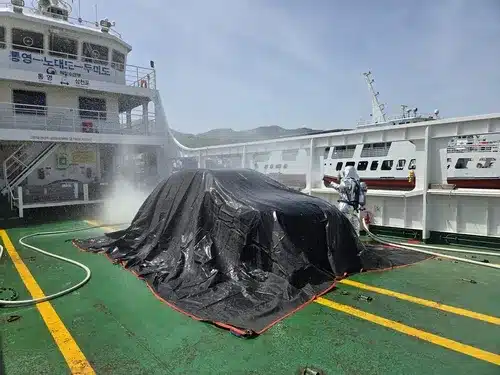
In June, a massive fire erupted at a Busan port while loading a container ship with 3,000 TEU, injuring several firefighters during suppression efforts. Another vessel at the same port experienced a blaze originating from an electric vehicle in its cargo hold.
Escalating Risks from Lithium-Ion Batteries
Electric vehicles powered by lithium-ion batteries represent a growing hazard in maritime transport. These units can trigger explosions upon ignition, turning ships into what experts describe as ‘moving powder kegs.’ Korean shipbuilders have delivered numerous such vessels globally, heightening concerns over potential incidents.
A single battery explosion risks chain reactions, with acid gas emissions and extreme heat rendering traditional firefighting ineffective. Affected ships often require special handling, including clear separation from other cargo.
Adaptations in Ship Design and Operations
Ships transporting EVs now feature enhanced fixed fire suppression systems, improved cargo hold ventilation, and water mist installations. Captains emphasize readiness, noting that EV fires demand non-water-based suppression methods in critical areas.
Ministry of Oceans and Fisheries officials stress compliance with International Maritime Organization (IMO) guidelines for safe ship operations and comprehensive fire safety protocols. ‘With IMO at the center, we promote safe transport and minimize regulatory burdens on shipping firms,’ one official stated. They added that nations utilize ships for EVs despite risks, prioritizing national baselines over international mandates.
Alarming Fire Statistics
Container ship fires account for a disproportionate share of incidents. Over the past 20 years, they represent 14.4% of total ship fires despite comprising just 1% of the fleet—a rate 10 times higher than average. Large container ships handling misdeclared cargo, hazardous materials, and lithium batteries face elevated risks due to massive volumes.
EV-related fires contribute to rising trends, impacting ship exchange values amid evolving safety standards. Industry insiders highlight the need for accurate cargo declarations and risk assessments to sustain operations.
Government and Global Response
The ministry pursues IMO container fire management discussions, advocating for domestic firm involvement. ‘Collaborative research has yielded IMO endorsements for optimal solutions,’ an official noted, emphasizing its role in reassuring ship operators about management efficacy.
Despite IMO’s ‘Net-Zero by 2050’ targets, efforts focus on minimizing industry impacts through exemptions where feasible. Initiatives include ammonia-fueled ships and safe tank-to-ship operations, with officials asserting, ‘Full decarbonization via container ships remains ideal, enabling strengthened competitiveness for shipbuilding and shipping sectors.’
