

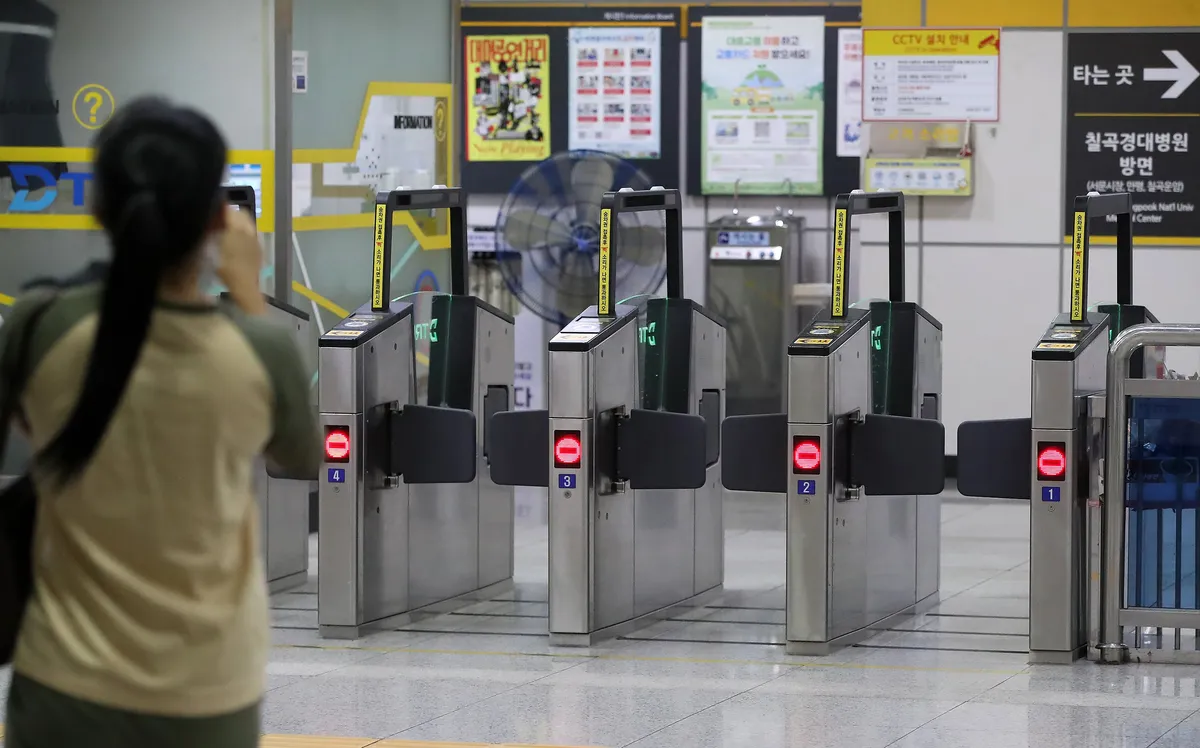
A significant power outage disrupted operations on Daegu’s Urban Railway Line 3 during the evening commute on July 7th, leaving thousands of passengers stranded and inconvenienced. The incident, which occurred around 7:38 PM, brought trains to a standstill across the entire line, forcing commuters to seek alternative transportation methods as they attempted to return home.
Power Failure Halts Daegu Subway Line 3
The power supply to Daegu Urban Railway Line 3 was abruptly cut off on the evening of July 7th, precisely during the peak hours when many residents were commuting home. This unexpected interruption led to trains stopping mid-journey, causing considerable disruption and distress for passengers. While power was partially restored to some sections, allowing trains to operate between Chilgok Gyungdae Hospital Station and Dalseong Park Station, the remaining portion of the line, from Dalseong Park Station to Yongji Station, remained non-operational.
The Daegu Metropolitan City and the Daegu Transportation Corporation confirmed the widespread power failure. The incident occurred around 7:38 PM, affecting the entire length of the monorail line. The immediate aftermath saw passengers disembarking from the stalled trains at stations, scrambling to find alternative ways to complete their journeys. This created a chaotic scene as many were left uncertain about how they would reach their destinations.
Passenger Experiences and Emergency Response
Commuters faced significant difficulties due to the sudden halt in service. Reports emerged of passengers urgently exiting trains at stations, a situation that, while necessary for finding alternative transport, likely added to the confusion and anxiety. Fortunately, the Daegu Fire and Disaster Headquarters reported no emergency rescue calls related to the subway incident, indicating that no passengers were trapped in a way that required immediate fire department intervention.
However, online communities buzzed with firsthand accounts and expressions of frustration. Passengers shared experiences of having to quickly switch to buses, particularly those near the Yongji Station area, where the train had stopped. These anecdotal reports highlighted the significant inconvenience caused by the power failure.
In response to the situation, Daegu City issued a safety announcement via text message at approximately 8:29 PM, about 50 minutes after the power failure began. The message advised residents to use alternative transportation methods, stating that only the section between Chilgok Gyungdae Hospital Station and Dalseong Park Station was operational due to the power supply issue on Line 3.
Investigation into the Cause and Previous Incidents
Officials from the Daegu Transportation Corporation indicated that the trains likely stopped because the entire Line 3 did not receive electricity. They stated that investigations were underway to determine the exact cause of the failure, assess the restoration progress, and ascertain if any passengers were stranded inside the trains. The focus was on understanding the root cause to prevent future occurrences.
This is not the first time Daegu’s Urban Railway Line 3 has experienced operational disruptions. In June 2024, a similar incident occurred when an external object caused a power supply interruption, leading to a halt in train services over a weekend. These recurring issues raise concerns about the reliability and maintenance of the city’s monorail system.
Daegu Urban Railway Line 3: An Overview
Daegu Urban Railway Line 3 is a significant public transportation artery for the city. It operates as a 23.95-kilometer elevated monorail line, connecting Dongho-dong in Buk District (Chilgok Gyungdae Hospital Station) to Beommul-dong in Suseong District (Yongji Station). The line plays a crucial role in the daily commute for many residents, making service disruptions particularly impactful.
The line’s unique elevated monorail design offers scenic views of the city but also presents specific maintenance and operational challenges. The recent power outage underscores the vulnerability of such systems to electrical supply issues and highlights the importance of robust backup power and rapid response protocols. The repeated disruptions also prompt questions about the overall infrastructure resilience of the Daegu urban railway network.
Looking Ahead: Ensuring Reliability
The incident on July 7th serves as a stark reminder of the critical nature of reliable public transportation. For the thousands of commuters affected, the evening commute turned into a significant ordeal. The Daegu Transportation Corporation faces the challenge of not only restoring full service promptly but also thoroughly investigating the cause of the power failure and implementing measures to prevent similar incidents from disrupting the lives of its citizens in the future. The recurring nature of these disruptions suggests a need for a comprehensive review of the line’s power infrastructure and maintenance procedures to ensure consistent and dependable service.
