

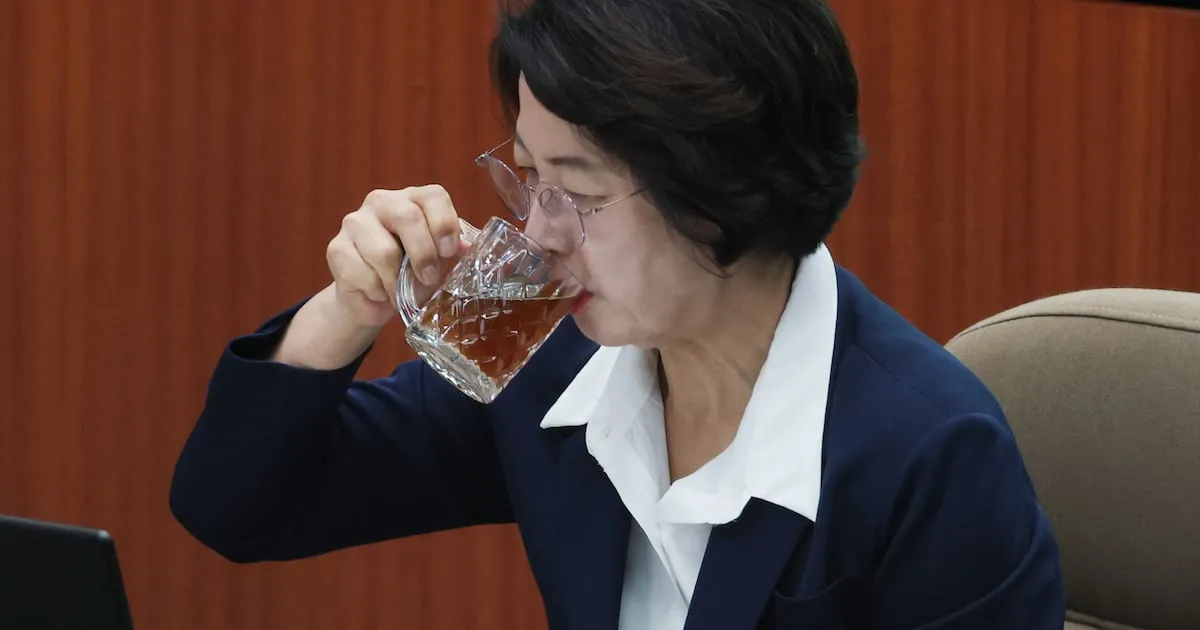
Gyeonggi Province Governor Choo Mi-ae is facing criticism following revelations that she is residing in a high-end apartment valued at approximately 1.2 billion Korean Won (around $900,000 USD) as her official residence. This comes shortly after she declared a state of fiscal emergency and initiated significant budget restructuring measures, leading to accusations of hypocrisy and a ‘double standard’ among provincial officials and the public.
Governor Declares Fiscal Emergency Amid Budget Cuts
Just last month, Governor Choo announced a dire fiscal situation for Gyeonggi Province, signaling the need for drastic austerity measures. In response, the provincial government prepared a supplementary budget of 546.5 billion Korean Won (approximately $410 million USD) aimed at addressing the financial crisis. As part of these belt-tightening efforts, the province postponed its regular personnel reshuffles, originally scheduled for the latter half of the year, to January of the following year. Furthermore, welfare budgets, including expenses for employee sports events, were slashed.
Controversial Official Residence
Despite these austerity calls, it has come to light that Governor Choo signed a lease agreement in June for a spacious 156-square-meter (approximately 1,680 square feet, or 47 pyeong) apartment in Gwanggyo, Suwon City. The lease, secured with a deposit of 1.22 billion Korean Won (around $915,000 USD), has served as her official residence since July, shortly after she took office. The apartment is located in close proximity to the provincial government offices.
Accusations of Hypocrisy and Double Standards
The stark contrast between the governor’s pronouncements of fiscal hardship and her choice of residence has ignited a firestorm of criticism within the Gyeonggi Provincial Government. An anonymous online forum frequented by provincial employees, known as ‘Waggle Waggle,’ has been flooded with posts denouncing the governor’s actions. Many argue that it is incongruous for the governor to solicit cooperation from employees to overcome the fiscal crisis while simultaneously occupying such an expensive residence.
Comments on the forum highlight the perceived disparity in treatment. One widely shared sentiment questioned, “Are the hardships faced by employees who commute 2-3 hours daily via public transportation because they lack official housing not a concern?” Another post directly challenged the governor’s actions: “Demanding austerity and reform from employees while enjoying the benefits of a 1.2 billion Won, 47-pyeong, one-room residence – is this acceptable in the eyes of the residents?”
Former Official Joins Criticism
The controversy has extended beyond internal discussions, drawing condemnation from former officials. Go Jun-ho, a former member of the Gyeonggi Provincial Assembly, issued a statement criticizing the governor’s housing choice. He asserted that if employees were asked to practice frugality, the governor’s own living situation should be subject to even stricter standards. “If the governor demanded savings from employees, she should have selected a smaller residence, spent less on housing, and left more of the provincial budget for essential resident services,” Go stated, emphasizing the need for fiscal responsibility at all levels.
Gyeonggi Province Defends Residence Choice
In response to the mounting criticism, Gyeonggi Province officials have defended the governor’s housing arrangement, asserting that the lease was secured out of operational necessity and in accordance with relevant regulations. A provincial representative stated, “The residence was secured in the closest available location to ensure the smooth operation of the governor’s duties. The contract was executed in compliance with all applicable regulations.”
The province maintains that the selection of the apartment was a practical decision made to facilitate the governor’s work, minimizing commute time and ensuring accessibility to the provincial government offices. They argue that the lease agreement adheres to established guidelines for official residences, designed to support the efficient execution of gubernatorial responsibilities.
Broader Implications and Public Scrutiny
This incident underscores the delicate balance public officials must strike between their official duties and personal living standards, particularly during times of economic uncertainty. The public’s expectation is that leaders will exemplify the austerity measures they advocate for, leading to intense scrutiny of any perceived discrepancies. The debate over Governor Choo’s residence highlights the ongoing tension between the practical needs of governance and the imperative for fiscal prudence and equitable treatment of public servants.
As Gyeonggi Province navigates its declared fiscal emergency, the controversy surrounding the governor’s official residence is likely to remain a focal point of public discussion and political debate, raising questions about transparency, accountability, and leadership in times of financial strain.
