

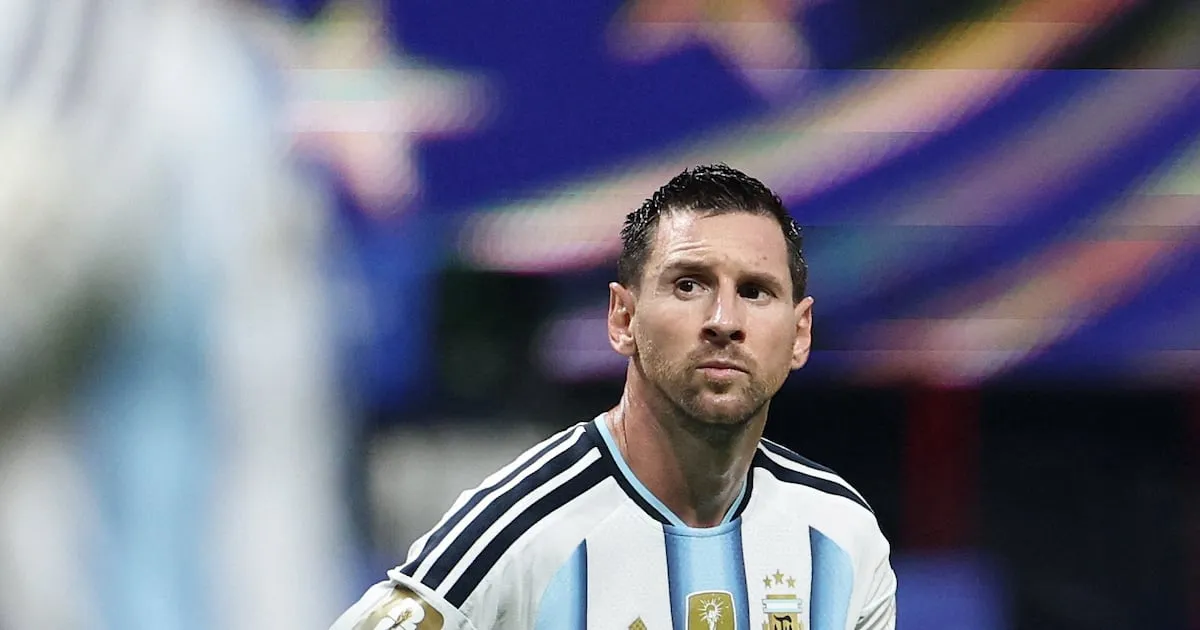
As the 2026 North American World Cup progresses towards its climax, Argentina finds itself at the center of controversy, with accusations of biased officiating surfacing following their advancement to the quarterfinals. These claims echo sentiments previously expressed by Algeria after a group stage match.
Egypt’s Grievances Over Refereeing
Following their 3-0 defeat to Argentina in a crucial Group J match on June 17th (Korean time), the Egyptian Football Association lodged a formal complaint with FIFA. They alleged that the referee’s decisions during the game were unfairly favorable to Argentina.
A key incident cited by Egypt involved Lionel Messi, Argentina’s star player. During the match, Messi appeared to step on the ankle of Egypt defender Aissa Mandi. While such an action could warrant a yellow card, the referee took no disciplinary action. Egypt contends that a Video Assistant Referee (VAR) review, if conducted, would have led to Messi’s expulsion.
Messi went on to score two more goals in that game, completing a hat-trick. The Egyptian Football Association promptly filed a complaint with FIFA regarding the referee’s performance in the match against Argentina.
Morocco’s Complaints in the Round of 16
Similar disputes arose during Argentina’s Round of 16 match on July 8th, where they narrowly defeated Morocco 3-2. Morocco’s coach, Hoissam Hassan, expressed strong dissatisfaction with the officiating.
The contentious moment occurred in the second half when Morocco was trailing 1-0. A potential penalty was not awarded for a foul on a Moroccan player inside the box, despite claims of shirt-pulling and a trip. Morocco’s coaching staff felt VAR should have been consulted, but it was not.
Conversely, a later incident involving an Argentine player in the box, where a Moroccan defender allegedly pulled a jersey, did result in a VAR review, leading to a penalty kick for Argentina. Morocco felt this demonstrated a double standard.
Coach Hassan stated after the match, “There was neither respect nor fair play. If they want to make Argentina champions so badly, why involve other nations in this tournament?”
The Egyptian Football Federation (EFA) confirmed on July 9th that they had submitted a formal request to FIFA to investigate the referee, who is of French nationality, for alleged serious errors and “double standards” that they believe led to Morocco’s elimination from the World Cup.
Broader Context and FIFA’s Role
These allegations come at a critical juncture in the tournament, with Argentina now preparing for their quarterfinal clash. The scrutiny on refereeing decisions in high-stakes matches is intense, and FIFA is expected to review all official complaints.
The World Cup, a global spectacle, relies on the integrity of its officiating. While controversial calls are an inherent part of football, repeated accusations from multiple teams can cast a shadow over the competition’s fairness. FIFA’s response to these complaints will be closely watched by fans and football federations worldwide.
Looking Ahead
As Argentina continues its World Cup journey, the debate surrounding the officiating in their past matches is likely to persist. The team’s ability to navigate these controversies while focusing on their performance on the field will be crucial in their quest for the title.
