

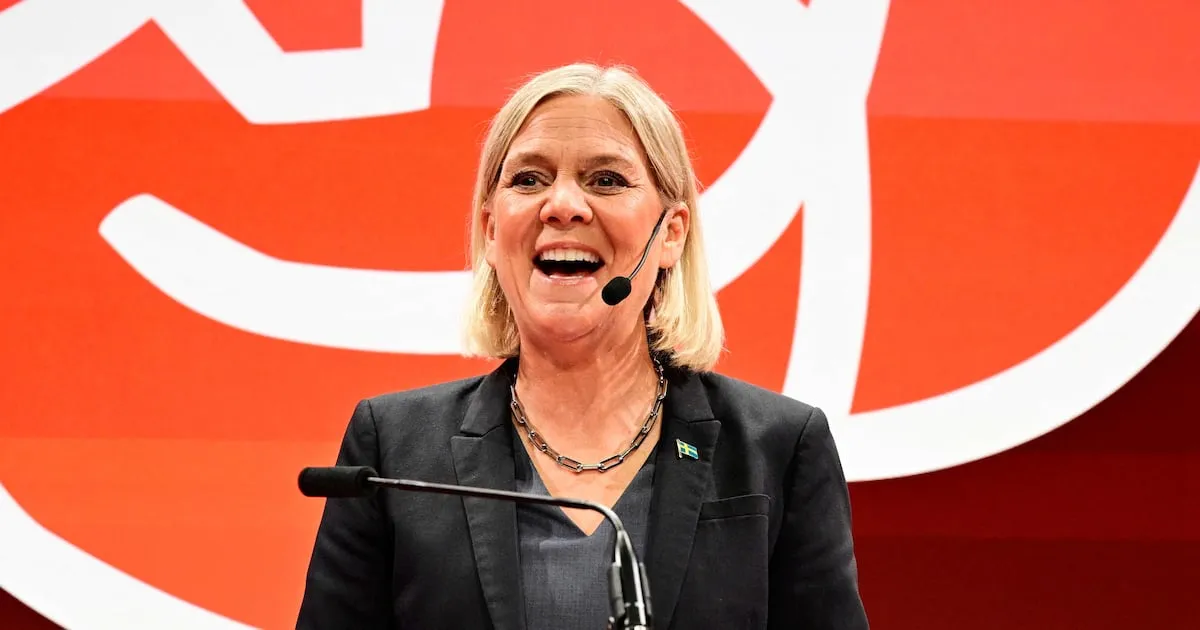
Sweden’s general election has concluded with a narrow victory for the left-wing alliance, securing 176 seats compared to the right-wing bloc’s 173 seats. The outcome led to the immediate resignation of Prime Minister Ulf Kristersson. The results, finalized on September 17th, show the left-leaning coalition narrowly outpolling their conservative counterparts in the 349-seat parliament.
Left-Wing Coalition Secures Narrow Majority
The election, held on September 13th, saw the four-party left-wing alliance, comprising the Social Democrats, the Left Party, the Centre Party, and the Green Party, amass a total of 176 parliamentary seats. This slim majority of three seats over the right-wing bloc, which garnered 173 seats, marks a significant shift in Sweden’s political landscape. The Centre Party, a moderate force within the left-wing coalition, emerged as the largest single party within the bloc, securing 99 seats.
Magdalena Andersson Poised for Return as Prime Minister
With this electoral success, Magdalena Andersson, leader of the Centre Party, is highly likely to return to the role of Prime Minister. Andersson previously served as Sweden’s first female Prime Minister from November 2021 until October of the following year. If Andersson successfully forms a government as planned, it would signify the establishment of a left-leaning administration, a notable development given the recent surge of far-right political movements across Europe.
Outgoing Prime Minister Resigns
Following the official announcement of the election results, outgoing Prime Minister Ulf Kristersson of the Moderate Party announced his resignation. Kristersson had previously pledged to include members of the Sweden Democrats in his government if his bloc had won, aiming to form a formal coalition. However, with his resignation, the prospect of Sweden Democrats’ participation in the government has been withdrawn.
Challenges Ahead for the Left-Wing Alliance
The immediate future for the newly victorious left-wing alliance involves navigating the complexities of forming a stable government. Internal disagreements within the bloc are already apparent. Notably, the Centre Party, a liberal-leaning entity, reportedly opposes the inclusion of Left Party members in the cabinet, creating potential friction in coalition negotiations. Should the left-wing alliance fail to form a unified government, there is a possibility that Kristersson could re-enter coalition talks.
Potential for Broad Center-Right Coalition?
Some analyses suggest that if the left-wing alliance falters, a centrist coalition could emerge, potentially involving the Moderate Party and the Centre Party. This scenario would aim to marginalize the far-right parties on both ends of the political spectrum. However, even combining the 70 seats of the Moderate Party with other potential allies would still fall short of the 174 seats required for a majority in the 349-seat Riksdag (parliament).
Parliamentary Procedures and Potential Re-election
According to reports, a vote to elect a new Prime Minister is scheduled to take place in the Riksdag on the 29th. If a candidate fails to secure more than half of the votes after four rounds of voting, a new general election would need to be called. This procedural safeguard highlights the delicate balance of power and the potential for further political uncertainty in Sweden following this closely contested election.
Key Takeaways
- The left-wing alliance secured a narrow 176-seat majority in Sweden’s general election, defeating the right-wing bloc’s 173 seats.
- Prime Minister Ulf Kristersson resigned following the election results.
- Magdalena Andersson of the Centre Party is expected to become the next Prime Minister.
- The election outcome is significant amidst a rise in far-right sentiment across Europe.
- Challenges remain for the left-wing alliance in forming a stable government due to internal disagreements.
- A potential re-election looms if a new Prime Minister cannot be elected within the stipulated parliamentary procedures.
The election results underscore a complex political environment in Sweden, with the narrow victory highlighting the need for careful negotiation and compromise to ensure stable governance. The coming weeks will be crucial in determining the shape of Sweden’s next government and its policy direction.
