

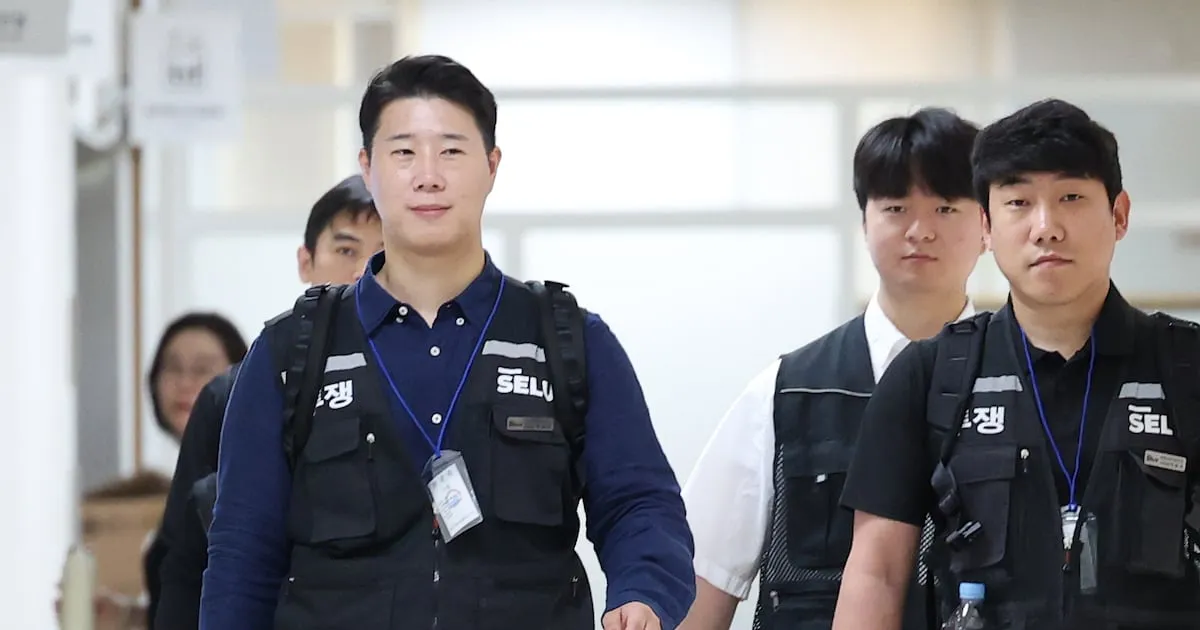
Internal conflict has erupted within Samsung’s labor unions, particularly the early-stage workers’ union (Chogi-yeon), just weeks after reaching a significant wage agreement. Once boasting a membership of over 75,000, making it the largest union in Samsung’s history, the Chogi-yeon has seen a substantial decline in its numbers. This internal turmoil stems from disagreements over performance-based bonuses across different business divisions, leading to a significant exodus of members and escalating into internal leadership challenges and legal disputes with other unions.
Internal Leadership Challenge and Union Restructuring
As of September 16th, the Chogi-yeon is holding a mobile vote on two key proposals: a no-confidence motion against Vice Chairman Lee Sang-hoon and Vice Chairman Lee Won-il, and an amendment to union bylaws. This amendment seeks to restrict membership eligibility to employees within the Device Solutions (DS) division. The vote, concluding on September 22nd, could effectively redefine the Chogi-yeon as a union exclusively for the DS division, potentially leading to the expulsion of existing members from the Device eXperience (DX) division.
From Dominance to Division: The Rapid Decline of Chogi-yeon
The Chogi-yeon experienced a period of rapid growth earlier in the year. By the end of January, its membership surpassed 62,500, officially making it a majority union. This number surged to over 76,000 by April, attracting members not only from the DS division but also from the DX division, which handles smartphones and home appliances. During this peak, Chogi-yeon Chairman Choi Seung-ho collaborated with other Samsung unions, such as the National Samsung Electronics Union (Jeonsam-no) and the Samsung Electronics Union Donghaeng (Donghaeng-no), forming a united front. They even threatened a general strike in early May, demanding that 15% of operating profit be distributed as performance bonuses.
The Bonus Dispute: A Deepening Divide
The core of the escalating conflict lies in the disparity of performance bonuses. During wage negotiations, the Chogi-yeon’s demand for the same performance bonus as former executives was not met. Dissatisfaction grew among DX division employees, who felt the negotiations were primarily focused on the DS division. This sentiment led the Donghaeng-no to withdraw from the joint strike committee on May 4th.
Although a tentative agreement was reached on May 20th, just a day before the planned strike, the resolution only exacerbated the compensation gap between divisions. Employees in the DS division’s memory business were projected to receive up to 600 million KRW by combining special operating profits and over-performance incentives (OPI). In stark contrast, DX division employees were set to receive only around 6 million KRW in company stock. This significant difference triggered a wave of departures from the Chogi-yeon. Within two weeks of the agreement, its membership dropped to the 50,000s, losing its status as the majority union.
A labor relations expert commented, “The performance bonus disparity has created a situation where different business units are essentially categorized into different ‘classes.'”
Internal Fragmentation: DS vs. DX Within the Union
Following the member exodus, the divide between DS and DX interests within the Chogi-yeon became more pronounced. In late June, Chairman Choi, who belongs to the DS division, proposed a ‘separate negotiation for the DS division’ and subsequently won a re-election with 70.8% of the vote and an 87.5% approval rating. Choi claimed that DX-affiliated Vice Chairman Lee Boo-won and Gwangju branch chairman Lee Won-il attempted to oust him to prevent a DS-centric shift in the union.
Conversely, the DX faction expressed discontent, arguing that the leadership was attempting to transform the union solely for DS members, effectively excluding existing DX unionists.
Allegations of Favoritism and Internal Disputes
The internal strife also brought to light issues concerning union fund management. It was revealed in March that the Chogi-yeon had purchased some catering supplies for a general meeting from a company represented by Chairman Choi’s father-in-law. Some union members questioned the process of selecting affiliated companies. Choi’s side defended the decision, stating that the company was chosen after a price comparison and was the most economical option, with no special favors involved. According to the union’s disclosed data, Choi’s father-in-law’s company charged 8,500 KRW per serving, which was lower than other companies’ prices of 10,000 KRW and 12,000 KRW.
Furthermore, Chairman Choi’s ownership of a Genesis GV80 also became a point of contention among some union members. His representatives clarified that the vehicle was purchased in April 2023, before the union’s activities began, with financial assistance from his father-in-law, and was unrelated to union funds.
Escalating Tensions and Legal Battles
The internal disputes have culminated in a vote to restructure the Chogi-yeon, centering it around the DS division. If the proposed bylaw amendment passes, only DS employees will be eligible to join, and existing DX members may be expelled. The conflict has also spilled over into inter-union relations.
On September 14th, the Chogi-yeon sent a formal complaint to the Donghaeng-no, demanding an apology and a commitment to prevent future occurrences of abusive language and personal attacks directed at Chairman Choi and Samsung Electronics executives during internal communication channels. They also requested the preservation of chat logs, hinting at potential legal action.
In response, Chairman Choi has filed lawsuits against individuals who allegedly defamed him and the union leadership in anonymous online communication channels. Approximately 15 individuals are reportedly under investigation. Other unions are reportedly providing legal support to the plaintiffs in these cases.
The Donghaeng-no plans to hold rallies starting September 18th at various locations, including the former Samsung Electronics Suwon campus, a construction site in Suwon, and the Seocho-dong Samsung SDS building, demanding additional compensation for the DX division. They are also planning protests at the former Samsung Electronics chairman’s residence.
A Fractured Labor Landscape
Samsung’s labor unions, which had united to form a joint front with over 70,000 members just weeks prior, are now divided into DS and DX factions. They are actively competing for new members and increased compensation. A Samsung Electronics official expressed concern, stating, “Competition may intensify as unions demand more compensation to attract members. There is a worry that conflicts between unions and the risk of strikes could become a recurring issue.”
