

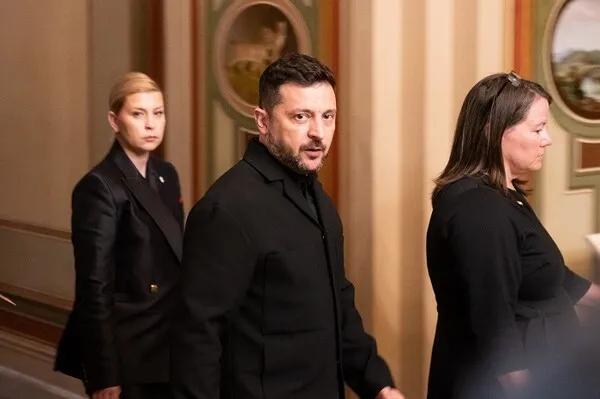
Ukrainian President Volodymyr Zelenskyy has indicated a willingness to engage in direct discussions with Russian President Vladimir Putin at the upcoming G20 summit in Miami in December. Such a meeting would mark the first face-to-face encounter between the leaders of Ukraine and Russia since the full-scale invasion of Ukraine began in February 2022. However, the potential for such a dialogue hinges significantly on the final decision of U.S. President Donald Trump, who will host the summit.
Putin himself has not attended G20 summits in person since the Osaka meeting in 2019. Zelenskyy, in an interview with Deutsche Welle (DW) broadcast on December 12th, stated that if Putin participates in the Miami summit, he too would attend. He emphasized the urgency for the leaders to meet and make substantive decisions, asserting that the sole objective of any such meeting should be a pragmatic outcome rather than just symbolic gestures.
Ukraine’s Assessment of the Battlefield
President Zelenskyy offered his perspective on the current state of the conflict. He characterized Russia’s military situation as one of significant personnel losses, reportedly around 30,000 soldiers, while achieving only marginal tactical gains. In contrast, he claimed that Ukraine has substantially bolstered its defensive capabilities, gaining the upper hand in certain areas of the front lines.
Urgent Plea for Air Defense Support
Looking ahead to the winter months, Zelenskyy raised concerns about Russia’s potential strategy of targeting Ukraine’s energy infrastructure. He reiterated a strong appeal to the United States and European allies for immediate and increased support in the form of Patriot anti-missile systems. Zelenskyy highlighted Russia’s capacity to launch approximately 140 cruise missiles per month, a rate that strains its logistical capabilities to meet demand.
To counter the anticipated winter offensive, Ukraine requires a minimum of 100 to 120 interceptor missiles. Zelenskyy urged Western allies, including the U.S. and Germany, who possess significant stockpiles, to release these resources promptly. He pointed out that Western nations hold substantial reserves of these defensive munitions.
Challenges in Meeting Ukraine’s Demands
However, fulfilling Zelenskyy’s requests presents considerable challenges. Factors such as the prolonged nature of the war, the risk of escalation, and the ongoing need for European nations to maintain their own air defense capabilities must be considered. Furthermore, the limited capacity to rapidly increase production of interceptor missiles creates a significant supply-demand gap.
Adding to the complexity, some observers suggest that Ukraine’s persistent and sometimes demanding requests for aid have led to fatigue and pushback within the international community, potentially hindering further assistance. Ukraine’s leadership has often framed its fight as a defense of the entire free world, positioning the support it receives from European countries as an expected obligation or a form of tribute.
This approach has reportedly strained relations, particularly with countries like South Korea, which has no direct involvement in the conflict and no existing mutual defense treaty. Ukraine has been vocal in urging South Korea to supply specific weaponry, citing the threat from North Korea as a parallel, a tactic that has drawn criticism. This perceived unilateral and aggressive stance, disregarding the unique security considerations and domestic opinions of potential donor nations, risks undermining the willingness of Western and allied countries to cooperate, especially as they face their own limitations in arms production and stockpiles.
Conclusion
The prospect of a direct meeting between President Zelenskyy and President Putin at the G20 summit offers a potential, albeit uncertain, avenue for de-escalation. While Ukraine urgently seeks enhanced air defense capabilities to counter Russian aggression, the international community faces significant logistical and political hurdles in meeting these demands. The diplomatic landscape remains complex, influenced by the ongoing conflict, the strategic interests of global powers, and the evolving dynamics of international cooperation.
