

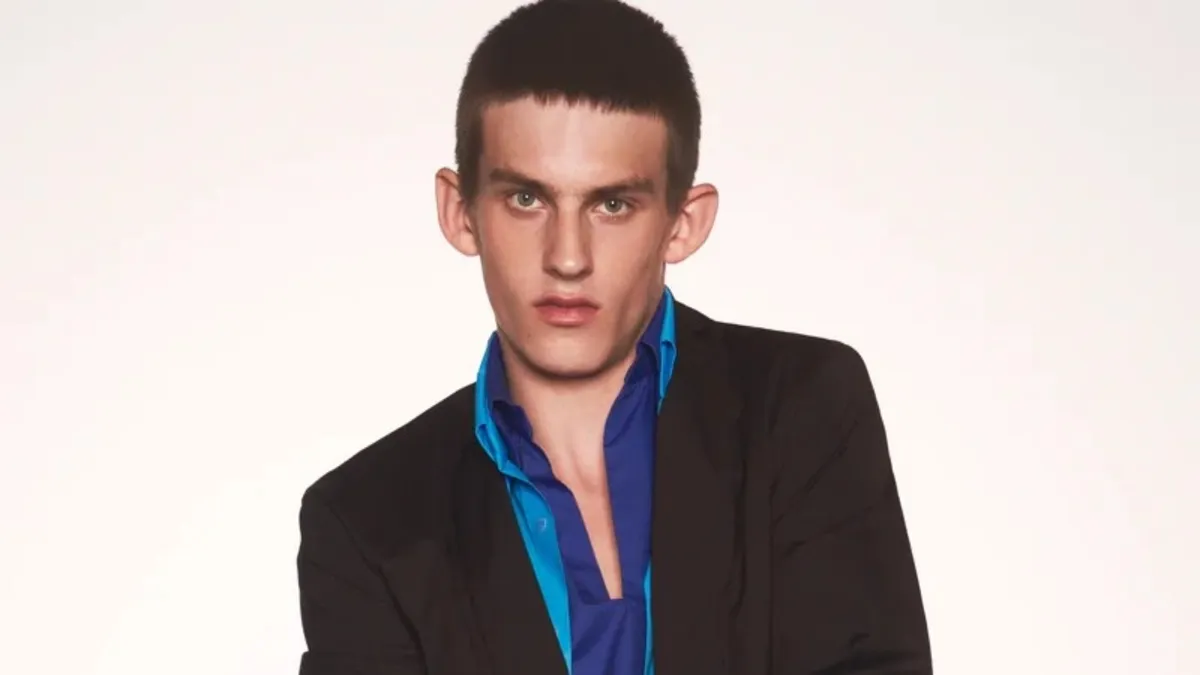
For decades, men’s fashion has been characterized by a set of established rules and a clear distinction between what is considered appropriate and inappropriate. This tradition often stems from the utilitarian origins of modern menswear, drawing heavily from military uniforms and workwear, or the formal structure of suits. Imagine walking into a bespoke tailor shop and asking for a blazer to match your sweatpants – the reaction would likely be one of bewildered disbelief. The unwritten laws are numerous: a shirt sleeve should extend about a centimeter beyond the blazer sleeve, the bottom button of a jacket is never fastened, and belts must always match leather footwear. These strictures suggest that men’s clothing has historically been a domain with far too many constraints, leaving little room for personal expression or enjoyment of fashion.
Challenging the Status Quo in Menswear
However, a new wave of designers is emerging, eager to break free from these long-standing conventions and offer a fresh perspective on menswear. They believe that men, too, have the right to enjoy fashion and express themselves through their clothing. These innovators are not afraid to question the established grammar of men’s fashion, introducing novel concepts and designs. Among them are three designers who are making significant waves:
- Keogh Dewar: A brand recently launched by the duo Harry Styles and Harry Lambert, quickly capturing attention for its bold approach.
- Nicolò Romano: Based in an Italian coastal town, Romano creates vibrant and eye-catching garments that challenge conventional aesthetics.
- Luke Derrick: The designer behind the brand Derrick, known for crafting exceptionally soft and comfortable suits.
The Vision Behind Keogh Dewar
Keogh Dewar, founded by the design partnership of Alison Keogh and Keit Dewar, embarked on their journey into menswear with a simple yet profound motivation: they found it more interesting. Both designers gravitate towards clothing with a clean, straightforward aesthetic. The challenge of innovating within the defined framework of ‘men’s fashion’ is what excites them. While Keogh Dewar operates as a menswear brand, they emphasize that their designs are open to anyone who wishes to wear them, transcending traditional gender boundaries.
Designing for the Male Form
When asked about the key differences between designing for women and men, Keogh Dewar highlighted the greater fluidity in womenswear. Designers often employ draping techniques to achieve flowing silhouettes. In contrast, menswear tends to maintain a more fixed basic form, with innovation primarily focused on details and construction methods. However, the lines between menswear and womenswear are increasingly blurring, with more brands freely crossing these boundaries. Keogh Dewar is part of this movement, often utilizing traditionally feminine colors and fabrics to create classic menswear items like shirts and blazers.
As female designers creating menswear, Keogh and Dewar acknowledge the importance of collaboration and feedback. They engage in extensive conversations with their male friends, seeking input on how the clothes feel, potential areas for improvement, and whether the garments inspire them to be worn frequently. This iterative process is crucial for ensuring their designs resonate with the intended wearer.
The Relevance of Gendered Fashion Categories
The question of whether distinguishing between menswear and womenswear remains relevant today is met with a nuanced response. Keogh Dewar believes there is still value in defining these categories, as it lends clarity and purpose to their creations. This was a driving factor behind launching Keogh Dewar specifically as a ‘menswear brand.’ By clearly demarcating their brand identity, they feel they can more effectively communicate their vision. Ultimately, however, their core ambition is to create clothing that is appealing and desirable to everyone, regardless of gender.
The Current State of Men’s Fashion
Regarding the general perception of men’s fashion, Keogh Dewar observes a state of oversaturation in the industry. Despite an abundance of brands and clothing options, street style often appears remarkably uniform. The designers constantly ponder what consumers truly desire. They don’t necessarily see a need for a complete revolution that overturns all existing menswear norms. Instead, they believe there is ample room for new ideas and creativity within the established ‘frameworks’ of suits, shirts, and shoes.
Men’s fashion has historically been subject to numerous restrictions and rules. Keogh Dewar’s approach involves acknowledging these conventions by first understanding them thoroughly. Then, for each garment, they make a conscious decision whether to adhere to or deviate from these established norms. The reason their clothing maintains a degree of ‘realism’ is the underlying familiarity. They re-imagine familiar items through the innovative use of color and fabric.
Inspiration and Innovation
Keogh Dewar often draws inspiration from early 2000s menswear, a period characterized by slim tailoring, sensual silhouettes, and daring colors. They acknowledge that exciting menswear brands certainly exist today, with Dries Van Noten being a prominent example that comes to mind. The duo first encountered Keogh Dewar after seeing a custom look created for Harry Styles. Their Spring/Summer 2027 collection, featuring extensive use of latex, struck them as a rare example of erotic menswear in recent times.
When asked about the rationale behind creating clothing that evokes such provocative and even fetishistic feelings, they explained their goal is to design garments that spark desire. They aim to create clothing that makes people want to own it, and perhaps even makes the wearer feel a sense of longing. Their objective is to craft clothes that exude a seductive, captivating, and liberated aura, appealing to individuals drawn to such qualities. They feel fashion can sometimes become overly serious, and their designs aim to inject a sense of playful rebellion.
Style Icons and Influences
Identifying a single style icon is challenging for the designers. They are more drawn to individuals who possess a strong, palpable energy rather than a specific look. Similar to their reference to early 2000s menswear, they often find inspiration in the style of celebrities from that era. Back then, celebrities seemed to approach fashion with a greater sense of freedom and spontaneity compared to today.
The designers behind Keogh Dewar, Alison Keogh and Keit Dewar, are pushing the boundaries of conventional menswear by infusing it with unexpected materials, bold colors, and a spirit of playful sensuality. Their work challenges the notion that men’s fashion must be rigidly defined, offering a vision where personal expression and desirability take precedence over outdated rules.
