

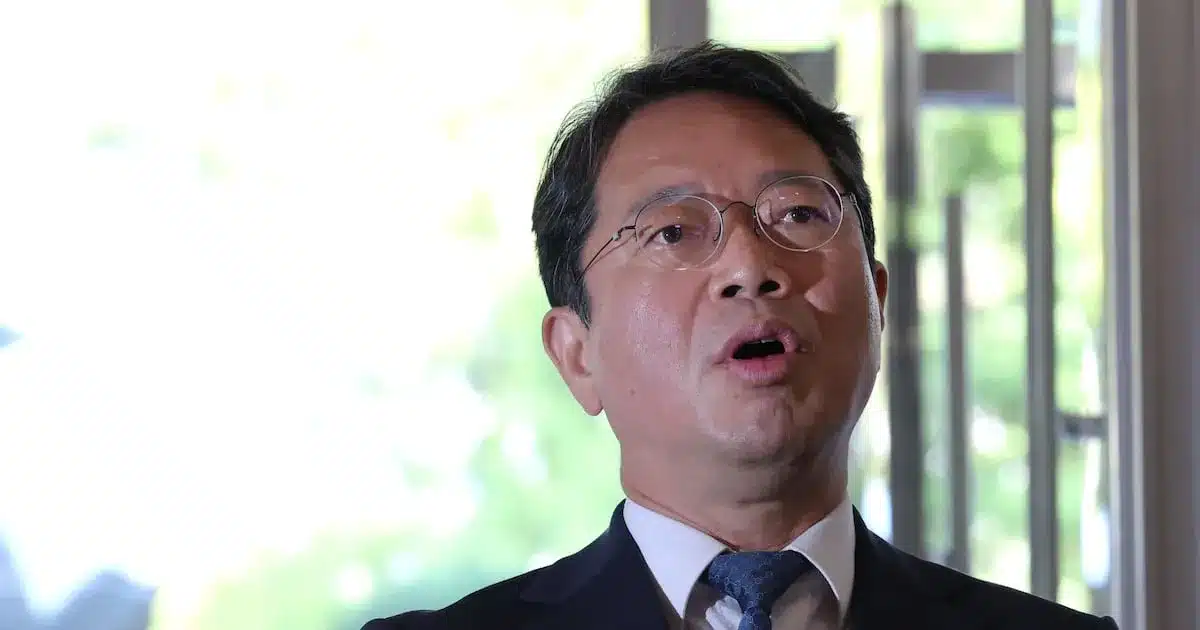
A prominent South Korean lawmaker has been publicly challenged to reveal the source of leaked investigation records, which critics allege were obtained illegally and used for political purposes. The controversy centers on allegations that the lawmaker, Han Dong-hoon, utilized non-public investigative materials in his public statements and political activities. The Democratic Party of Korea has been vocal in its criticism, demanding transparency and accountability regarding the origins of these sensitive documents.
Allegations of Illegal Record Acquisition
Kim Dong-a, a member of the Democratic Party, held a press conference at the National Assembly to formally lodge a complaint. He accused Representative Han of improperly receiving and using confidential investigation records for political maneuvering and public smear campaigns. Kim stated that he was filing a complaint with the prosecutor’s office against both Representative Han and an unnamed individual who allegedly provided the records.
“We are filing a complaint with the prosecutor’s office for aggravated obstruction of justice against a lawmaker who is illegally using non-public investigation records for political attacks and smear campaigns, and the unidentified provider who handed over these records to him,” Kim Dong-a announced at the briefing.
The core of the accusation lies in Representative Han’s alleged dissemination of these materials on his personal social media accounts. According to Kim Dong-a, these posts included text messages, bank transaction details, and communication logs of individuals involved in the investigation. Kim Dong-a characterized this action as a clear breach of official secrets, defamation, and violations of personal information protection and public records management laws, labeling it a serious criminal offense.
Context of the Investigation and Accusations
The Democratic Party’s scrutiny of Han Dong-hoon intensified following his active defense of a nominee, Kim Sung-won, against allegations of lobbying related to the approval process for an experimental COVID-19 treatment. Kim Sung-won is accused of soliciting the approval of an investigational new drug application for a COVID-19 treatment from Gene-Xell to Kim Kang-lip, then head of the Ministry of Food and Drug Safety, in 2021, at the request of a broker named Yang Mo.
Another Democratic Party lawmaker, Jeon Yong-gi, also weighed in on the matter via Facebook. He questioned the legality of Representative Han’s acquisition of the documents. “If the data was obtained legally, he should state it confidently,” Jeon Yong-gi wrote. He further pressed, “Under what circumstances and from whom did Representative Han receive the leaked recordings of private conversations between nominee Kim and Mr. Yang?” This direct questioning highlights the party’s demand for a clear explanation of the data’s provenance.
Broader Political Implications and Demands for Transparency
The Democratic Party’s spokesperson, Cho Gye-won, addressed the issue in a written briefing. Cho clarified that nominee Kim’s petition to the Ministry of Food and Drug Safety regarding the COVID-19 treatment was a public appeal made in 2021. At that time, the development of COVID-19 treatments was a national priority, and the request was aimed at preventing domestic mid-sized companies from receiving undue profits. Cho criticized Representative Han for using leaked and unverified investigation materials, whose sources remain undisclosed, to sway public opinion.
“Representative Han is currently engaged in a public opinion battle using leaked investigation records and recordings without revealing their source,” Cho stated. “This is an act that requires scrutiny.”
The ongoing dispute underscores a significant political confrontation, with the Democratic Party seeking to hold Representative Han accountable for what they perceive as the misuse of sensitive information. The demand for the source of these leaked records is central to their argument, as they contend that the integrity of the investigation process and the protection of personal data are at stake. The situation highlights the complex interplay between political scrutiny, investigative procedures, and the public’s right to know, balanced against the need for confidentiality and legal propriety in official inquiries.
Key Figures and Their Roles
- Han Dong-hoon: The lawmaker at the center of the controversy, accused of using leaked investigation records.
- Kim Sung-won: A nominee defended by Han Dong-hoon, who faces allegations of lobbying related to a COVID-19 treatment approval.
- Kim Dong-a: A Democratic Party lawmaker who filed a formal complaint regarding the leaked records.
- Jeon Yong-gi: Another Democratic Party lawmaker who publicly questioned the legality of the data acquisition.
- Cho Gye-won: The Democratic Party spokesperson who criticized Han Dong-hoon’s use of unverified information.
- Kim Kang-lip: Former head of the Ministry of Food and Drug Safety, allegedly lobbied by Kim Sung-won.
- Yang Mo: A broker allegedly involved in the lobbying efforts for the COVID-19 treatment.
The resolution of this controversy will likely depend on the findings of the ongoing investigations and the clarity provided by Representative Han regarding the origin and legality of the documents he has presented. The case serves as a stark reminder of the ethical and legal considerations surrounding the handling of confidential information in the political arena.
