

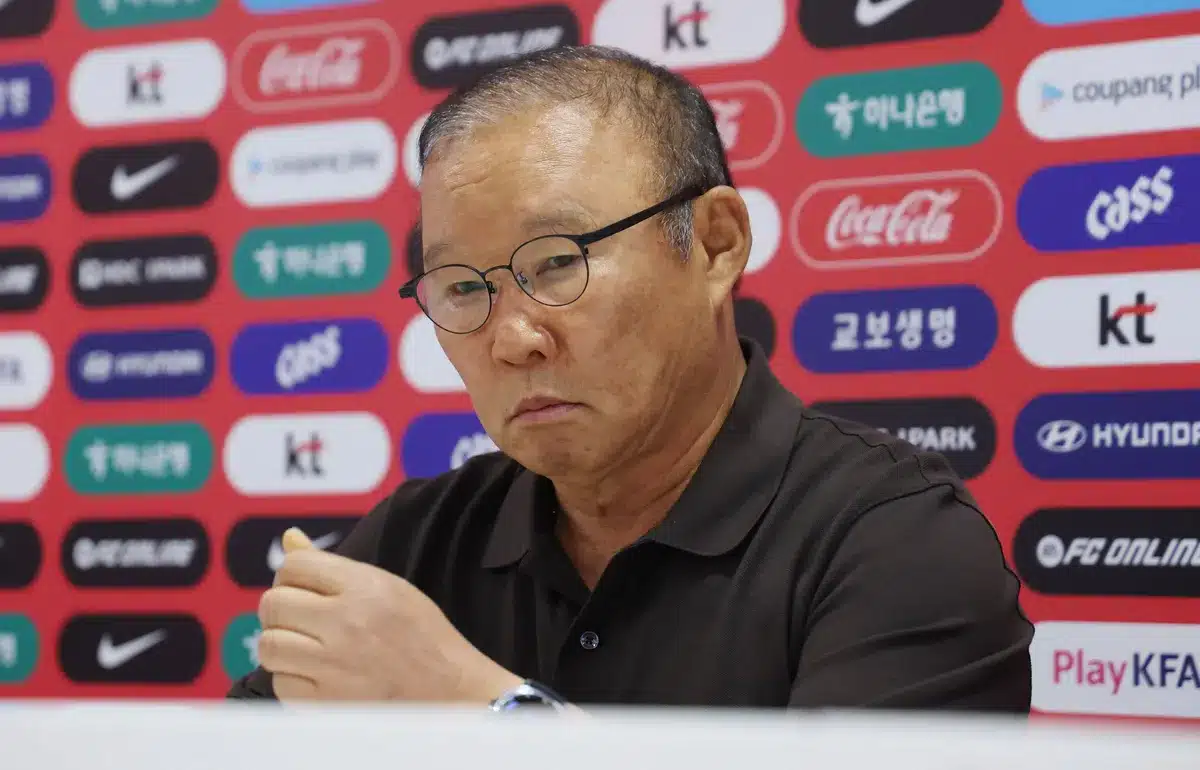
Former national football team coach Park Hang-seo has launched a strong criticism against the Korea Football Association (KFA), alleging the organization was “too arrogant” and operated with an internal “cartel.” These remarks were made during an interview featured on the YouTube channel ‘Seo Hyung-wook’s Football TV,’ which boasts over 270,000 subscribers, and was published on the 2nd.
Park, who served as the captain of the players’ delegation during the 2026 FIFA World Cup qualifiers, shared his candid thoughts on behind-the-scenes issues and systemic problems within the KFA. He specifically addressed concerns about the association’s internal structure, stating, “I’m not referring to a specific university cartel. There was a cartel within the Football Association itself.” He further elaborated, “The Football Association was too arrogant and looked down on football people. It was a problem that was bound to explode eventually.”
Player Disputes and Demands During World Cup Qualifiers
The former coach also shed light on internal conflicts within the national team during the World Cup period, revealing that prominent players Son Heung-min and Lee Jae-sung personally approached him to mediate. “Son Heung-min and Lee Jae-sung came to me and asked me to help resolve this situation,” Park recounted.
According to Park, the players presented three specific demands to address the issues they were facing. These demands included:
- The public disclosure of the names of journalists involved in certain reports.
- The explicit mention of the real names of these journalists.
- A public apology from the relevant parties.
- A ban on interviews and coverage for the journalists in question.
Park explained that the players sought the association’s proactive intervention to resolve these matters. He emphasized that the players expected a swift and decisive response from the KFA.
Resignation Before World Cup Conclusion
Park Hang-seo also disclosed that he submitted his resignation before the conclusion of the 2026 FIFA World Cup qualifiers. Although he stated that his role as the players’ delegation captain did not come with clearly defined responsibilities or authority, he felt a moral obligation to take responsibility for the team’s performance.
“As the captain, I didn’t have any special duties, but because I was in that position, I certainly had a moral responsibility,” Park explained. “It was in that spirit that I submitted my resignation before the first match of the World Cup qualifiers.” This decision underscores his sense of accountability, even in a role that lacked formal power.
Vision for the Future of Korean Football
Looking ahead, Park Hang-seo stressed the importance of the younger generation of footballers leading the transformation of Korean football. He specifically mentioned prominent figures like Lee Young-pyo, Park Ji-sung, and Park Joo-ho as examples of the kind of leadership needed.
“Young footballers must take the lead, and the older generation should play a supporting role from behind,” Park stated. This perspective highlights his belief in empowering emerging talent and fostering a new era for the sport in Korea, with experienced individuals providing guidance rather than direct control.
Park’s comments bring to light significant internal dynamics and potential governance issues within the KFA, suggesting a need for introspection and reform within the organization. His candid assessment, stemming from his direct involvement during a critical period for the national team, offers a valuable, albeit critical, perspective on the state of Korean football.
