

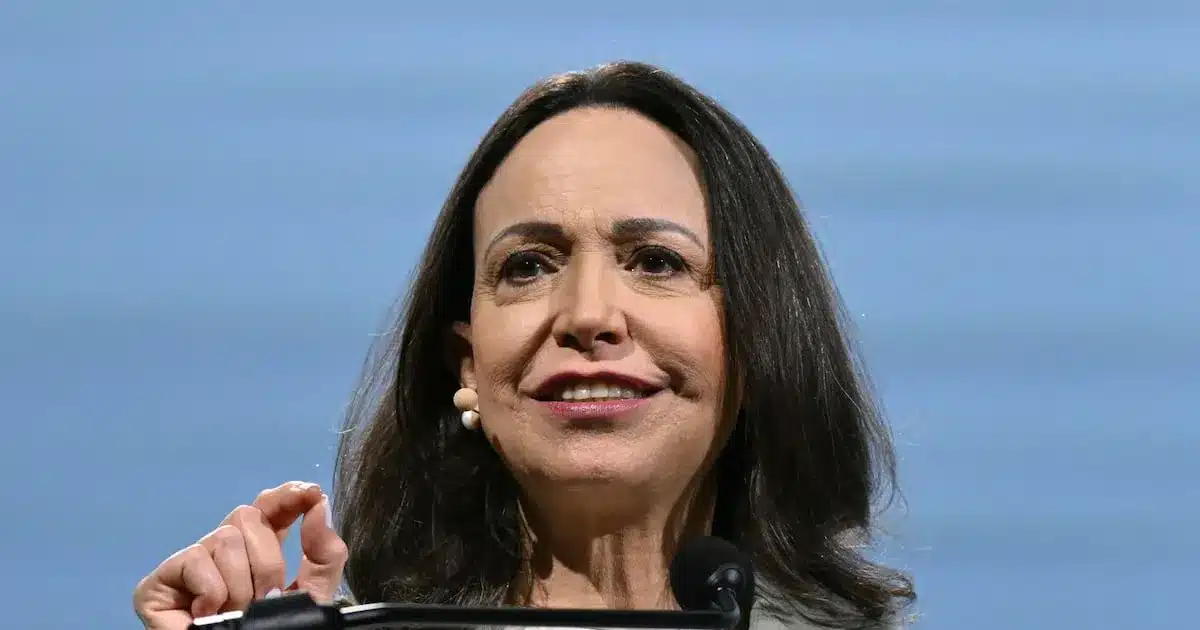
Maria Corina Machado, a prominent opposition leader in Venezuela, has voiced strong criticism against a significant oil development agreement between the United States and the Venezuelan government. Machado asserted that Venezuela’s underground resources belong to the Venezuelan people, not to what she termed an “illegitimate government.” This statement directly challenges the legitimacy of the interim administration led by acting President Delcy Rodríguez, questioning the validity of agreements made with the U.S.
Machado’s Stance on National Resources
In a public statement, Machado emphasized that oil exploration and extraction are crucial components of Venezuela’s future development strategy. She highlighted the substantial investment required for such endeavors, stating, “Oil is part of a major asset development project that we must undertake in Venezuela.” However, she stressed that the nation needs more than just financial capital, implying a need for sovereign control and proper governance over its resources.
Machado’s remarks underscore a deep-seated concern among segments of the Venezuelan population regarding the management and potential exploitation of the country’s vast oil reserves. Venezuela possesses the largest proven oil reserves globally, making its resource management a critical issue for both domestic stability and international relations.
The U.S.-Venezuela Oil Agreement
The agreement in question grants the United States access to approximately 65 billion barrels of Venezuelan oil. This represents about one-fifth of the nation’s total estimated oil reserves. The deal was hailed as an “historic agreement” by both U.S. President Donald Trump and Venezuelan acting President Delcy Rodríguez. President Trump also indicated the possibility of early presidential elections in Venezuela following this development.
The U.S. administration has suggested that if elections are held promptly in Venezuela, President Trump might consider supporting Rodríguez. This potential endorsement has fueled speculation about the future political landscape of Venezuela. However, Machado has consistently focused on the legitimacy of the current government, arguing that it lacks the mandate to make such far-reaching decisions regarding national assets.
Questions of Legitimacy and National Sovereignty
Machado articulated the feelings of many Venezuelans, saying, “I understand the sadness, anger, and insecurity that the people feel when someone, in our name and without asking our opinion, decides our assets at will.” Her statement directly confronts the core issue of national sovereignty and the right of the Venezuelan people to determine the fate of their natural resources.
While Machado has been a vocal critic of the current government and its dealings, she has also sought to maintain a strategic diplomatic approach. She acknowledged the necessity of the U.S. as a partner in fully realizing Venezuela’s strategic potential, stating, “The United States is a necessary partner to fully develop Venezuela’s strategic value.” This nuanced position suggests a desire for international cooperation while firmly asserting Venezuelan ownership and control over its resources.
Background and Political Context
Venezuela has been experiencing a prolonged period of political and economic instability. The country’s oil-dependent economy has been severely impacted by fluctuating global oil prices, mismanagement, and international sanctions. This has led to widespread shortages of essential goods, hyperinflation, and a significant exodus of its population.
The political landscape is deeply divided, with an opposition movement, led by figures like Machado, challenging the legitimacy of President Nicolás Maduro’s government. While the Maduro government maintains control, international recognition has been fragmented, with many countries, including the U.S., supporting the opposition’s call for democratic reforms and new elections.
The recent oil agreement emerges within this complex context. For the U.S., securing access to Venezuelan oil could have implications for global energy markets and U.S. energy policy. For Venezuela, the deal represents a potential, albeit controversial, avenue for economic relief and resource development. However, the fundamental question of who has the legitimate authority to negotiate and sign such agreements remains a central point of contention.
Future Implications
Machado’s strong opposition highlights the ongoing debate about national ownership versus international partnership in resource management. Her emphasis on the will of the Venezuelan people suggests that any long-term solution for the country’s economic recovery must address issues of governance and democratic legitimacy.
The U.S.-Venezuela oil deal, while potentially significant for energy markets, is unlikely to resolve the underlying political challenges within Venezuela. The differing perspectives on legitimacy and resource rights underscore the complexities of the situation and the difficult path ahead for the nation. The role of international actors, the demands of the Venezuelan people, and the legitimacy of its leadership will continue to shape the future of Venezuela’s oil sector and its broader economic and political trajectory.
