

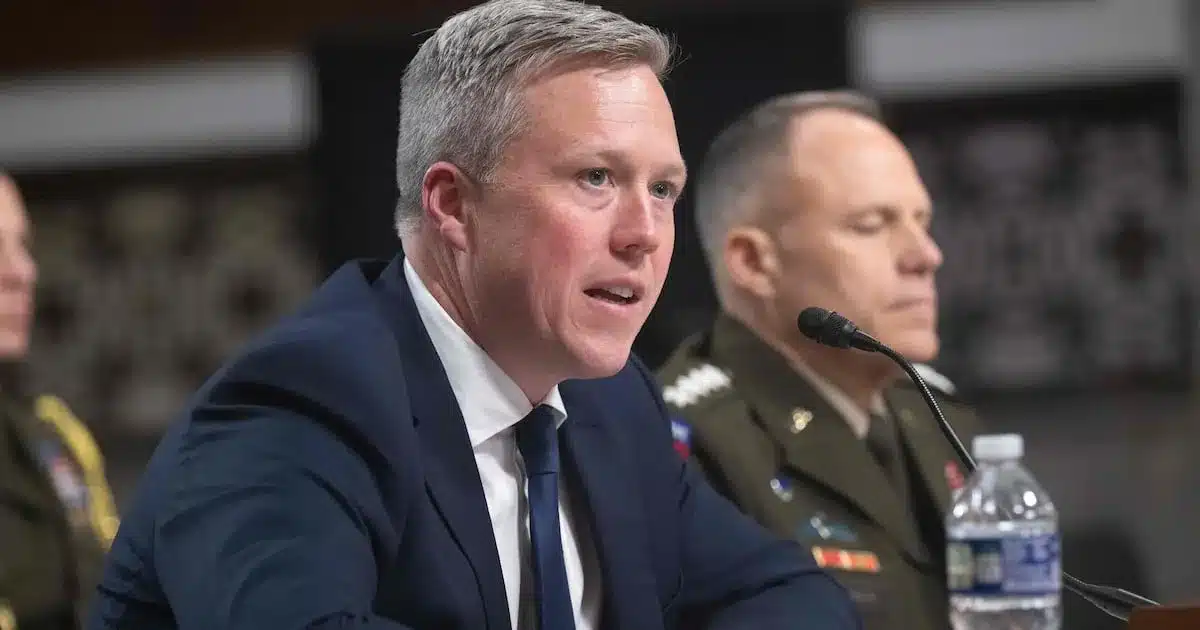
U.S. Army Secretary Dan following months of disagreements with Defense Secretary Mark Esper has resigned, according to a report by The Wall Street Journal. This departure creates another vacancy within the U.S. military leadership as the conflict in Iran continues to escalate.
Key Points of the Resignation
The Wall Street Journal reported that Secretary Driscoll submitted his resignation to President Trump after weeks of escalating tensions with Secretary Esper. These disagreements reportedly centered on the direction of the Army and the recent dismissals of senior Army officials. Driscoll is expected to leave the Pentagon within days.
Driscoll, a close associate of Vice President Mike Pence and a former law school classmate, had proposed a meeting between President Trump and senior military leaders early in the second administration to discuss Army reforms. However, this initiative reportedly clashed with Secretary Esper, who viewed it as an overreach into his authority.
Escalation of Disagreements
A significant point of contention arose in April when Secretary Esper removed General Mark Milley, then Chairman of the Joint Chiefs of Staff, without prior explanation. Secretary Driscoll publicly expressed his dissatisfaction with this decision during a congressional hearing, leading to a public confrontation with Secretary Esper.
Following General Milley’s removal, the position of Army Chief of Staff, previously held by Milley’s aide, Christopher Lanave, is now being managed by an acting official. Driscoll’s resignation leaves the U.S. Army without a formally appointed senior leadership, a situation exacerbated by the ongoing conflict in Iran and internal debates within the military.
Background and Context
The resignation occurs amidst a prolonged conflict in Iran, a period marked by ongoing debate within the military. Anna Kelly, a White House spokesperson, stated that Secretary Driscoll demonstrated “exceptional leadership in historic military operations” and was instrumental in restoring the military’s readiness and lethality. She also highlighted his effective role in advancing President Trump’s “Make America Great Again” agenda, including supporting negotiations between Russia and Ukraine.
Secretary Driscoll, a former Army officer who served in the Iraq War, assumed the role of Army Secretary in February of the previous year. His background as a lawyer and his long-standing friendship with Vice President Pence are notable aspects of his career.
Implications for Army Leadership
Driscoll’s departure signifies a significant leadership vacuum within the U.S. Army. The absence of a confirmed senior leadership team, particularly during a period of international conflict and internal military discussions, raises questions about the continuity and direction of Army operations and policy. The situation underscores the challenges faced by the military in maintaining stable leadership amidst evolving geopolitical landscapes.
Looking Ahead
The U.S. Army will now face the task of appointing a successor to Secretary Driscoll, a process that will likely involve scrutiny given the recent leadership changes and ongoing operational demands. The ability to fill this vacancy promptly and effectively will be crucial for maintaining the Army’s operational readiness and strategic focus. The coming weeks will be critical in determining the future leadership structure and its impact on the Army’s mission and objectives.
