

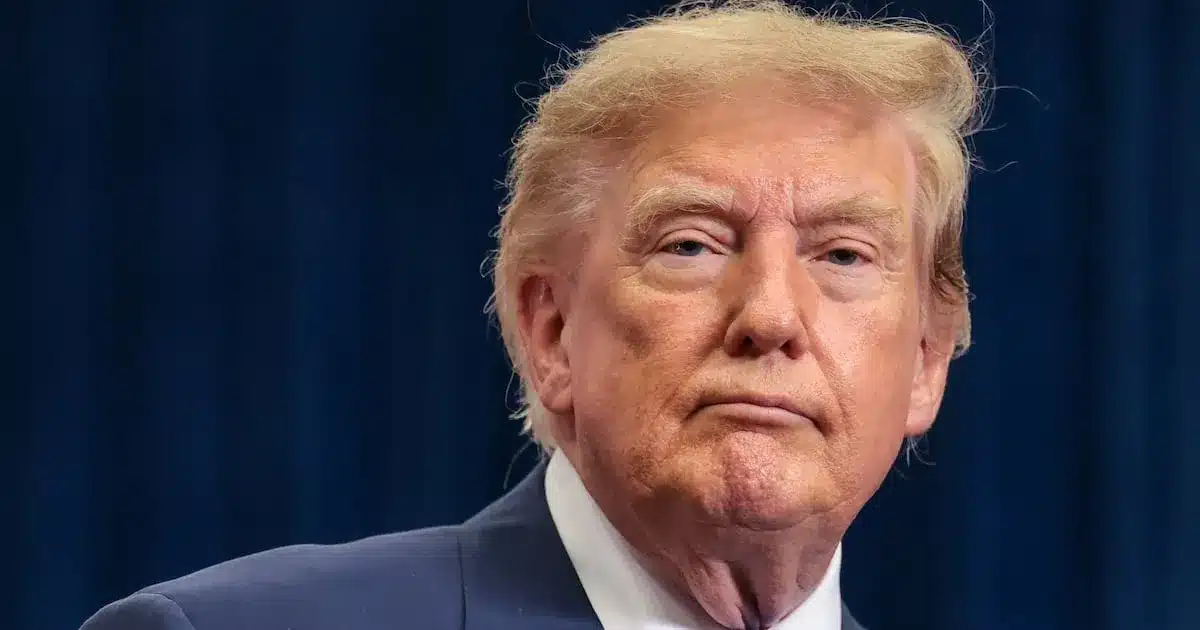
Amidst a renewed exchange of fire between the United States and Iran, President Donald Trump declared on July 31st that the U.S. would respond forcefully to Iranian aggression, signaling a commitment to retaliation. Trump stated in a brief interview that a response was imminent, according to reporting from Fox News.
Escalation of Tensions
The recent escalation began when U.S. forces targeted two missile launch sites in Larak Island, located in the Strait of Hormuz, on July 30th. These strikes were reportedly in response to Iran’s alleged actions of firing missiles and deploying drones towards a U.S. military base in the United Arab Emirates (UAE). Trump asserted that the U.S. missile defense system successfully intercepted all but one Iranian missile. He further claimed that the single missile that was not intercepted did not hit any critical infrastructure and was allowed to pass.
Trump expressed skepticism about Iran’s willingness to adhere to agreements, stating, “Iran wants to meet very badly, but I don’t believe Iran will honor any agreement.” This sentiment follows the U.S. Treasury Department’s announcement of a large-scale sanctions operation against Iran the previous week. Trump maintained that these sanctions were beginning to have a significant impact on the Iranian regime.
The U.S. was expected to seek allied support for these measures at the G20 finance ministers’ meeting, which commenced on July 31st. Adding to the rhetoric, Trump posted on his social media platform, Truth Social, on the same day, labeling Iran as “officially a failed nation” and declaring, “Iran is dead.” He further elaborated, stating that Iran lacked a navy and air force, and was unable to provide salaries to its military and police personnel.
U.S. Military Actions and Iranian Response
The U.S. military’s actions involved striking missile launch sites belonging to Iran’s Islamic Revolutionary Guard Corps (IRGC). The IRGC, in turn, is accused of attacking a U.S. military base in the UAE with ballistic missiles and drones. The U.S. stated that its missile defense systems were effective in thwarting the majority of the incoming threats.
President Trump’s comments highlight a significant hardening of U.S. policy towards Iran, emphasizing a strong deterrent posture and a willingness to use economic pressure alongside military readiness. The administration’s strategy appears to be a combination of imposing severe economic sanctions and maintaining a robust military presence in the region to counter perceived Iranian threats.
Strengthening U.S. Missile Defense Capabilities
In a separate development on July 31st, the U.S. Department of Defense announced that it had entered into significant basic agreements with two major defense contractors, General Dynamics and Lockheed Martin. These agreements are aimed at accelerating the production of missile defense interceptors, which are currently in short supply. The Pentagon stated that these agreements would initiate a seven-year, multi-year procurement (MYP) to increase the production quantities of critical missile components.
These components are essential for supporting systems such as the Terminal High Altitude Area Defense (THAAD) system and the latest variants of the Patriot Advanced Capability-3 (PAC-3) missile. The initiative seeks to streamline production and expedite delivery schedules.
Pentagon’s Commitment to Domestic Manufacturing
Michael Dirks, the Principal Deputy Assistant Secretary of Defense for Acquisition and Sustainment, emphasized the department’s commitment to bolstering domestic manufacturing capabilities for advanced missile defense technologies. He stated, “We are cutting through red tape, streamlining processes, and rapidly expanding our domestic manufacturing capacity to deliver advanced missile defense capabilities.”
This strategic move by the Pentagon underscores a broader effort to ensure the U.S. military maintains a technological edge and sufficient stockpiles of critical defense systems. The focus on domestic production aims to reduce reliance on foreign suppliers and ensure a consistent supply chain for essential military hardware, particularly in the face of heightened geopolitical tensions.
Broader Geopolitical Context
The exchange between the U.S. and Iran occurs against a backdrop of complex regional dynamics and international relations. Iran’s actions are often viewed within the context of its regional influence and its ongoing dispute with several Middle Eastern nations and global powers. The U.S. response, characterized by strong rhetoric and military posturing, reflects its commitment to regional stability and the security of its allies.
The G20 meeting provides a platform for international dialogue on economic cooperation and security challenges. The U.S. intention to seek allied support for its Iran policy suggests an effort to build a united front against what it perceives as destabilizing actions by the Iranian regime. The effectiveness of sanctions and the potential for further escalation remain key points of international focus.
Conclusion
President Trump’s declaration of strong retaliation against Iran, coupled with the Pentagon’s moves to bolster missile defense production, signals a period of heightened tension and strategic maneuvering. The situation underscores the volatile nature of U.S.-Iran relations and the ongoing efforts by the United States to counter perceived threats through a combination of economic pressure, diplomatic engagement, and military preparedness. The coming days and weeks will likely reveal the extent of Iran’s response and the broader international community’s reaction to these developments.
