

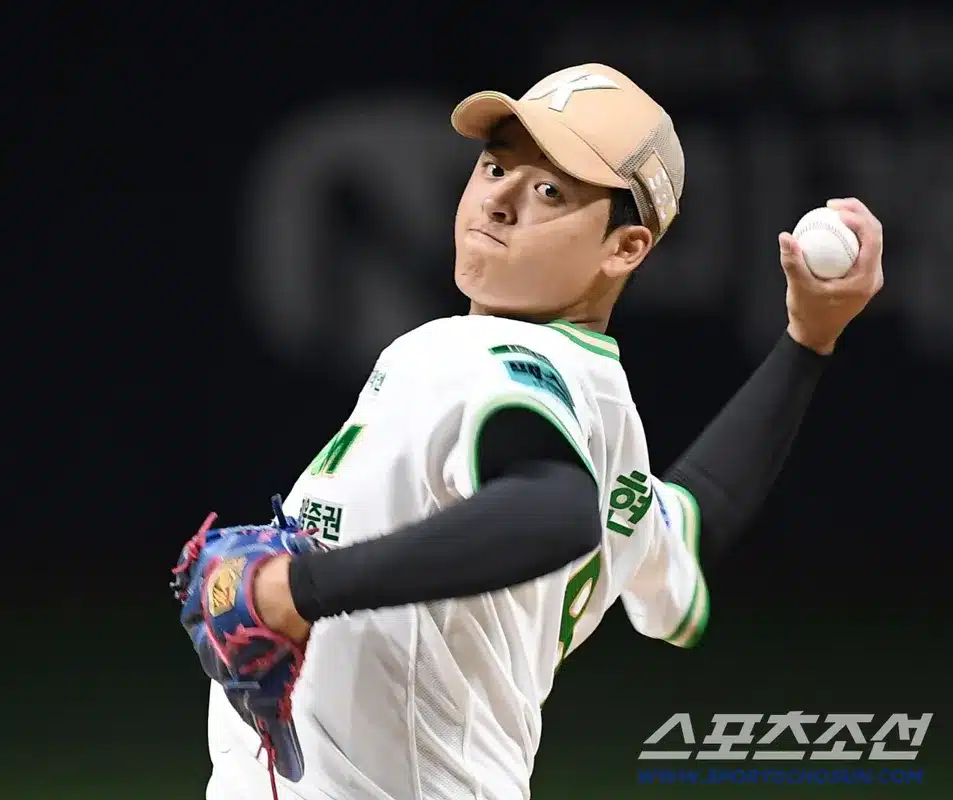
Control issues, often referred to as the “unsolvable homework” in baseball, continue to plague promising young pitchers, even those capable of throwing fastballs exceeding 150 km/h (93 mph). When these powerful pitches stray from the strike zone, teams, fans, and coaches alike find themselves in a difficult situation. Kiwoom Heroes manager Seol Jong-jin has openly discussed the struggles with control faced by his team’s top prospects, highlighting it as a significant concern.
The Control Conundrum for Elite Prospects
Among the highly touted pitchers on the Kiwoom Heroes are Park Jun-hyeon, the first overall pick in the 2026 KBO draft, and Jeong Hyeon-woo, the first overall pick in the 2025 draft. Both were acquired through high draft picks, with the team securing selections within the top 10 for three consecutive years. However, their recent performances have underscored the persistent challenge of control. In a game against the Samsung Lions on May 26th, both pitchers experienced significant control problems, recording 2 walks and 5 hits allowed for Park Jun-hyeon, and 2 walks and 4 hits allowed (including a hit-by-pitch) for Jeong Hyeon-woo. These early struggles set a difficult tone for the games.
Manager Seol explained the impact of these control issues during Park Jun-hyeon’s outing. “Yesterday, Park Jun-hyeon’s first-pitch strikes were almost nonexistent,” Seol noted. “In his previous starts, even with an 80% first-pitch strike rate, he could maintain a 50% strike rate and engage in aggressive battles with hitters. But yesterday, from the beginning, his first-pitch strikes faltered, leading to an increase in balls. As runners accumulated, the pitcher himself came under immense psychological pressure.”
The situation escalated when Park Jun-hyeon issued three consecutive balls in the third inning, with the pitch-to-walk ratio completely disrupted. “At that point, it was impossible to continue the game normally,” Seol stated. “We had no choice but to remove him early.” This decision reflects the critical nature of control for maintaining game flow and pitcher effectiveness.
Root Causes: Incomplete Command and Unstable Balance
Seol identified two primary reasons for the control struggles experienced by these first-year professional pitchers: “incomplete command” and “unstable balance in pitch delivery.” He elaborated that younger pitchers, due to their limited experience, often exhibit greater variability between good and bad days on the mound. This inconsistency makes it challenging to consistently hit the strike zone.
“The problem of not being able to control the ball despite having a fast pitch is a “숙제” (a homework assignment or a persistent problem) that not only I and our coaching staff but all managers and pitching coaches across the 10 teams are facing,” Seol admitted. “If you look at other teams, there are several promising pitchers who throw over 150 km/h but still struggle with control. It’s a common, almost “unsolvable” issue in baseball.”
Addressing the Mental and Mechanical Aspects
Following the game, manager Seol addressed the young pitchers who appeared visibly shaken. “I understand you don’t want to give up balls, but you absolutely cannot survive by pitching away from the strike zone,” he emphasized, strongly urging a more aggressive mindset.
To help pitchers identify and correct subtle mechanical flaws, the coaching staff is providing detailed analysis. They compare videos of the pitchers’ mechanics during their best performances with footage from when their balance is disrupted, allowing the pitchers to visually recognize the differences and make necessary adjustments.
Simultaneously, the coaching staff is working on the psychological aspect, engaging in continuous dialogue with the pitchers. The goal is to help these young arms maintain composure under the immense pressure they face on the mound. “For young players, failing to adjust their condition or experiencing control issues is a ‘growth pain’ that everyone goes through,” Seol explained. “What we can do is persistently help them refine their mechanics through video analysis and bolster their confidence through counseling. The coaching staff must watch over them with greater attention and patience.”
This approach underscores the belief that with dedicated coaching, consistent practice, and mental fortitude, these promising young pitchers can overcome their control issues and reach their full potential.
