

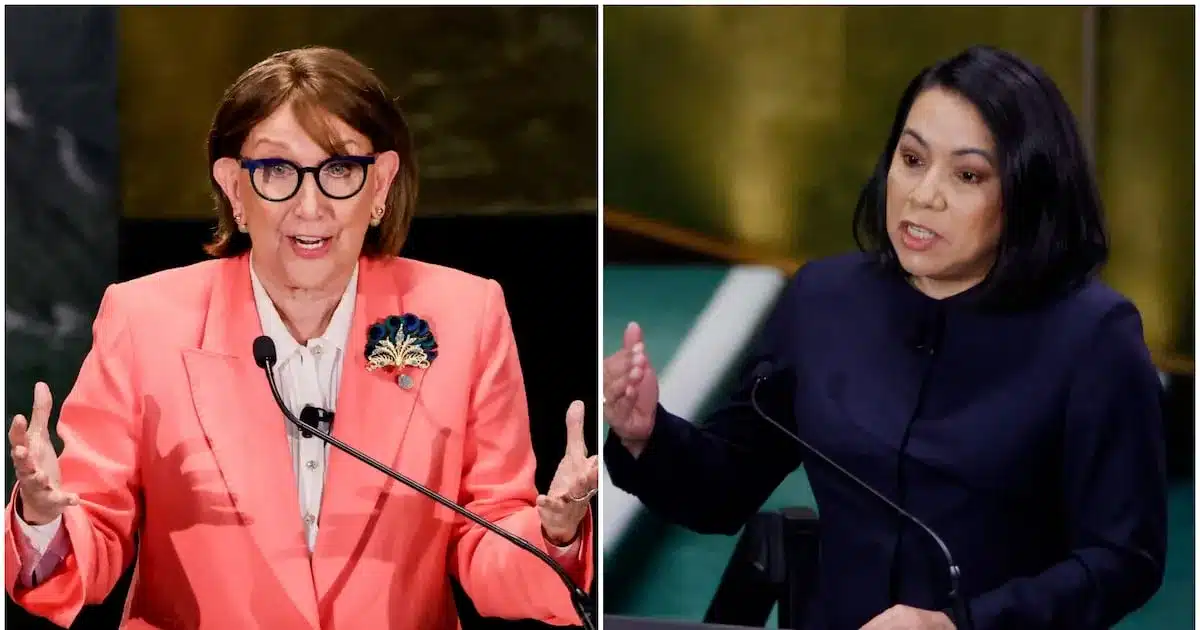
The race to become the next United Nations Secretary-General remains wide open after the second informal poll among Security Council members. While female candidates have taken the top two spots, the results reveal a highly competitive and unpredictable contest with no single candidate emerging as a clear favorite. The close margins between leading contenders and the significant number of abstentions suggest a complex path ahead for the Security Council.
Second Straw Poll Shows Shifting Tides
In the second straw poll, conducted on August 21st (local time), the field of candidates vying for the UN’s top leadership position saw a notable shift. Susana Malcorra, Argentina’s former Foreign Minister and a candidate previously backed by Spain, secured the leading position with 8 votes in favor, 3 against, and 4 abstentions. This marks an improvement from her performance in the first poll, where she ranked second.
Costa Rican former Foreign Trade Minister Rebeca Grynspan, who led the first poll, now shares second place with 7 votes in favor. She is joined by Rafael Grossi, Argentina’s Ambassador to Austria and former Director General of the International Atomic Energy Agency (IAEA), who also garnered 7 votes. The narrow one-vote difference between the frontrunner and the joint second-place candidates underscores the intense competition.
Other notable candidates trailing behind include:
- Former UN Under-Secretary-General for Political Affairs, B. Lynn Pascoe (United States)
- Former Prime Minister of New Zealand, Helen Clark
- Former UN High Commissioner for Human Rights, Zeid Ra’ad Al Hussein (Jordan)
- Former Portuguese Foreign Minister, António Guterres (Portugal)
The latest round of voting also saw some candidates receive no support. Among them was former Ecuadoran Ambassador to the UN, Maria de Lourdes Spencer, who was a late entrant into the race.
Potential for First Female UN Chief
The strong showing of female candidates, particularly Malcorra and Grynspan, has fueled speculation about the possibility of the UN appointing its first-ever female Secretary-General. Since its inception in 1945, the UN has had nine Secretaries-General, all of whom have been men. This historical context makes the current candidacies particularly significant.
However, UN diplomats caution against premature conclusions. The current vote tallies do not definitively indicate who has the strongest momentum. The distribution of votes among the 15 Security Council members is fragmented, and a substantial number of abstentions remain a key factor. Even the leading candidate, Malcorra, received 3 ‘no’ votes, highlighting that no candidate has secured unanimous backing.
The Crucial Role of Veto Powers and Abstentions
Looking ahead, the nature of the ‘no’ votes will become increasingly critical. To advance to the final stage, a candidate must secure the support of at least nine of the 15 Security Council members, with no vetoes cast by any of the five permanent members (P5): China, France, Russia, the United Kingdom, and the United States. The presence of a P5 member’s veto among the ‘no’ votes against any candidate could significantly alter the dynamics of the race.
The complexity of the selection process is evident, with some observers noting that the situation has become more intricate than in the first poll. While the top position has changed hands, the gaps between candidates have narrowed, and no individual has yet secured a clear mandate from the Security Council. The possibility of new candidates entering the race if consensus cannot be reached among the current contenders also remains a factor.
The Selection Process Explained
The straw polls conducted by the Security Council are informal consultations designed to gauge support for candidates. The ultimate goal is for the Security Council to recommend a single candidate to the UN General Assembly for appointment. The process involves repeated voting and consultation among the Security Council members until a consensus candidate emerges. The ultimate decision rests on securing broad support among the permanent members and a majority of the council, with the P5 holding significant influence due to their veto power.
The upcoming rounds of voting are expected to further clarify the preferences of the Security Council members and reveal which candidates can navigate the complex political landscape to secure the necessary support. The focus will be on not only gaining affirmative votes but also on avoiding the disqualifying negative votes from the permanent members.
