

Tensions are escalating between Israel and Turkey over military influence in Syria, marking a significant diplomatic and strategic confrontation between the two regional powers. The dispute centers on alleged Turkish military presence near the Israeli border and underscores the complex geopolitical landscape of post-conflict Syria.
Background of the Dispute
Israel, a traditional military ally of the United States, has been intensifying its operations within the Middle East. This has led to increased friction with Turkey, another key NATO ally of the U.S. Syria itself is undergoing a complex transition following the collapse of the Bashar al-Assad regime in December 2024. While an interim government is in place, the country remains a volatile region with deep-seated religious and ethnic divisions.
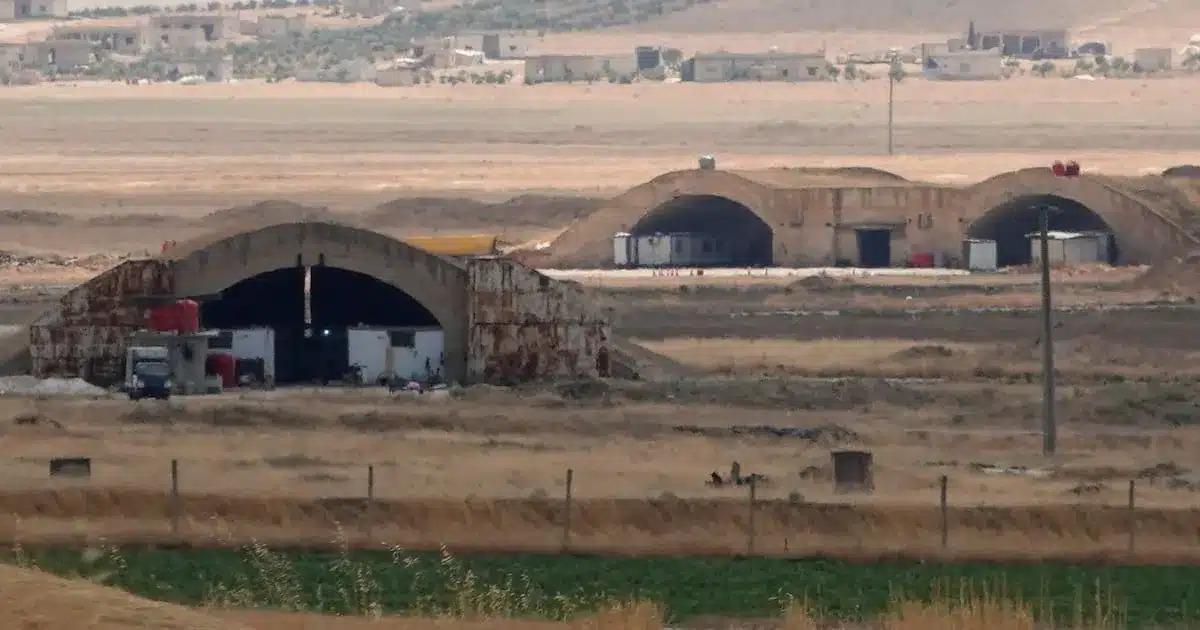
The immediate trigger for the latest diplomatic spat occurred on December 18th when Israel reportedly struck an Syrian army base in Abu al-Zuhur. This location is approximately 300 kilometers from the Israeli-Syrian border and also situated near the Turkish-Syrian frontier. Israel’s Prime Minister’s office stated that Syria was violating a principle of maintaining the status quo by allowing Turkish military deployments at the affected base. Israel further explained to its U.S. allies that the strike was intended to curb the growing Turkish military presence in the region.
Mutual Accusations and Denials
Turkey swiftly rejected Israel’s claims. A Turkish government official asserted that no Turkish troops were stationed at the base in question. The official accused Israel of using the strike as a pretext to bomb neighboring countries and destabilize the region further. The Turkish Presidential Communications Directorate issued a strong statement, accusing Israeli Prime Minister Benjamin Netanyahu of pursuing expansionist policies that provoke instability in the Middle East, especially with an election approaching in October. They urged Israel to abandon its aggressive policies and adhere to international law.
However, the rhetoric continued to escalate. On December 19th, Israeli Major General Eyal Zamir visited occupied Syrian territory and issued a warning directed at Turkey, stating, “We will not allow hostile forces to establish bases on our border.” Prime Minister Netanyahu echoed this sentiment, framing the strike as a consequence of Turkey ignoring Israeli warnings. He declared, “We will never tolerate the strengthening of military forces that threaten us. Do not.””
Escalating Rhetoric and Strategic Interests
On December 20th, Israeli Defense Minister Yoav Gallant directly criticized Turkish President Recep Tayyip Erdoğan, suggesting that Erdoğan was drawing Turkey into a dangerous confrontation in Syria. In response, the Turkish Presidential office retorted that Netanyahu’s threats and falsehoods revealed his fear and delusion, further demanding that he abandon his aggressive and coercive policies and respect international law. The Turkish Ministry of National Defense affirmed its commitment to preserving Syria’s sovereignty and territorial integrity, indicating that military support for Syria would continue.
The complex situation in Syria, with an interim government led by Ahmed al-Sharaa, a Sunni rebel figure, following the regime’s collapse, has created a power vacuum. Internal disagreements among various factions and persistent terrorist activity have led both Turkey and Israel to actively seek increased influence in the country. These geopolitical ambitions are closely tied to their respective national security interests.
Turkish Strategic Objectives
Turkey shares a border of over 900 kilometers with Syria. A primary security objective for Ankara is the establishment of a stable, pro-Turkish central government in Syria that can suppress the independence movements of Kurdish armed groups, which are viewed as a threat to Turkish national security.
Israeli Strategic Objectives
Israel views the potential re-establishment of a strong Syrian army on its northern border, particularly in the Golan Heights (which Israel occupies and effectively controls), or any significant Turkish military presence in southern Syria, as a critical security threat. Experts suggest that the conflicting visions—Turkey’s desire for a “strong and unified pro-Turkish Syria” versus Israel’s aim for a “demilitarized, controlled Syria”—are on a collision course.
Regional Implications and Expert Analysis
Tom Barrett, the former U.S. Ambassador to Syria and Special Envoy, warned that the current situation carries a significant risk of rapid escalation into direct military conflict between Israel and Turkey. Professor Inam Al-Sheikh from the National Defense University noted that for Israel, both Syria and Turkey represent additional security concerns. He observed that Turkey appears poised to confront Israel more directly, a shift from Israel’s previous focus on striking Iranian and Hezbollah targets.
Historically, Turkey, a secular republic that led modernization efforts, officially recognized Israel shortly after its establishment in 1949, being one of the first Islamic nations to do so. However, relations have deteriorated significantly as both countries have seen leaders with strongman tendencies come to power. President Erdoğan, in power since 2014, has moved away from secularism, emphasizing Islamic and Turkish nationalist ideologies. Prime Minister Netanyahu, Israel’s longest-serving leader, promotes a vision of “Greater Israel” based on Jewish nationalism and rejects the two-state solution for Israelis and Palestinians.
The conflict between Israel and Hamas, which erupted in October 2023, and the subsequent U.S.-Iran tensions in February 2024, have further exacerbated the situation. Erdoğan has drawn parallels between Netanyahu and Hitler, while Israel has recently officially recognized the Armenian genocide during the Ottoman Empire, a sensitive historical issue for Turkey.
Future Outlook
The confrontation between Turkey and Israel is poised to become a pivotal factor influencing the future dynamics of the Middle East. Turkey’s recent formation of a “Mecca Alliance” with Saudi Arabia and Pakistan—both Sunni-majority nations, with Pakistan being the only Islamic nuclear power—aims to establish a NATO-style collective defense. This emerging bloc of Sunni powers could further heighten Israel’s security concerns in the region.
The escalating tensions highlight the intricate web of alliances, rivalries, and security interests that define the contemporary Middle East, with Syria serving as a critical stage for these geopolitical struggles.
